Guides · Marchon
Marchon's Smart-Glasses Play, Explained: The Optical Counter-Offensive
VSP Vision is mobilizing frame giant Marchon to challenge the Meta-Luxottica axis. Here is how traditional optical leverage could shake up connected eyewear.

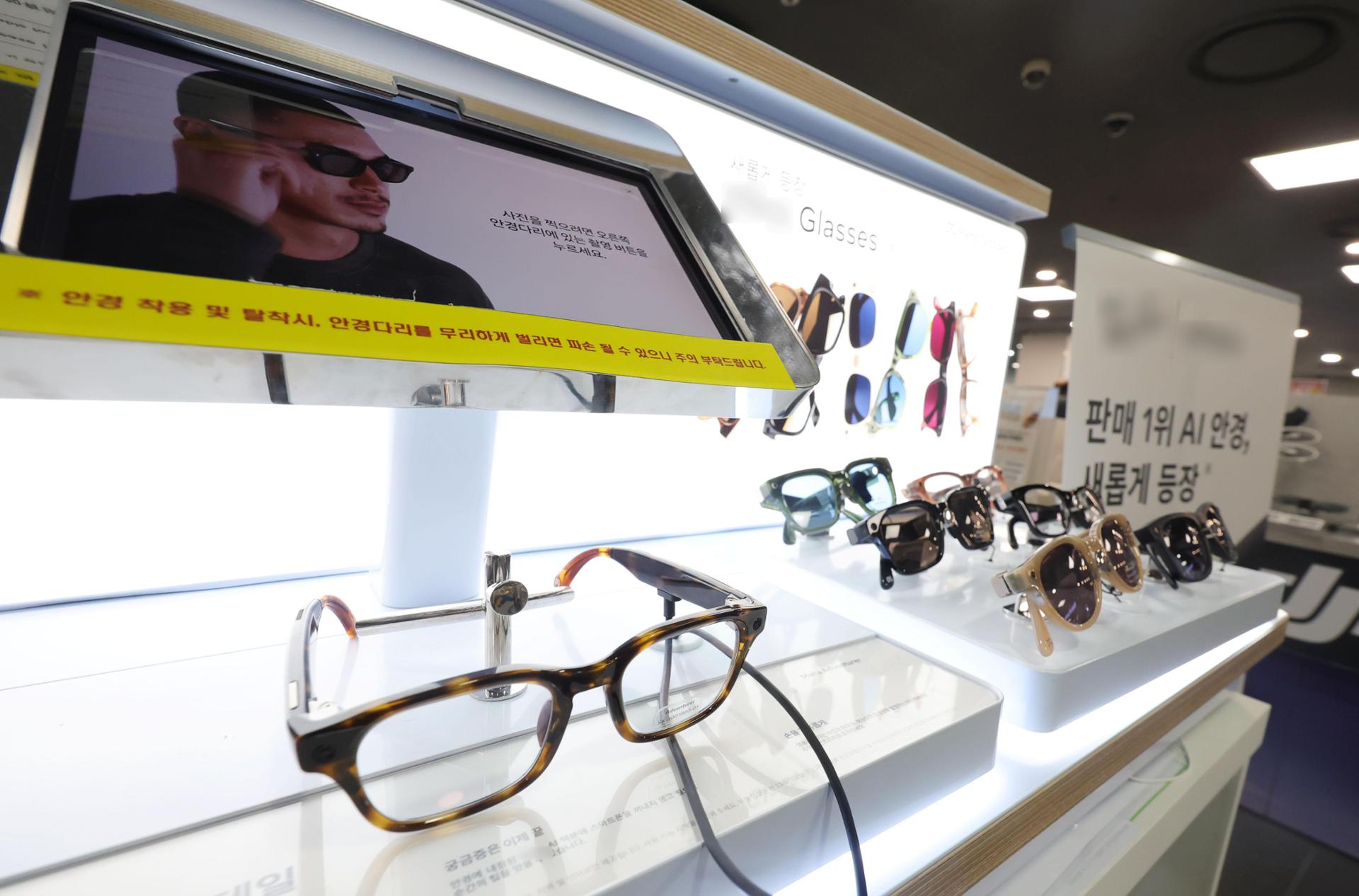
Meta's runaway success with EssilorLuxottica made one reality painfully clear to Silicon Valley: technology companies cannot design, fit, or sell eyewear people actually want to wear without a traditional optical titan holding their hands. The battle for everyday face computers is not being won on spec sheets alone; it is being won on temple comfort, prescription fulfillment, and dispensary displays.
Enter Marchon Eyewear. As the manufacturing and design powerhouse owned by VSP Vision—the largest vision-care health insurer in the United States—Marchon has spent decades operating as a quiet juggernaut of the optical world. While tech blogs obsessed over Silicon Valley prototypes, Marchon controlled the physical retail real estate in thousands of independent optometrist practices.
Now, VSP is preparing its formal connected-eyewear debut, positioning Marchon and partner Marcolin directly against EssilorLuxottica and Meta. If you think this is just another legacy fashion house reluctantly gluing electronics to acetate, you are misjudging where the smart-glasses category must scale next.
Founded in 1983 and acquired by VSP in 2008, Marchon constitutes half of the legacy eyewear aristocracy. Its licensed portfolio spans the commercial sweet spot of global fashion: Nike, Calvin Klein, Lacoste, Dragon, and Ferragamo. It does not produce avant-garde runway oddities; it manufactures high-volume, highly profitable frames for everyday prescription wearers.
The timing of this pivot is existential. EssilorLuxottica's validation of smart audio frames with Ray-Ban proved that consumer appetite for invisible tech is real and accelerating. If Marchon sits out the transition to sensor-laden eyewear, it risks watching its retail footprint erode as patients swap standard designer frames for smart alternatives.
Crucially, Marchon is not targeting early-adopter gadget hobbyists. Its natural customer is the mainstream consumer walking into an optometrist's office with insurance benefits in hand. That structural advantage—a captive insurance ecosystem paired with trusted high-street brands—gives Marchon distribution leverage that standalone hardware upstarts simply cannot replicate.
Let us be clear on the hardware: Marchon does not currently have shipping smart glasses in our catalog. There is no leaked spec sheet for spatial audio drivers, no published field-of-view for a micro-OLED display, and no battery runtime benchmark to dissect.
What is publicly verified is VSP Vision's active roadmap to launch connected eyewear through Marchon's supply chain. While VSP previously experimented with biometric sensor frames under Project Genesis years ago, this new push is squarely aimed at the commercial smart-glasses market dominated by Ray-Ban Meta.
Expect Marchon's initial hardware to avoid power-hungry waveguide displays entirely. The credible route is a lightweight, audio-and-camera platform wrapped in recognizable silhouettes from licenses like Nike or Calvin Klein. For Marchon, cold-bendable acetate temples, optical adjustability, and uncompromised prescription glazing will always take priority over bulky computing engines.
Positioned against an indie darling like Brilliant Labs, the contrast is stark. Brilliant Labs built Frame for open-source tinkerers willing to embrace eccentric circular frames, bright monocle HUDs, and experimental AI prompt chains. Marchon will never cater to developers; it will deliver conservative, unthreatening industrial design intended for people who do not know what an API is.
Against tech incumbents like Google—currently attempting to license its Android XR platform and Project Astra multimodal AI to hardware partners—Marchon represents the other half of the puzzle. Google has repeatedly faltered on wearable ergonomics and retail optical channels. Marchon understands pupillary distance, pantoscopic tilt, and bridge fit down to the millimeter.
Look also at OPPO's Air Glass series. OPPO built an impressive, ultra-lightweight monocular HUD for the technophile vanguard, but it remains a fragmented, regional proof-of-concept without an optical distribution pipeline. Marchon is not building a standalone tech curiosity; it is preparing hardware that slips effortlessly into the clinical vision-care workflow.
The smart-glasses category has spent a decade choking on engineering hubris, treating human faces like circuit-board mounts. Marchon's undeniable strength is that it already knows how to make frames people wear for sixteen hours a day. Its greatest weakness, however, will be software. Traditional eyewear conglomerates have zero pedigree in shipping low-latency firmware, ambient AI pipelines, or frictionless companion apps.
Over the next 12 months, watch Marchon's technology partnerships closely. Whether VSP licenses an ambient platform from a tech giant or attempts to build its own software stack will dictate whether this initiative genuinely threatens the Meta-Luxottica alliance or dissolves into another forgotten optical trade-show prototype.
Interactive guide: prices, displays, cameras, battery.
Share this story