Guides · Warby Parker
Warby Parker's Smart Glasses Play: The Android XR Fashion Gambit
Warby Parker is teaming up with Google to anchor Android XR in mainstream retail. Here is what the eyewear giant brings to connected optics and why tech incumbents should worry.
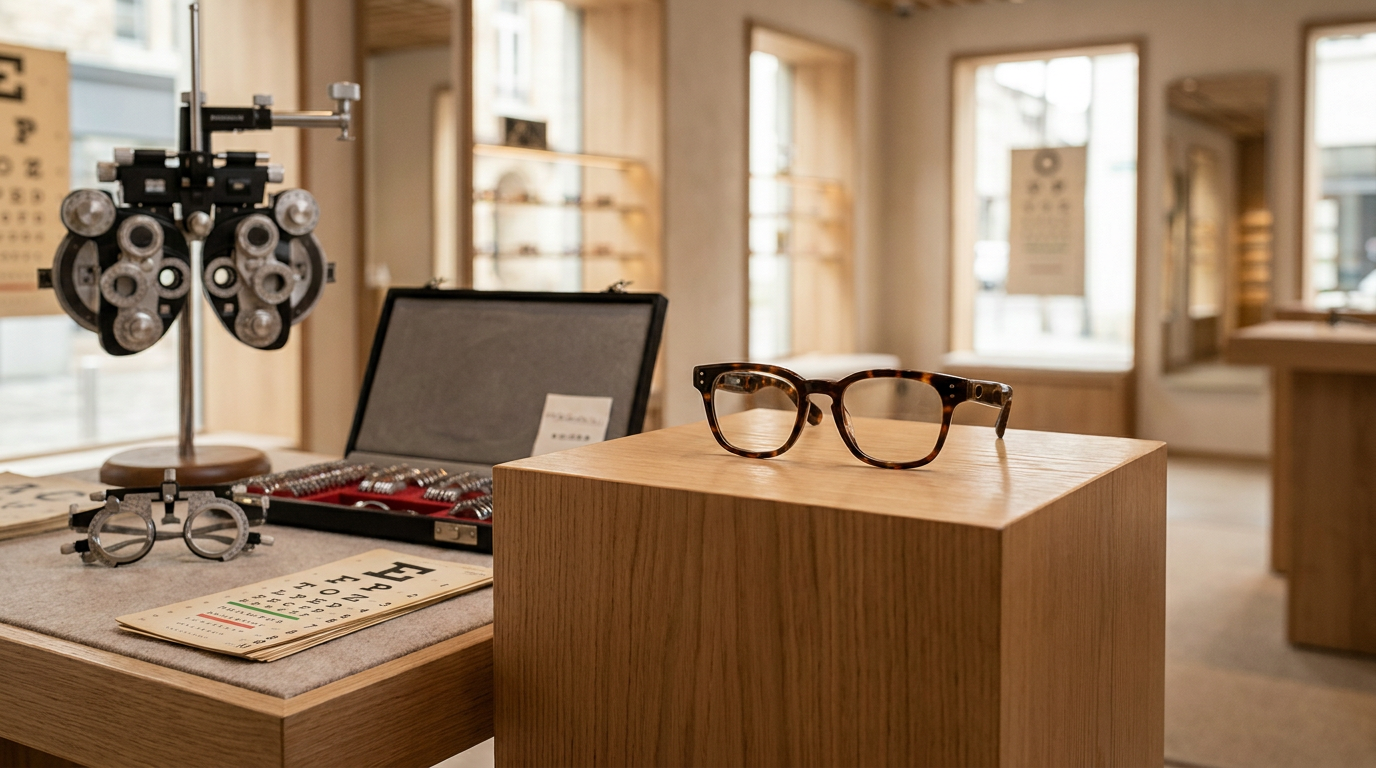
Silicon Valley has spent a decade trying and largely failing to solve the face. Tech giants have repeatedly treated eyewear as a miniaturization puzzle, assuming that if you cram an optical engine, an SoC, and a battery into plastic temples, consumers will naturally show up. What they perpetually misunderstand is that glasses are not consumer electronics; they are medical devices and vanity-driven fashion items that happen to sit directly on the human visage.
Enter Warby Parker. The company that broke the Luxottica monopoly by understanding consumer design, optical distribution, and consumer pricing is stepping directly into smart glasses. By aligning itself with Google to launch the first consumer-facing hardware on the Android XR platform, Warby Parker is not entering the market as a novelty peripheral maker. It is positioning itself as the consumer front-door for Google's ambient computing ambitions.
This partnership fundamentally alters the smart glasses landscape. Meta has proven through its Ray-Ban collaboration that brand pedigree and wearable aesthetics matter far more than raw visual computing specifications. If Warby Parker can marry genuine optical craftsmanship with Android's ambient AI ecosystem, the smart glasses race shifts from an engineering contest to an execution war on retail shelves.
Founded in 2010, Warby Parker made its name by dismantling the opaque, high-margin eyewear industry through a direct-to-consumer model. The company succeeded not by inventing new lens physics, but by turning prescription glasses into an accessible, style-conscious accessory supported by seamless home try-ons and stylish brick-and-mortar showrooms. Today, it operates hundreds of retail locations staffed with licensed optometrists.
That physical infrastructure is precisely why Google tapped them. The biggest hurdle facing standalone AR and HUD hardware has always been custom optical prescription fulfillment. Tech brands cannot run lens-grinding labs or vision tests; Warby Parker already does this at scale. Their core demographic is young, tech-literate, urban professionals who already wear corrective lenses daily and have zero interest in donning industrial visor tech.
Entering smart glasses now is both offensive and defensive for Warby Parker. As Meta expands its smart frames into prescription territory and consumer tech prepares for post-smartphone interfaces, standard acetate frames risk obsolescence. Warby Parker's play allows it to capture the upgrade cycle without shouldering the catastrophic R&D costs of building an operating system from scratch.
Details on the hardware itself remain tightly guarded, but the core roadmap is officially public: Warby Parker has locked in a November 12, 2026 pre-order target for its 'Intelligent Eyewear' lineup, serving as the flagship consumer vehicle for Google's Android XR. Unlike companies that leak pie-in-the-sky component spec sheets years early, Warby Parker and Google have intentionally kept thermal envelopes, sensor arrays, and optical engine specifics under wraps.
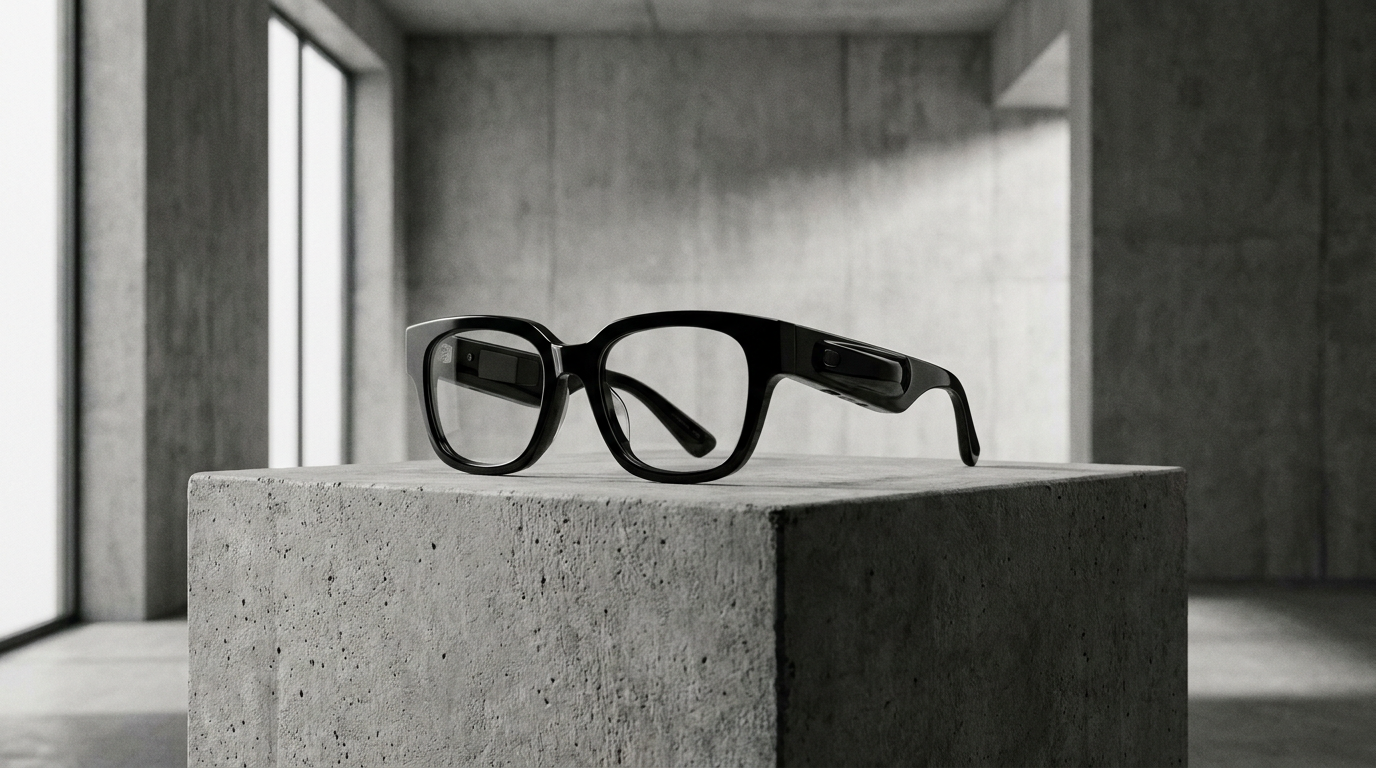
What is established is the system architecture. Warby Parker is handling frame design, ergonomics, materials, and retail optical integration, while Google provides the underlying Android XR software stack and multimodal Gemini AI layer. The hardware is designed to prioritize all-day weight and silhouette over heavy mixed-reality immersion, targeting seamless daily wear rather than clunky passthrough computing.
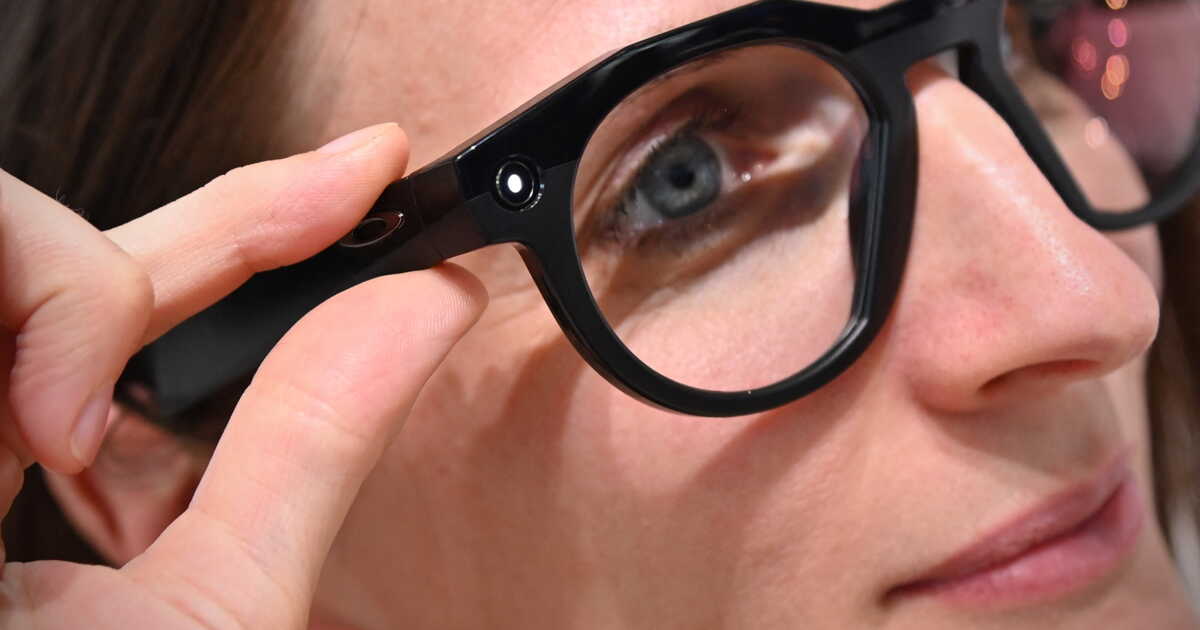
By withholding premature silicon claims and focusing on a concrete delivery timeline, Warby Parker avoids the trap of overpromising battery life or waveguide transparency. The product strategy centers on shipping an everyday frame that looks indistinguishable from standard Warby acetate while tapping Android XR's context-aware intelligence, notifications, and audio-first capabilities.
This strategy creates immediate friction with existing market hardware. Take Solos and its AirGo Vision frames, which use modular GPT-powered audio and vision frames to court daily users. While Solos deserves credit for pushing lightweight AI integration into consumer frames, it lacks the retail clout, aesthetic recognition, and massive prescription infrastructure that Warby Parker commands off the shelf.
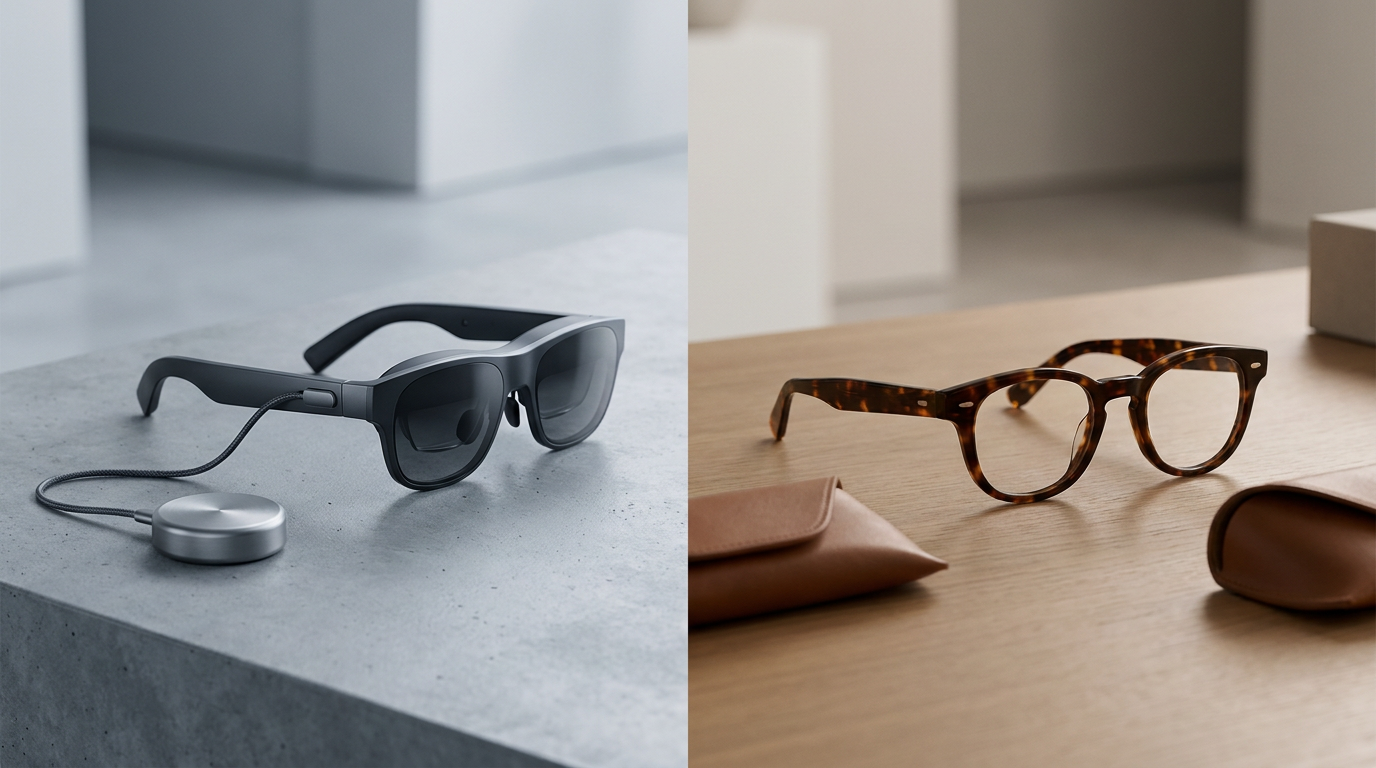
At the display extreme sits the ASUS AirVision M1, a pair of tethered micro-OLED glasses built exclusively to act as a personal virtual monitor. ASUS delivers crisp virtual real estate for productivity, but the hardware looks like a peripheral, feels like a peripheral, and requires a tethered cable. Warby Parker is targeting an entirely different universe: untethered, socially invisible ambient assistance rather than a display slapped on your nose.
Meanwhile, players like Magic Leap remain quarantined in high-cost commercial corridors. The Magic Leap 2 is a masterpiece of enterprise mixed reality and dynamic dimming optics, but it costs thousands of dollars and weighs down the face with industrial bulk. Warby Parker's platform is the antithesis of the Magic Leap approach, trading complex enterprise spacial meshes for consumer-ready form factors that people will actually wear to dinner.
Warby Parker's entry marks the end of the prototype era for Android-based eyewear. The strength of this play lies entirely in retail execution: millions of existing prescription customers, hundreds of storefronts for fittings and adjustments, and Google's software backbone handling contextual AI. The weakness, however, is the calendar. A November 2026 pre-order date leaves a massive runway for Meta and other incumbents to solidify market dominance while consumers wait.
Over the next 12 months, track whether Warby Parker can keep developer interest warm around Android XR without concrete developer hardware in circulation. If Google delivers an operating system that is genuinely lightweight and battery-efficient, Warby Parker will possess the exact distribution engine required to normalize smart frames for normal people. If the software bloats, even the best-looking frames in retail will not save it.
Interactive guide: prices, displays, cameras, battery.
Share this story