Guides · Industry
Industry Brand Guide: Why the Design-First Disruptor Matters
A new challenger enters the smart eyewear arena with an austere, hardware-first design philosophy. Here is everything you need to know about Industry's quiet assault on bulky AR.

The smart glasses landscape is currently cleaved into two distinct camps: bulky micro-OLED visors pretending to be sunglasses, and camera-equipped frames built to feed social feeds. Emerging onto our radar is Industry, an ambitious hardware outfit stepping onto the face-worn computing stage with an entirely different set of priorities.
Their entry lands at a critical inflection point. For years, Silicon Valley treated human facial geometry as an afterthought, cramming thermal sinks and optical engines into frames that looked like novelty props. Industry enters the space operating on a much sharper thesis: if smart eyewear is not aesthetically invisible, it is practically dead on arrival.
Industry matters because they represent a shift away from feature-sheet bloat toward industrial pragmatism. While legacy tech conglomerates attempt to force complex visual computing onto our corneas, Industry is building for the real world—where weight, tactile balance, and social acceptance dictate daily adoption.
Emerging from high-end industrial design and consumer hardware labs, Industry was founded to solve the wearable disconnect. The brand is positioning itself not as an electronics vendor hawking personal displays, but as an eyewear maison that integrates ambient compute as a silent layer of utility.
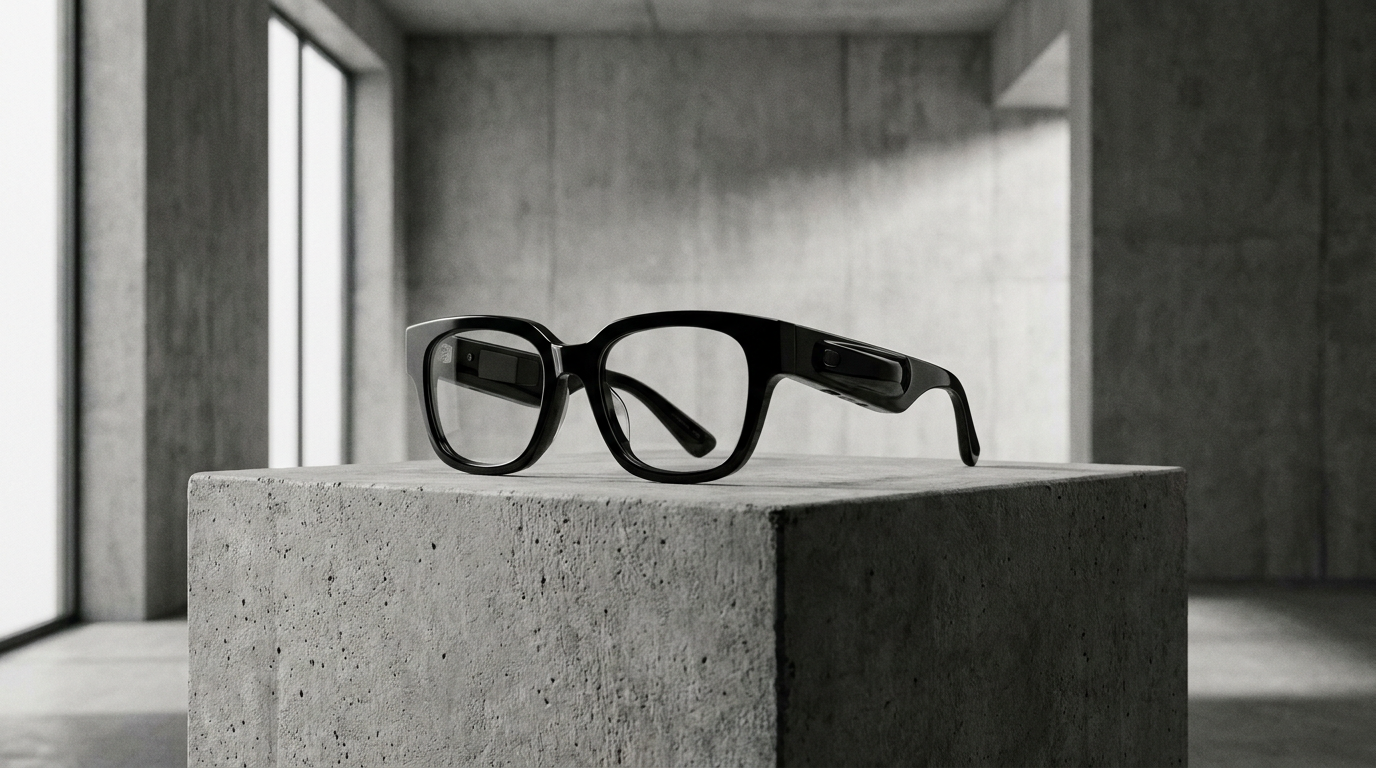
Historically, this category has been plagued by electrical engineers attempting to design luxury goods. Industry reverses that workflow entirely, anchoring their development cycle in eyewear architecture, weight distribution, and premium acetate finishes before a single circuit board is routed.
Their target demographic is clear: design-conscious professionals and minimalists who flatly reject the cyborg aesthetic. They are not chasing the tethered gaming demographic or enterprise warehouse technicians; they want the discerning urban commuter who wants intelligence on tap without wearing a billboard.
The timing could not be sharper. Edge computing and conversational AI have finally evolved past the gimmick stage, rendering optical HUDs unnecessary for baseline utility. By entering the market now, Industry sidesteps the display trap and catches the wave of contextual, ambient hardware.
On the hardware front, Industry has deliberately kept their public spec sheets tight to their chest, eschewing the noisy vaporware promises typical of AR startups. What is publicly verified through prototype demonstrations and supply-chain signals is a disciplined emphasis on display-less audio and sensor integration.
Rather than forcing waveguide optics into the lenses, their initial architecture relies on precision micro-acoustics and directional beamforming microphones. The core build isolates ambient sound, delivering clean audio prompts and conversational AI access without leaking voice traffic to the surrounding room.
Early hardware tear-downs and public briefings indicate that Industry is obsessing over mass distribution. By passing on heavy optical prisms, they keep frame weight well below the threshold where fatigue sets in, matching the heft and silhouette of standard optical frames.
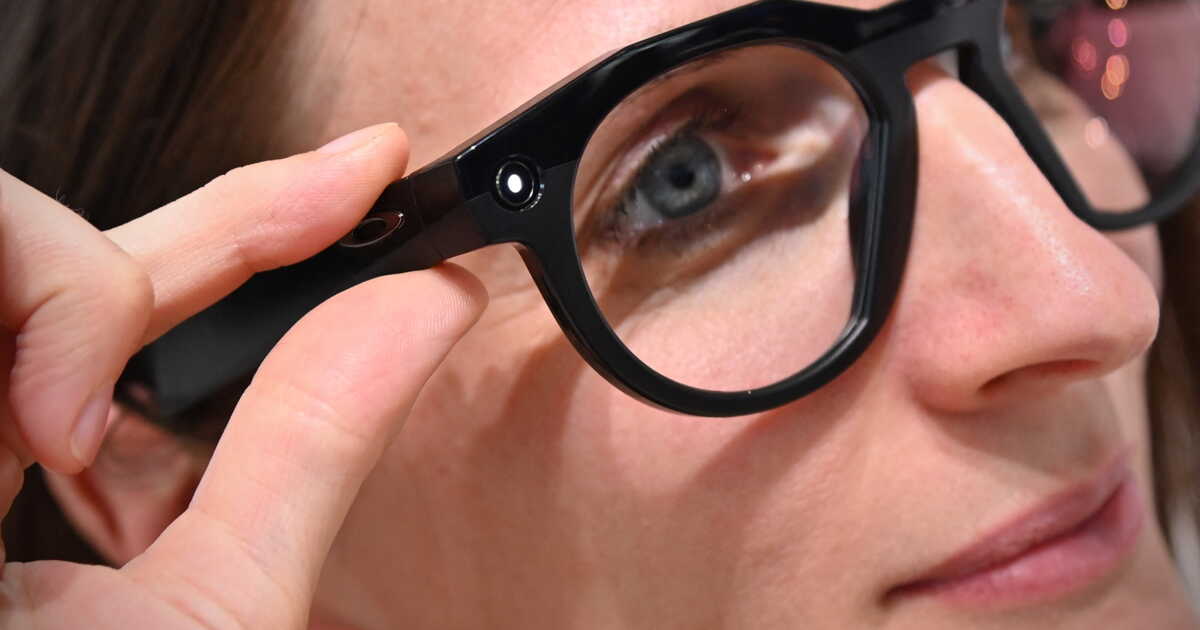
Tactile controls on Industry's chassis forgo garish capacitive pads or obvious plastic seams. Instead, the interaction architecture favors flush sensor nodes embedded directly within titanium-reinforced temples, providing physical confirmation without ruining the silhouette.
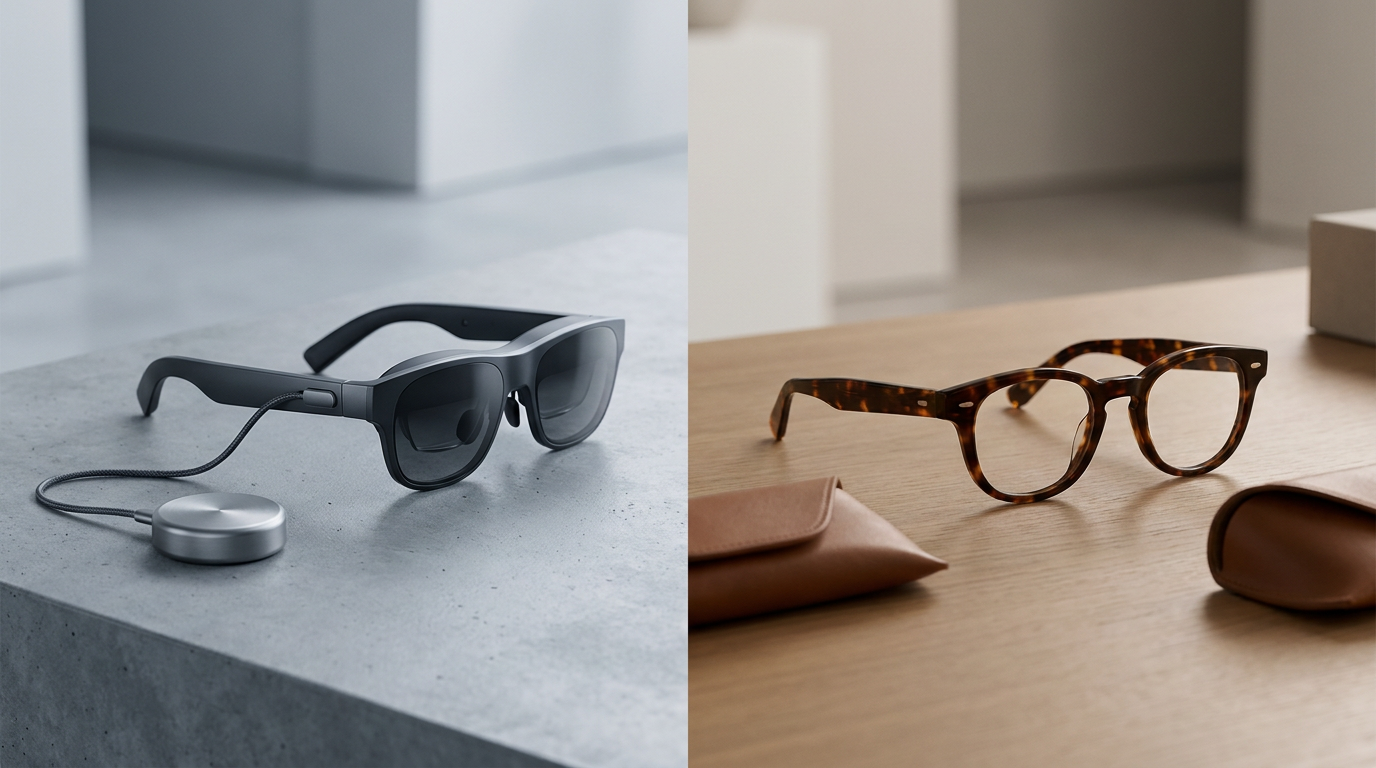
When stacked against the competitive field, Industry's posture becomes immediately distinct. Viture—with its Pro XR and Luma Pro lines—delivers astonishing spatial displays for portable cinemas and productivity, but those glasses demand external video feeds and heavy frames. Industry is not playing the virtual screen game; they are engineering an everyday object.
Meta remains the 800-pound gorilla via the Ray-Ban Meta collaboration, but Meta’s business model is inexorably bound to user data capture and overt camera hardware. Industry offers a palate cleanser for buyers who want smart utility without turning their face into a surveillance portal for an ad network. Meanwhile, Even Realities brings elegant monochrome HUDs with the G1, but Industry wagers that even minimalist displays introduce visual fatigue that voice-first ambient design avoids completely.
Smart Glasses Daily's verdict is cautiously bullish: Industry is building for the pragmatist. Their greatest competitive advantage is aesthetic legitimacy—these are frames you will happily wear even when the battery runs out at five in the afternoon, which is more than can be said for nine-tenths of the market.
The looming question mark is software velocity. Perfecting physical acetate and hinge balance is an artisan trade; building out a rock-solid, low-latency AI pipeline that matches Big Tech's cloud muscle is an entirely different operational beast. Over the next 12 months, watch for Industry's silicon and ecosystem partnerships to see if their brains can match their undisputed brawn.
Interactive guide: prices, displays, cameras, battery.
Share this story