Manufacturer News · Xreal
XREAL AURA Debuts as First Android XR Glasses at $1,099
Built with Google and Qualcomm, the tethered spatial glasses ship in November with transparent optics and a split-compute puck.
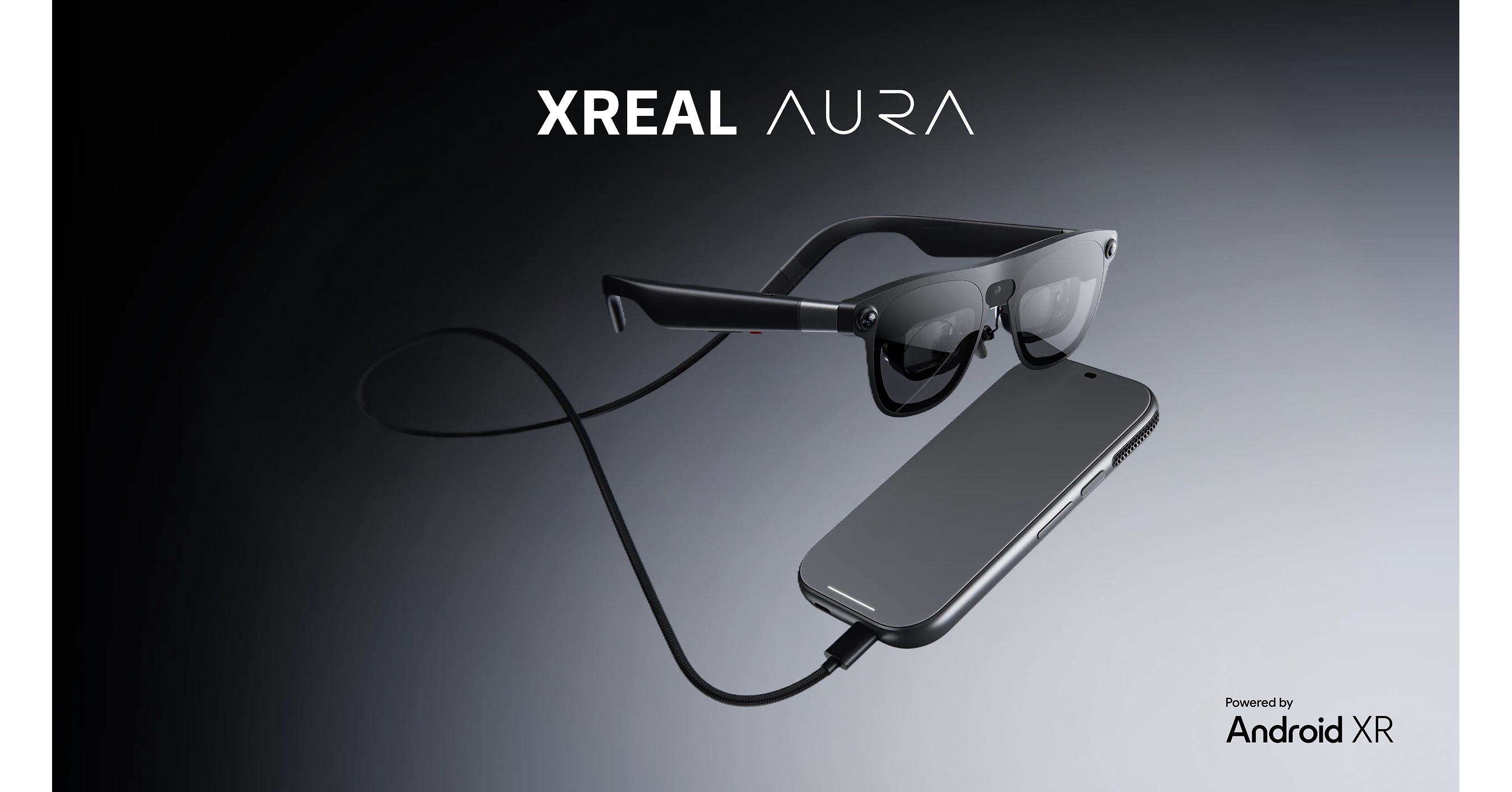
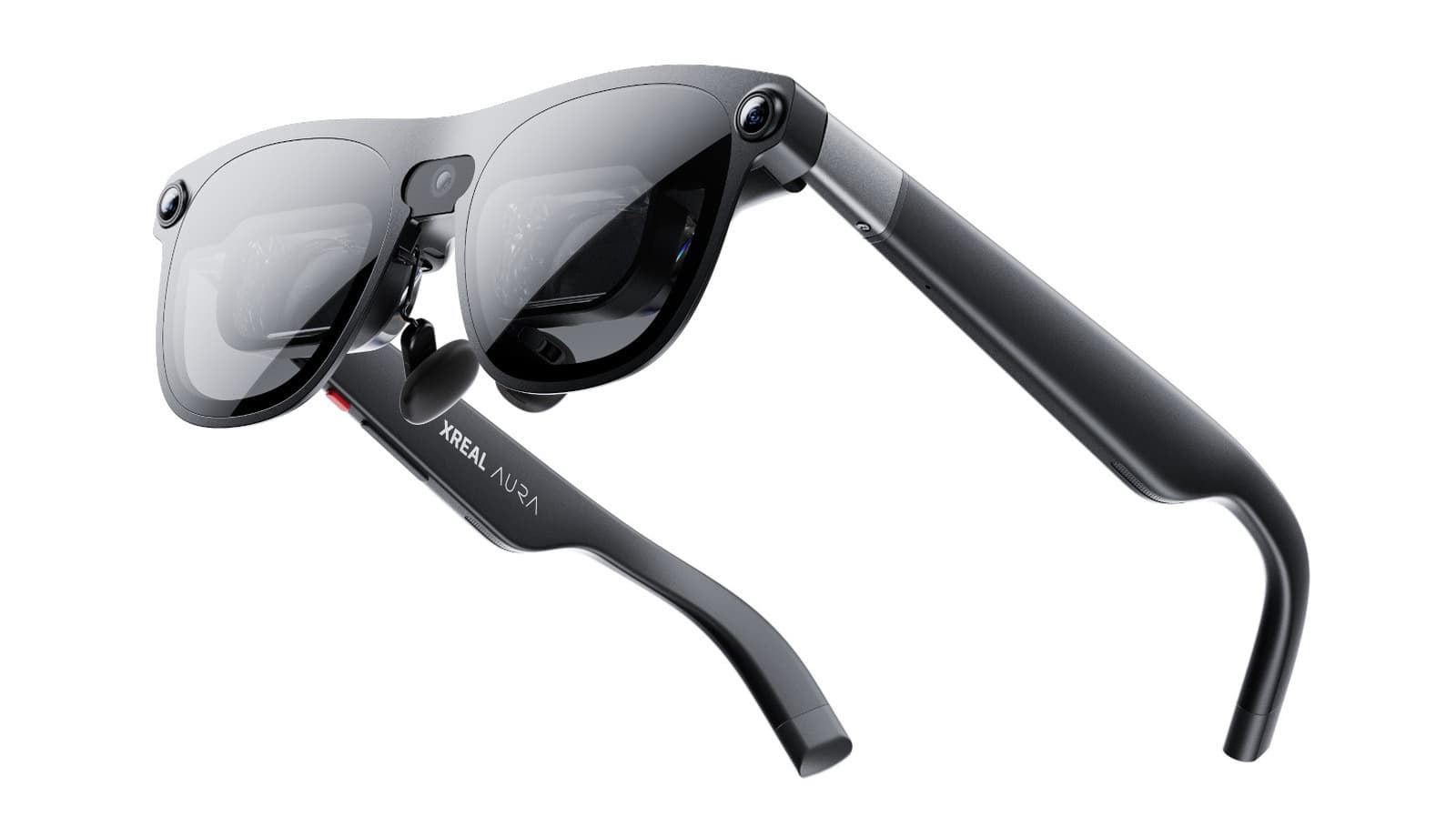
On October 29, 2026, XREAL officially unveiled the XREAL AURA, marking the retail debut of Google's Android XR platform in a pair of lightweight, optical see-through glasses. Introduced on stage at Google's Android Developer Summit, the AURA combines Google's spatial operating system and Gemini AI with Qualcomm's new Snapdragon Reality Elite Platform.
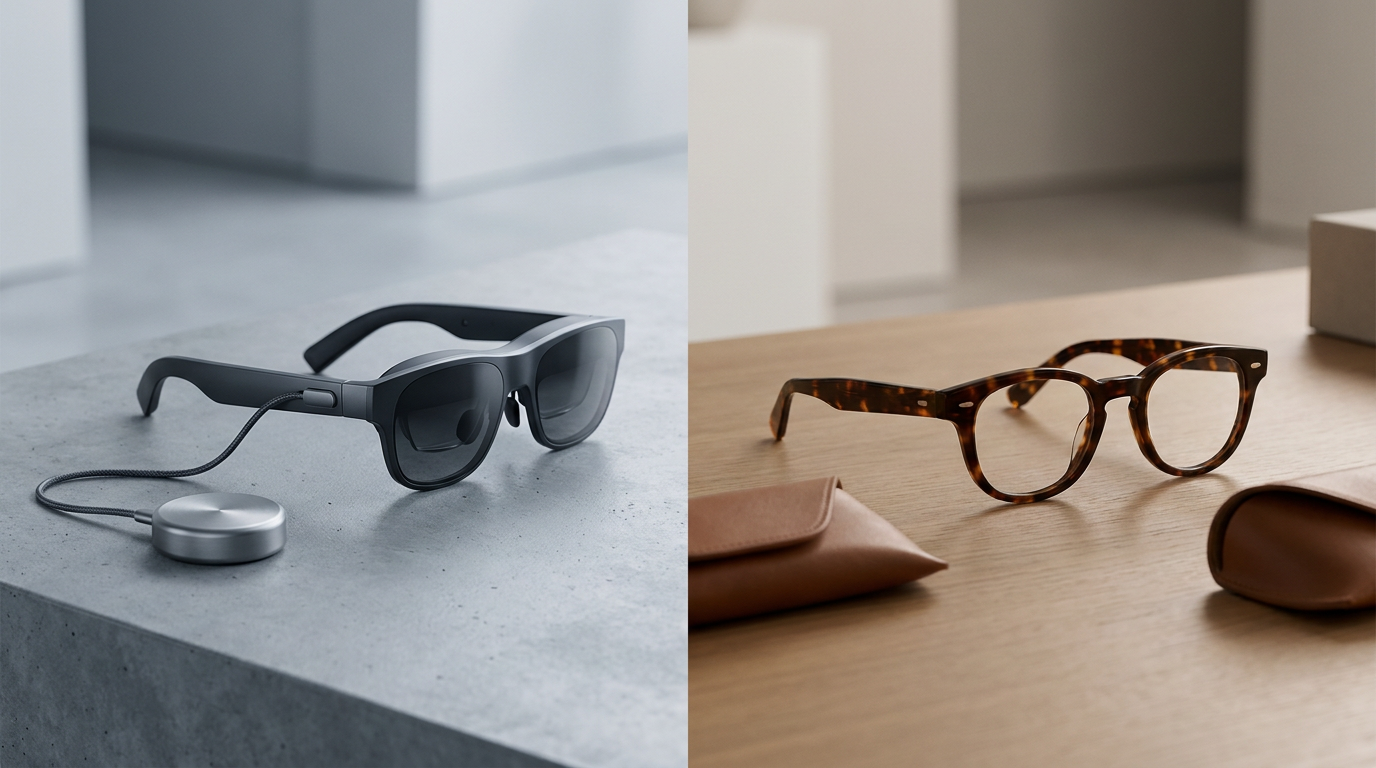
Unlike bulky passthrough VR headsets that occlude the user's eyes behind video cameras and opaque screens, the AURA relies on transparent waveguide optics. This approach allows users to view spatial windows and 3D digital elements overlaid directly onto their physical surroundings without isolating them from coworkers or their environment. To keep head-borne weight manageable, XREAL relies on a wired split-compute architecture: the primary processing chipset and battery live inside a dedicated pocket puck, keeping the glasses under 95 grams.
Order books opened immediately for buyers in the United States, Canada, Japan, and South Korea, with hardware scheduled to ship in mid-November. XREAL is launching the device with promotional introductory pricing: $1,099 for a base model equipped with 12GB of RAM and 256GB of onboard storage, and $1,299 for an upgraded tier offering 16GB of RAM and 512GB of storage.
According to PR Newswire, XREAL co-founder and CEO Chi Xu framed the launch as a bridge between high-end spatial computing and wearable ergonomics. 'This is a defining moment for XR. We built AURA for people who want the power of spatial computing without being removed from the world around them,' Xu said. 'With transparent lenses, a category-leading lightweight design, Gemini by your side, and access to the Android ecosystem from day-one, the promise of XR is more approachable than ever.'
How it compares: The AURA stakes out a very distinct middle ground in the wearable computing hierarchy. While devices like the Apple Vision Pro and Meta Quest 3 rely on heavy, fully self-contained enclosures that run upward of 500 grams, XREAL offloads that thermal and battery bulk down to a tethered puck. The result is an experience far lighter on the face than mixed reality goggles, while offering significantly more processing grunt, native app capability, and six-degrees-of-freedom tracking than standard media-viewer smart glasses like the older XREAL Air series or Rokid Max.
What this means: This launch represents the real test for Android XR. For years, lightweight smart glasses makers had to write their own clunky companion software shells, leaving developers to rebuild custom interfaces for proprietary SDKs like Nebula. By anchoring the AURA directly to Android XR and native Gemini assistance, Google and XREAL are finally offering an established mobile development pipeline that standard Android app makers can target without re-engineering their entire stack from scratch.
Our take: The split-compute puck remains a calculated trade-off. Running a physical wire down to your pocket is never anyone's ideal sci-fi fantasy, but physics has not budged: packing elite processing power and day-long thermal dissipation into sub-100-gram frames is still impossible without an off-board battery. If Android XR delivers a responsive, app-rich interface, early adopters and remote workers will happily tolerate the tether to get true spatial productivity on their face.
Interactive guide: prices, displays, cameras, battery.
Share this story