Manufacturer News · Xreal
Xreal Launches Aura AR Glasses With Android XR at a Pivotal Moment
Running Google's dedicated Android XR platform, the tethered Xreal Aura debuts at introductory pricing of $1,099 against a turbulent backdrop of studio cuts and market volatility.
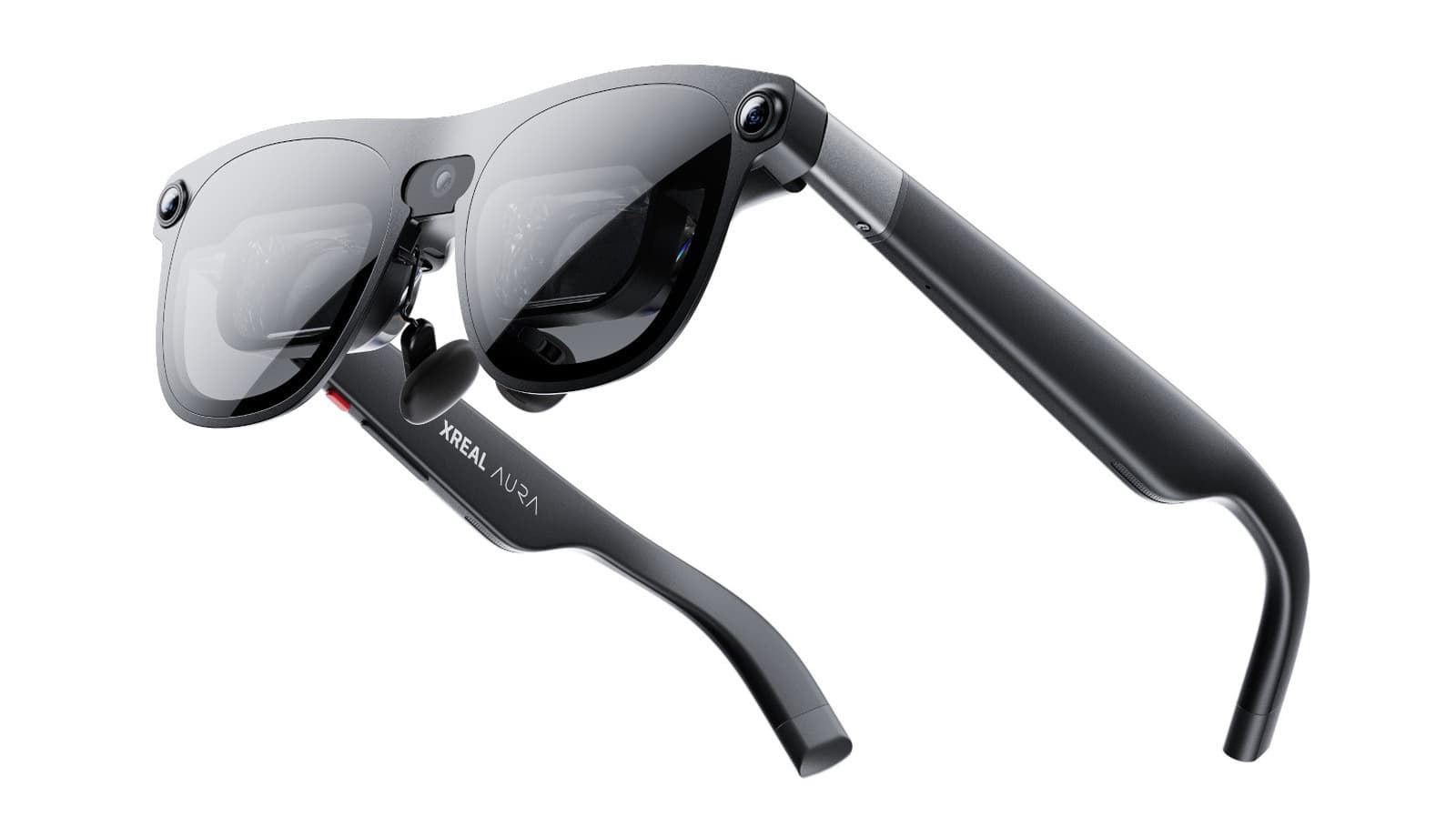
Announced on November 6, 2026, Xreal has officially brought its Android XR-powered Aura smart glasses to market. Developed in collaboration with Google and Qualcomm, the wearable represents the commercial vanguard for Google's revitalized spatial computing operating system. To drive early adoption, Xreal is running launch promotions offering discounts between $180 and $200 through December, pricing the base 12GB RAM and 256GB storage configuration at $1,099 (down from $1,279), while the upgraded 16GB and 512GB tier lands at $1,299 instead of its $1,499 retail price. Shipments kick off in mid-November across the United States, Canada, Japan, and South Korea.
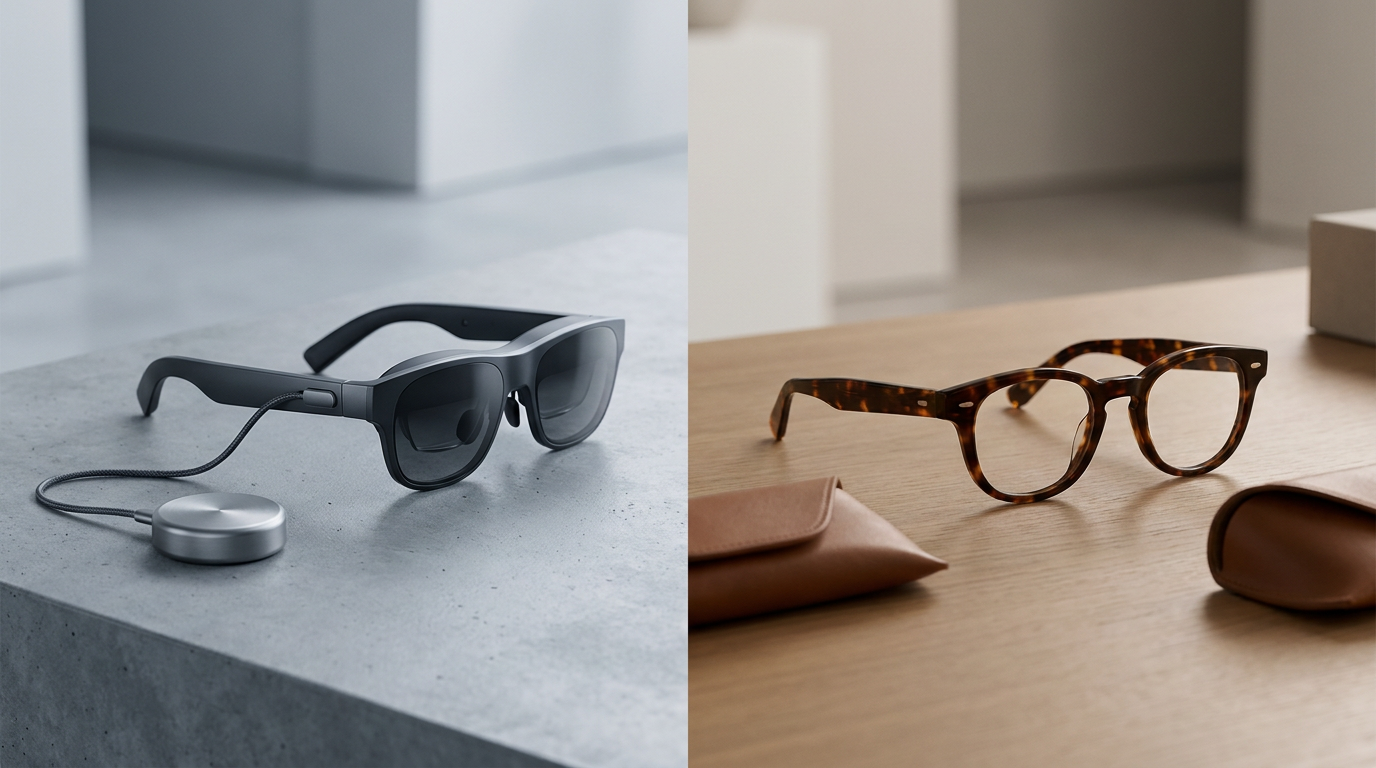
The hardware configuration balances optical clarity with computational power by offloading processing to a dedicated pocket computing puck. The glasses feature transparent optical displays, integrated spatial audio, and native Gemini AI functionality. According to reporting from AR Insider, software support at launch spans virtual desktop monitors, spatial media streaming, and an augmented reality adaptation of Fallout: Factions. Furthermore, native integration with the open-source Godot game engine provides independent developers with a direct pipeline to build spatial applications for Android XR without costly proprietary toolchains.
Yet Aura arrives during a turbulent stretch for both hardware ecosystems and the broader technology sector. As AR Insider highlights, broader tech shares experienced severe volatility this week, with the Nasdaq dropping 5.5 percent amid investor jitters surrounding artificial intelligence infrastructure spending and semiconductor earnings reported by Reuters. The extended reality sector is also grappling with contraction across content studios: veteran studio Schell Games cut 49 employees, representing roughly 40 percent of its staff, following a difficult year that has seen cutbacks across prominent VR developers as documented by UploadVR.
What this means for the wearable market: Xreal Aura is an essential test case for Google's Android XR strategy. Google previously struggled to establish a lasting footprint in headworn computing after the retrenchment of Google Glass and Daydream. By partnering with Xreal and Qualcomm, Google is attempting to create an open hardware standard capable of rivaling Apple's visionOS and Meta's Horizon OS. Utilizing an external computing puck is a deliberate engineering compromise, removing weight and thermal penalties from the frames to deliver a wearable silhouette that users can tolerate for hours of work or media consumption.
How it compares: At roughly $1,100 on sale, the Aura does not directly target casual buyers picking up entry-level audio frames or simple display mirror glasses like the Xreal Air line. Instead, it stakes out intermediate territory between affordable mobile accessories and high-end mixed reality headsets. For buyers, the real selling point will not be novelty games, but whether Android XR and Gemini can reliably replace multiple physical computer monitors and provide fast, contextual AI assistance on the go. If developers rally behind Android XR, Xreal could carve out a defensible niche before heavyweight competitors launch their own lightweight spatial glasses.
Interactive guide: prices, displays, cameras, battery.
Share this story