Analysis · Meta
The Screen Is Dead: Why Display-Less AI Glasses Are Winning the Face War
Waveguides and micro-displays are bleeding cash on terrible battery life and bulky optics. The real mainstream revolution belongs to screen-free frames that prioritize voice, design, and retail scale.
Silicon Valley's spatial computing obsession has spent a decade chasing floating green text and virtual monitors. While engineers burn billions trying to squeeze Micro-OLEDs and optical waveguides into acetate, consumers are voting with their wallets for frames that have no screen at all. The future of facial computing is not a heads-up display; it is an intelligent, invisible voice.
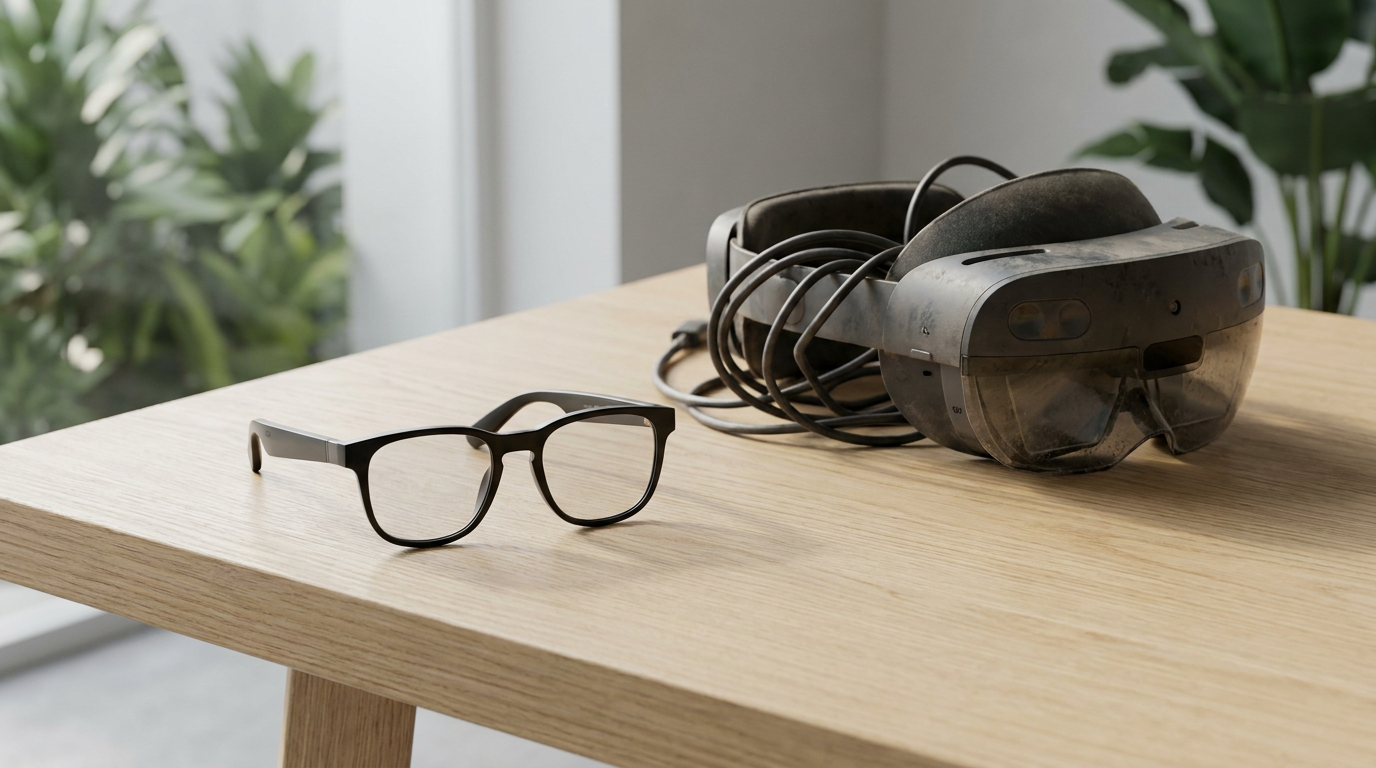
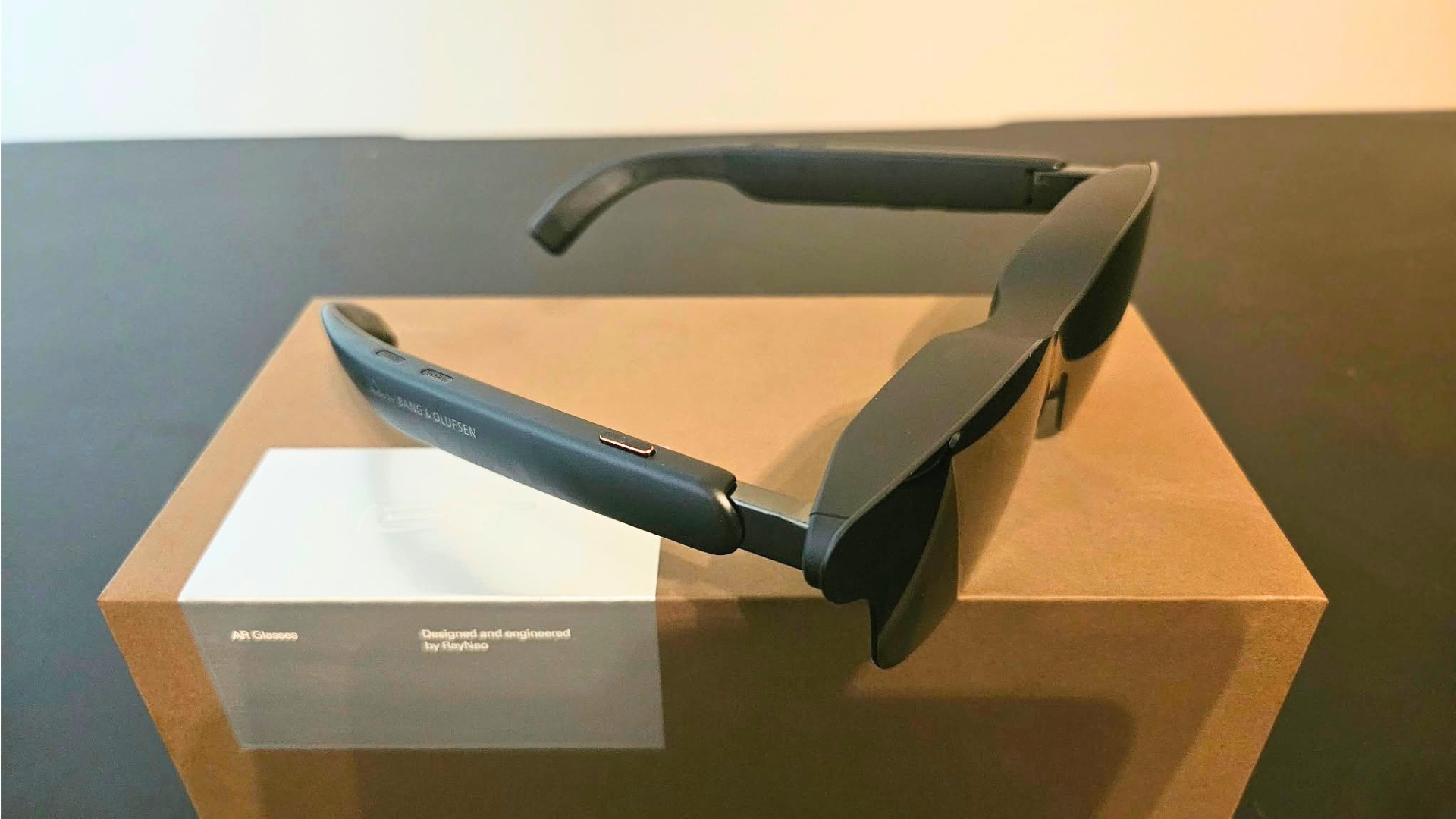
Look at the latest crop of display-heavy hardware to understand why visual augmented reality remains an expensive dead end for the general public. Xreal opened pre-orders for the Aura at a staggering $1,099, saddled with a tethered external compute brick and Android XR overhead. RayNeo's GT delivers sharp 1080p Micro-OLEDs, but it remains a corded 68-gram mobile monitor trapped in living rooms and airline seats. Neither device solves the fundamental problem of daily wearability.
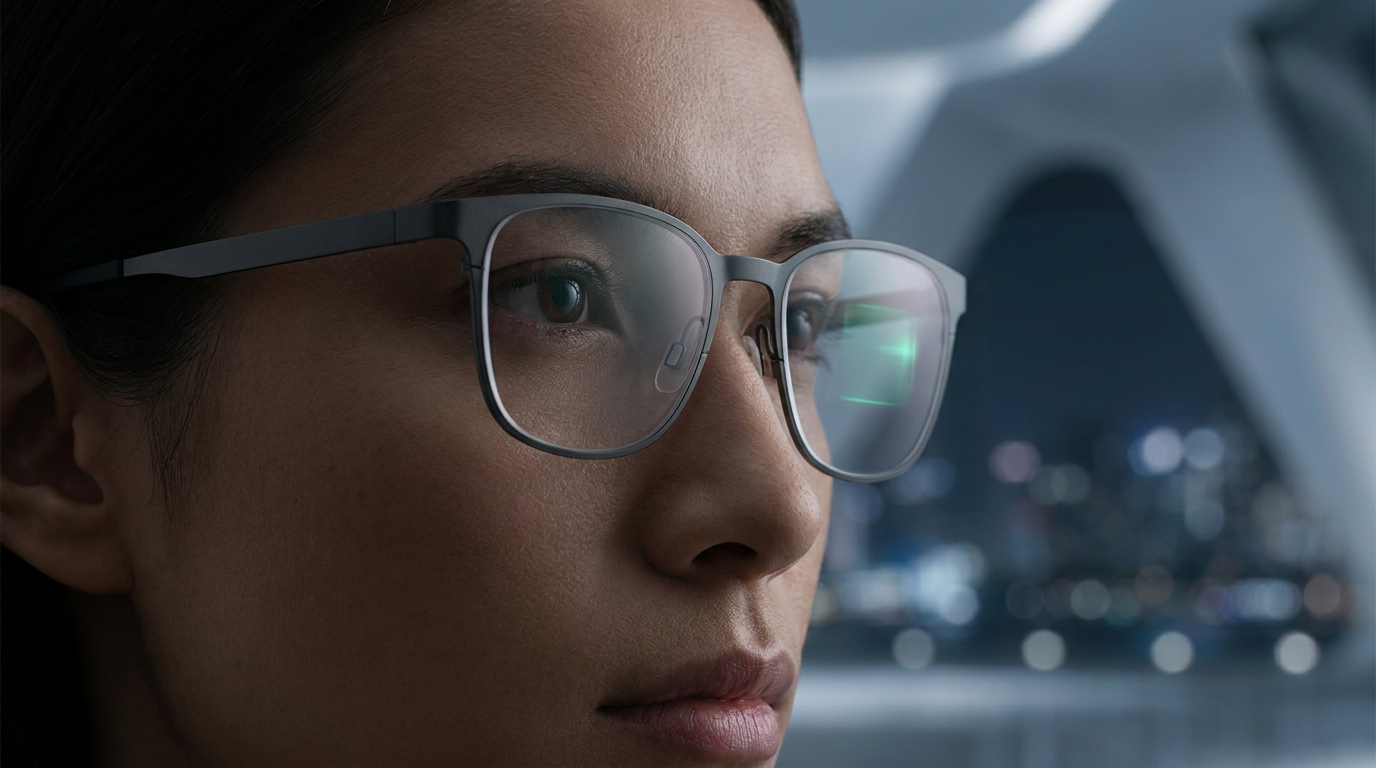
Even when display makers attempt lightweight daily designs, the optical compromises border on comical. Rokid just squeezed a dual Micro-LED HUD into its 49-gram frames, but users get an anemic 480 by 398 resolution across a narrow 23-degree field of view. You are effectively paying a massive hardware penalty to peer through a postage stamp of green pixels. That is not spatial computing; it is an overpriced distraction.
The physical realities of optical waveguides also sabotage the bedrock of the eyewear business: prescription manufacturing and durable materials. Even Realities had to charge 749 euros for its faux-tortoiseshell G2 because standard acetate warps under heat, ruining sub-millimeter waveguide alignment. When a frame cannot tolerate standard optical materials, it ceases to be consumer eyewear and becomes fragile lab equipment. Licensed opticians will not champion products that require clean-room precision to adjust.
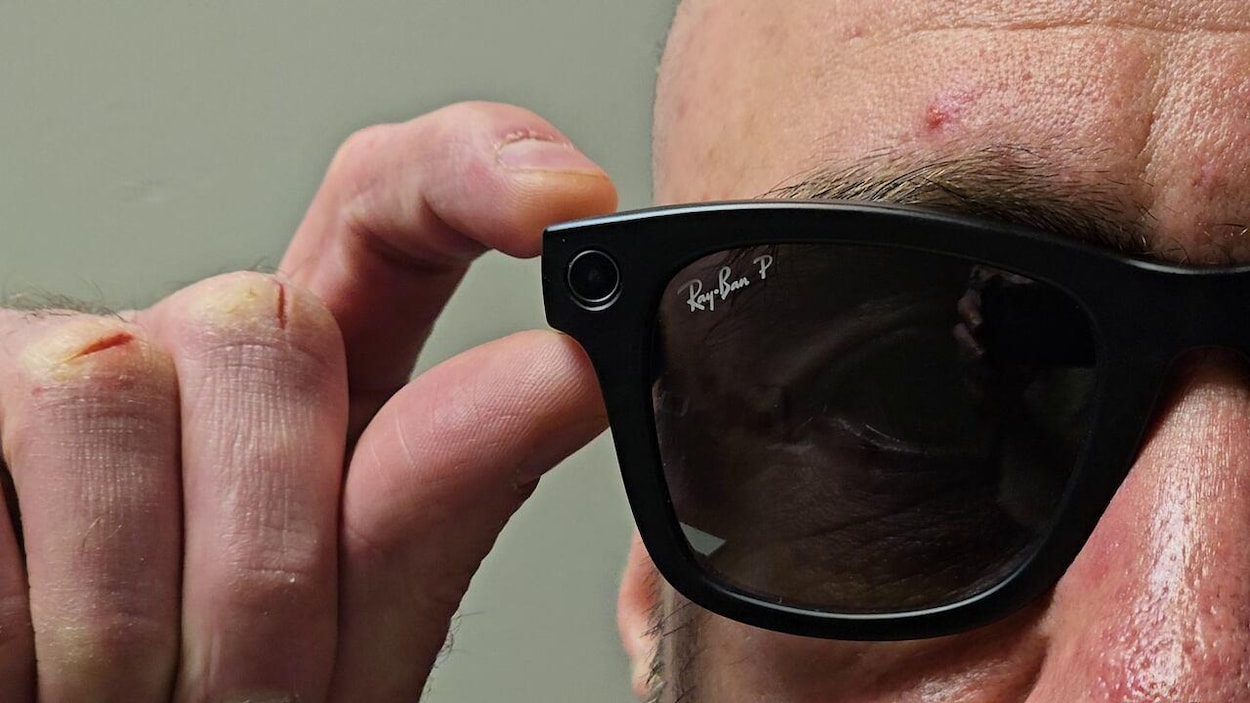
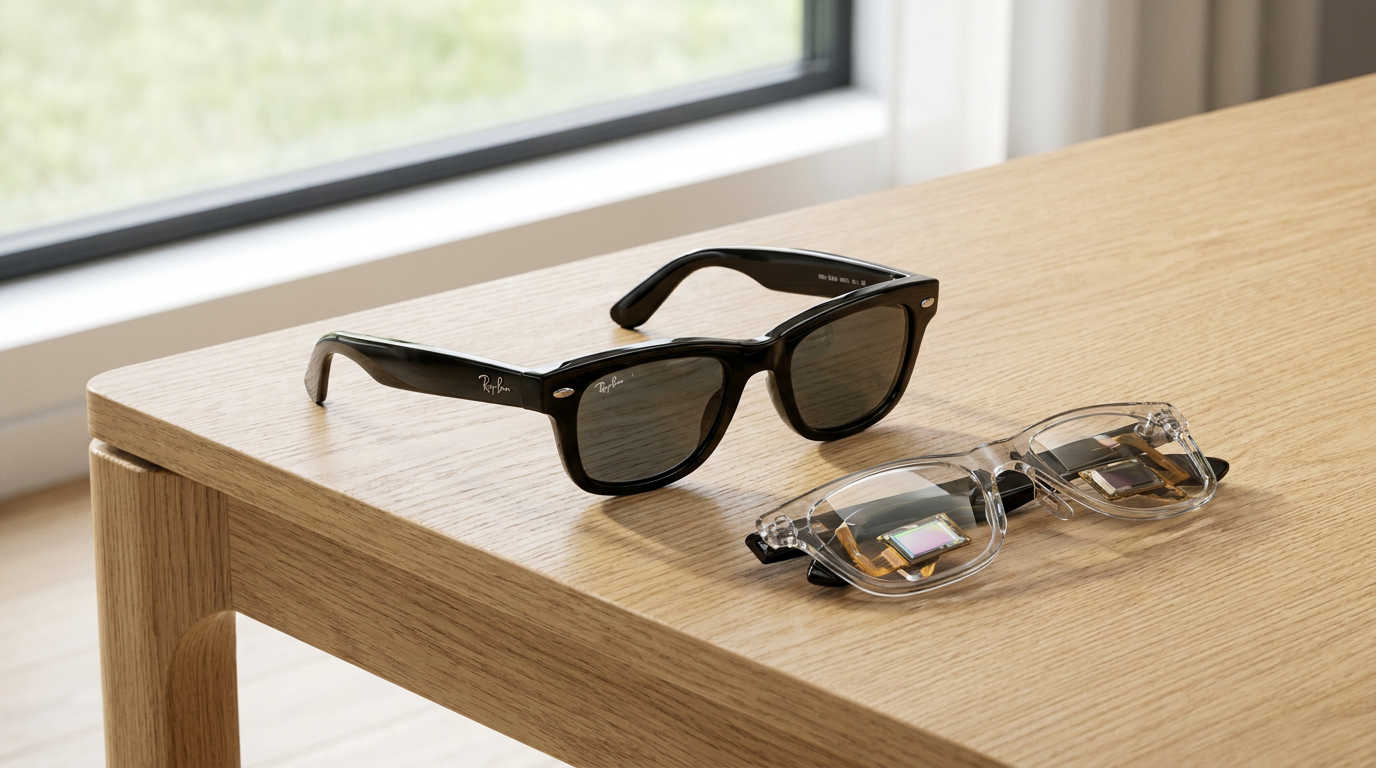
Enter the display-less reality check. Meta and EssilorLuxottica just pushed their Ray-Ban and Oakley smart frames into emerging markets like the Philippines, offering localized voice AI and all-day prescription utility in standard designer silhouettes. They did not achieve global scale by projecting floating menus into wearers' eyeballs. They achieved it by stripping away the glass optics entirely and letting voice, sensors, and open-ear audio do the heavy lifting.
Paris newcomer Sportconnect is executing the exact same playbook across Europe. By pairing Sony sensors and OpenAI models in camera frames retailing at just 249 euros, Sportconnect is proving that removing optical displays cuts price tags down to impulse-buy territory. More importantly, they are selling directly through 200 independent optical shops, meeting actual spectacle wearers where they already shop. It turns out regular eyewear shoppers want lightweight utility, not high-tech goggles.
The economic divergence here is impossible to ignore. Big Tech is currently confronting astronomical AI capital expenditures while trying to justify $1,000 spatial headsets to skeptical buyers. Display-less frames cut bill-of-materials costs dramatically, offload multimodal computation to cloud language models, and sidestep thermal throttling on the bridge of your nose. They allow hardware makers to sell products at sustainable margins without bankrupting the end consumer.
Critics love to point out that camera-equipped, display-less frames face a severe social reckoning. Venue bans are mounting, bystander paranoia is real, and Samsung is already sweating over public backlash as it prepares its upcoming Galaxy Glasses. But visual HUDs do not solve the surveillance dilemma either, because nearly every useful spatial AR system still requires outward-facing cameras to track the world. Displays simply add weight and cost to a device that still terrifies your local bartender.
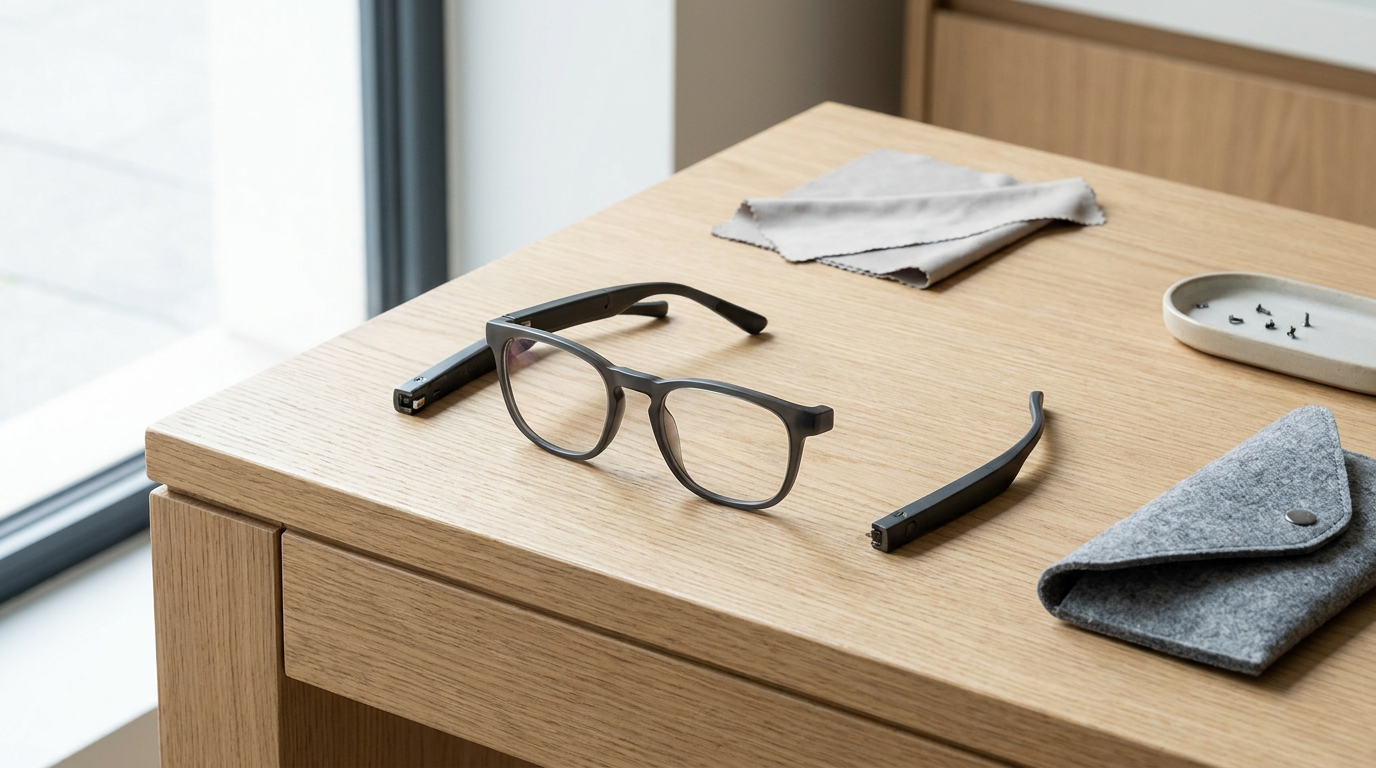
In fact, the pure audio and sensor path offers an even cleaner mass-market escape hatch. European optical titan Afflelou recently debuted the Magic Connect 2, bypassing cameras and screens completely in favor of snap-on Bluetooth temples that fit ordinary prescription frames. If regulatory scrutiny or cultural pushback forces cameras out of sensitive public spaces, audio-first AI remains entirely untainted by public suspicion. Modular audio specs prove that contextual assistance does not require turning wearers into roving recording rigs.
We need to dismantle the persistent myth that smart eyewear requires a visual interface to be transformative. Conversational AI models and localized assistants have rendered floating text redundant for quick, context-dependent tasks. You do not need a floating notification bubble to tell you your flight is boarding when low-latency directional speakers can whisper it into your ear. Audio is faster, less distracting, and infinitely more discreet than squinting at low-resolution text overlays.
Contextual audio, ambient cameras, and rapid voice synthesis deliver 90 percent of ambient computing's promise without any of the optical baggage. They allow frames to weigh 35 grams instead of 95 grams, survive a full day on modest battery cells, and fit inside iconic shapes like the Ray-Ban Wayfarer or Oakley sports wraps. Wearers do not want a desktop monitor strapped to their eyebrows; they want frictionless digital assistance that respects their personal style.
The mass-market smart glasses war will not be won by the company with the highest nit count or the widest field of view. It will be won by the frame that ordinary people forget they are wearing after eight continuous hours. By ditching the display, AI glasses finally solved the only spec sheet that matters: human vanity and everyday comfort. The screen is dead; long live the smart frame.
Interactive guide: prices, displays, cameras, battery.
Share this story