Analysis · Even Realities
The Invisible HUD: Why Display-Only Smart Glasses Are Winning the Face War
Camera-packed frames are drowning in privacy bans and social paranoia. Pioneers like Even Realities and Brilliant Labs prove that subtle micro-displays are the true future of wearable computing.
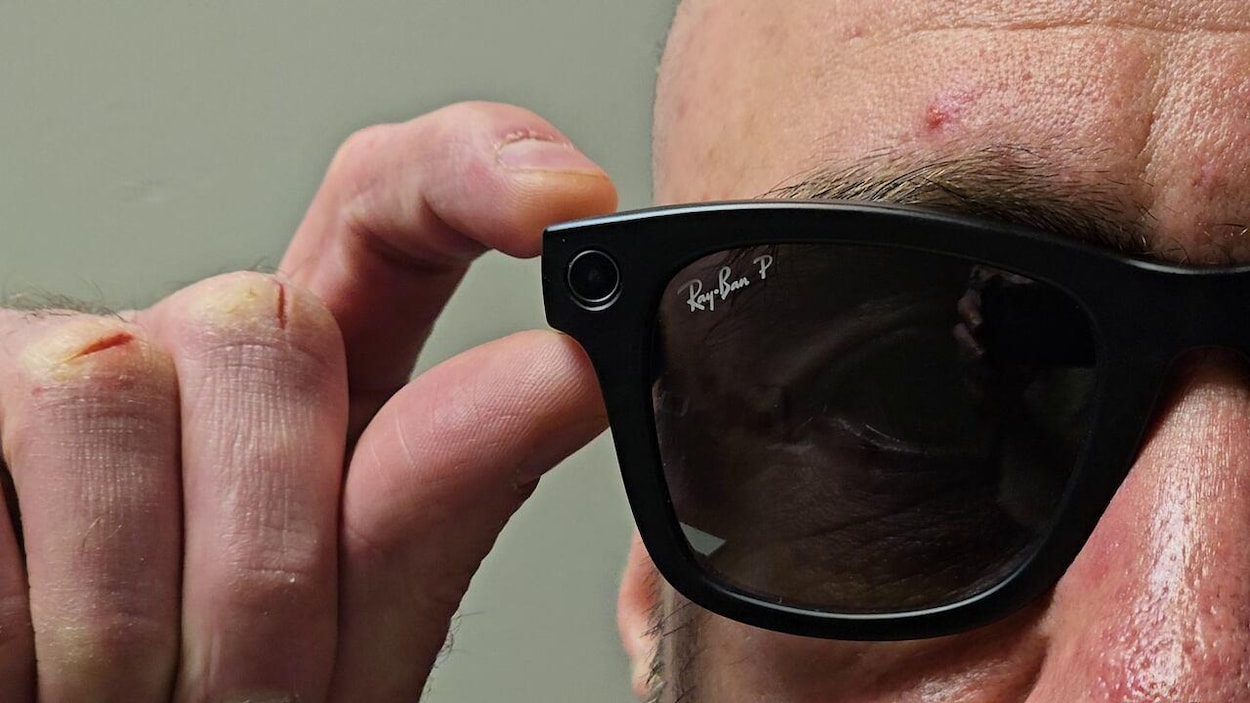
The consumer electronics industry fell headfirst into a camera trap. For the past three years, Silicon Valley convinced itself that turning consumers into roving surveillance nodes was the only viable path to smart eyewear adoption. Meta normalized the formula with Ray-Ban, European upstarts like Sportconnect are racing to ship 249-euro frames equipped with 20-megapixel Sony sensors, and Samsung is prepping Gentle Monster camera frames for a December rollout. Yet beneath the splashy marketing campaigns, that camera-first strategy is running straight into a wall of legal bans, consumer fatigue, and deep social friction.
The collateral damage of face-mounted cameras is mounting rapidly. In Florida, an employee took Walt Disney Parks to court under the Americans with Disabilities Act after the theme park banned her Meta smart glasses, arguing corporate security outweighed her visual accommodations. At the same time, Samsung and Google are struggling to address bystander anxiety ahead of their Android XR debut, contemplating desperate fixes like magnetic lens covers or shouting audio alerts to warn passersby. The general public simply does not want to be surreptitiously cataloged during casual conversations, coffee runs, or sensitive meetings.
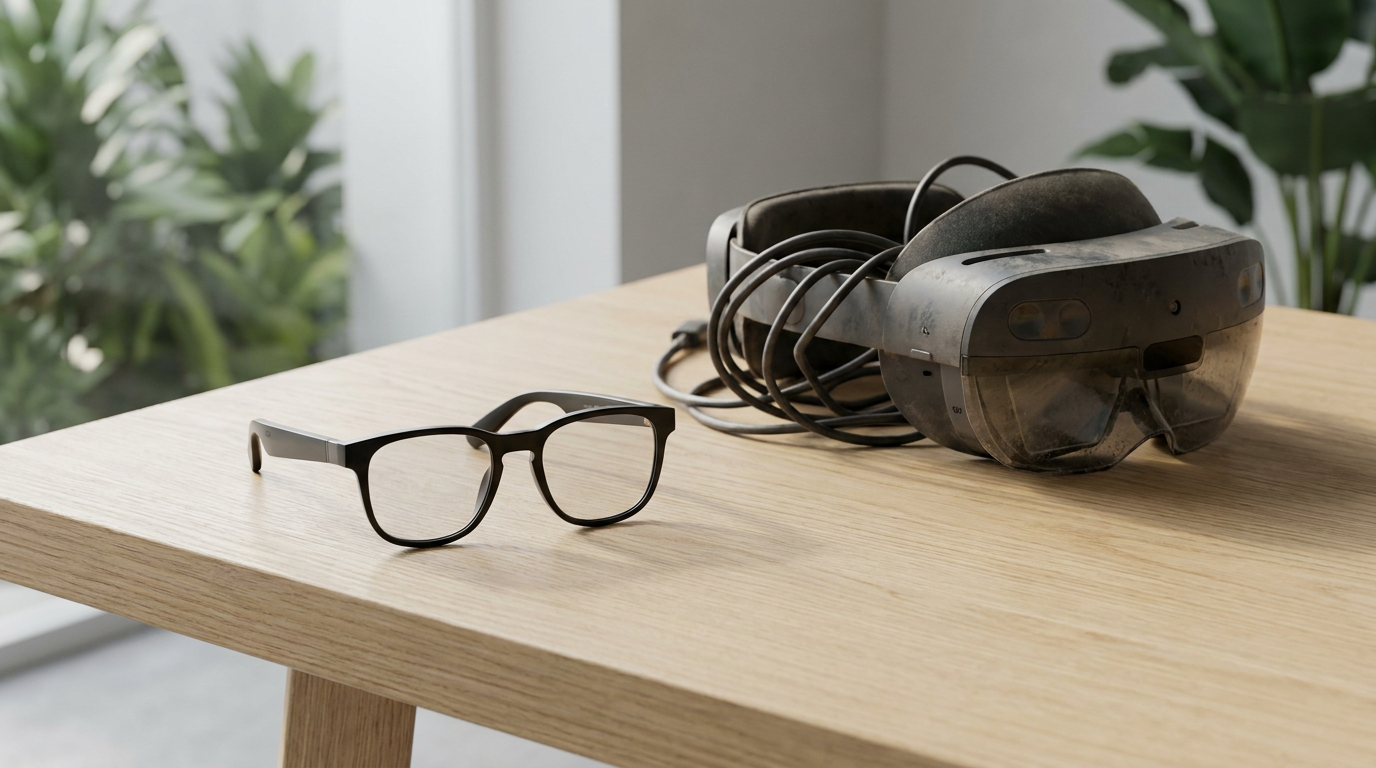
Against this backdrop of surveillance anxiety, a quiet counter-revolution has taken root. While legacy players chased action cameras strapped to cheekbones, boutique hardware makers like Even Realities and Brilliant Labs spotted the real prize: heads-up display minimalism. Eyewear does not need a camera pointed outward to broadcast your life to social networks. It needs a high-resolution, low-power display pointed inward to deliver silent intelligence directly to the wearer.
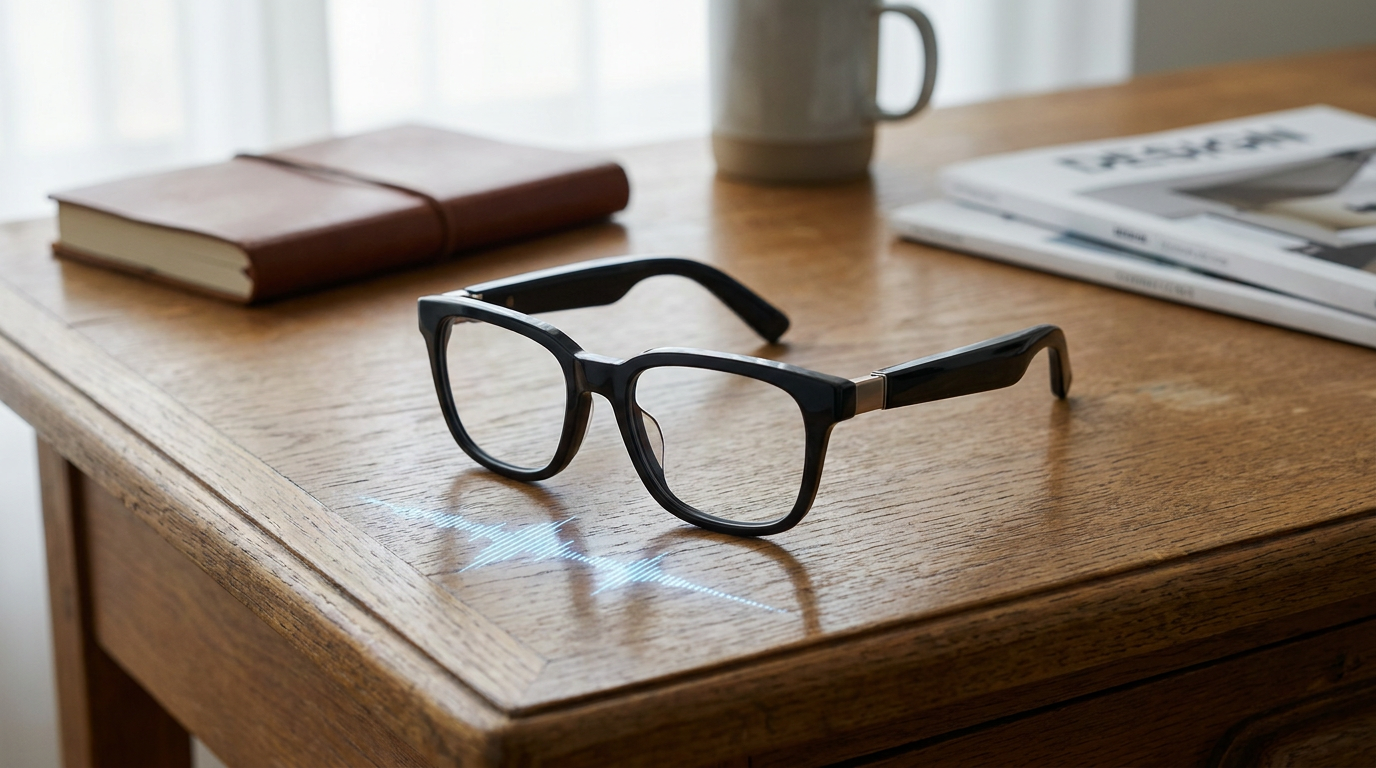
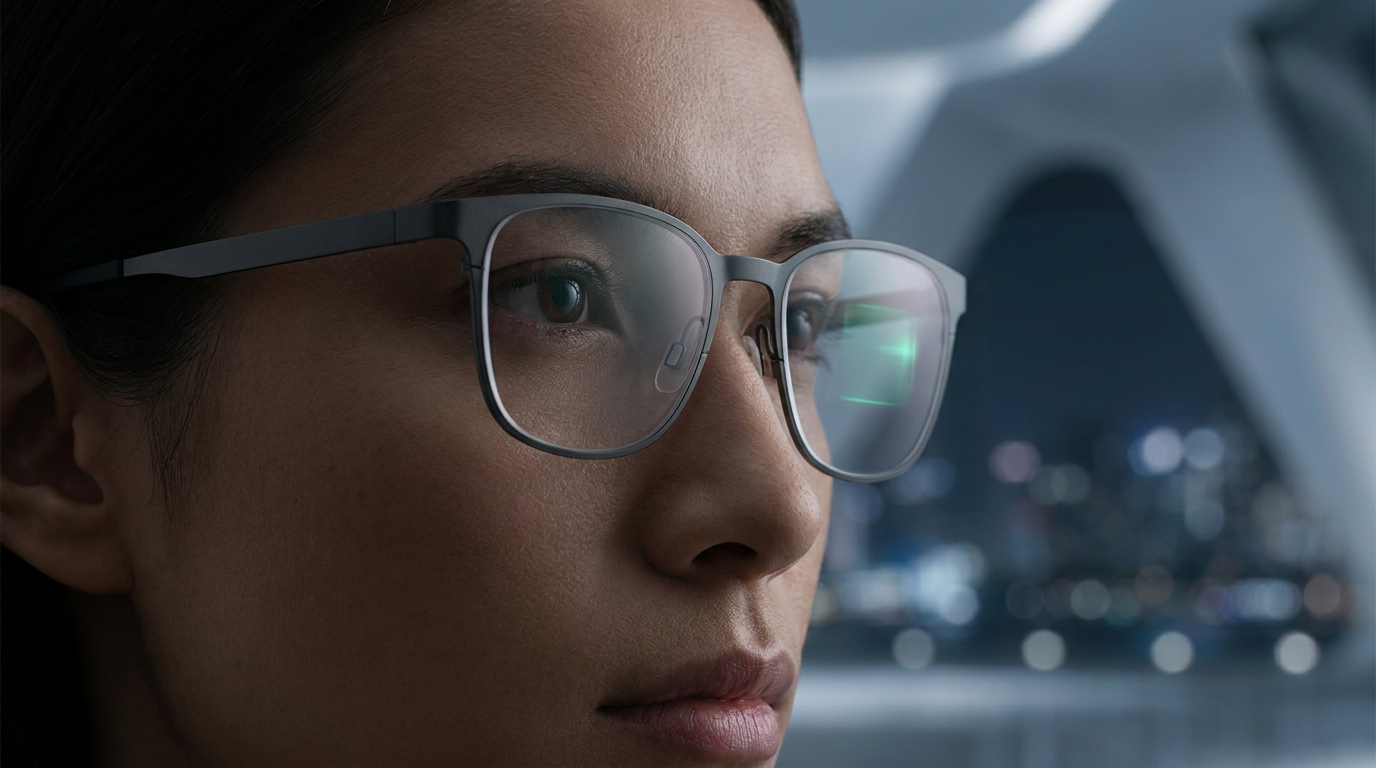
The Even G2 smart glasses represent the high-water mark of this philosophy. Shenzhen-based Even Realities deliberately stripped cameras from the equation, relying instead on high-precision green micro-LED waveguides that project text directly into the user's field of view. The company recently expanded the line with its 749-euro Tortoise Brown 2 edition, engineering a bespoke composite material to avoid the thermal warping common in traditional acetate that can throw off sub-millimeter optical waveguides. That level of mechanical obsession reveals a company thinking like an optician rather than a Silicon Valley growth hacker.
The brilliance of the display-only form factor lies in its zero-friction social contract. When someone enters a conference room wearing the Even G2 or a Brilliant Labs Frame, nobody tenses up or glances nervously around the table. There are no telltale recording LEDs to tape over, no privacy lawsuits brewing in the background, and no corporate compliance headaches. Wearers enjoy invisible teleprompting, turn-by-turn navigation, and ambient AI translations without broadcasting their presence or intimidating their peers.
Ditching cameras also solves the brutal physics problem that has crippled consumer wearables for a decade. Image sensors are thermal disasters, parasitic power hogs, and physical space monopolists. By eliminating camera modules, image signal processors, and high-bandwidth video pipes, display-first hardware can repurpose every milligram and milliamp toward lightweight balance and day-long battery endurance. Optical veterans like Vuzix have spent years amassing waveguide patents for this precise reason, betting on optical lightguides rather than heavy camera assemblies.
Contrast that restraint with the camera-centric hardware flooding the lower end of the market. French startup Sportconnect is betting big on traditional optical retail channels, pitching its camera-loaded lineup across hundreds of opticians in France, Belgium, and Canada. Yet budget camera frames inevitably run into the retention wall that EssilorLuxottica and Meta are already confronting. Consumers buy camera glasses as a vacation novelty, shoot a dozen shaky first-person clips, and then abandon the hardware in a drawer once the novelty wears off.
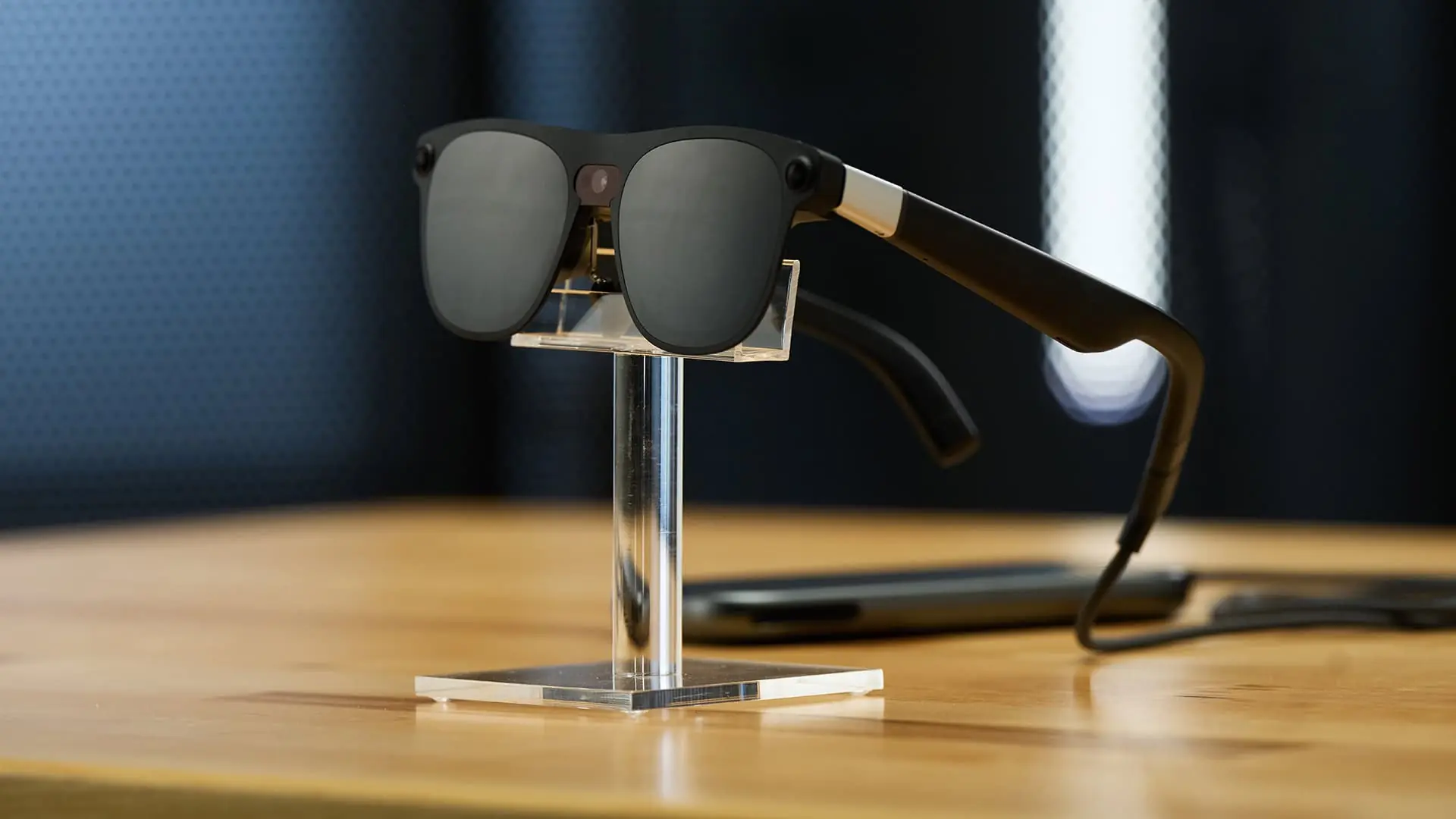
Hardware builders with real foresight are prioritizing interaction over recording. Chinese AR maker Rokid recently unveiled the Rokid Color, delivering a full-color micro-LED engine in a frame weighing a remarkable 55 grams. Rokid recognized that modern smart glasses cannot survive on clumsy temple-tapping or conspicuous voice commands in public spaces. By pairing its color display with gaze tracking and an integrated smart ring, Rokid built an intimate interface that respects the wearer and the surrounding environment.
This shift also highlights why spatial computing maximalism crashed so spectacularly. Apple wasted billions trying to persuade the world that the future of computing required a $3,500 laminated glass scuba mask. The Vision Pro flopped because normal humans refuse to sever their social presence behind isolating reverse pass-through screens. Yet reports suggesting Apple will retreat to a screenless, audio-only camera frame by 2027 show a company swinging wildly from one flawed extreme to another.
An audio-only AI frame is ultimately an incomplete vision, little more than an expensive pair of wireless earbuds glued to an acetate bridge. Audio is an intrusive, linear medium that cannot handle complex data without interrupting the user's auditory awareness. Having an AI voice whisper an upcoming calendar itinerary while you are conducting a job interview is disorienting and clumsy. A monochrome optical waveguide, by comparison, renders glanceable bullet points in complete, dignified silence.
The bifurcation of the smart eyewear market is now accelerating. Camera frames will survive in narrow operational niches like cycling, action sports, industrial inspection, and law enforcement where video capture is the core mandate. But for everyday lifestyle glasses designed to sit on a human bridge for sixteen waking hours, ambient cameras are dead weight. Wearers demand subtle utility, clean aesthetics, and freedom from social suspicion.
The silent comeback of display-only smart glasses is not a nostalgic retreat, but the maturation of the entire wearable category. Even Realities and Brilliant Labs understood what the tech giants ignored: the real value of artificial intelligence is what it shows you, not what it records of others. The future belongs to the invisible HUD, delivering effortless intelligence to the only person in the room who actually asked for it.
Interactive guide: prices, displays, cameras, battery.
Share this story