Analysis · Multi-brand
The Battle for Your Face: Why Always-On AI Is Forcing Smart Glasses to Grow Up
As Google, Samsung, and legacy optical giants rush to challenge Meta, the real fight is over ergonomics, thermals, and wearable restraint. The face computer is finally shedding its gimmicks.
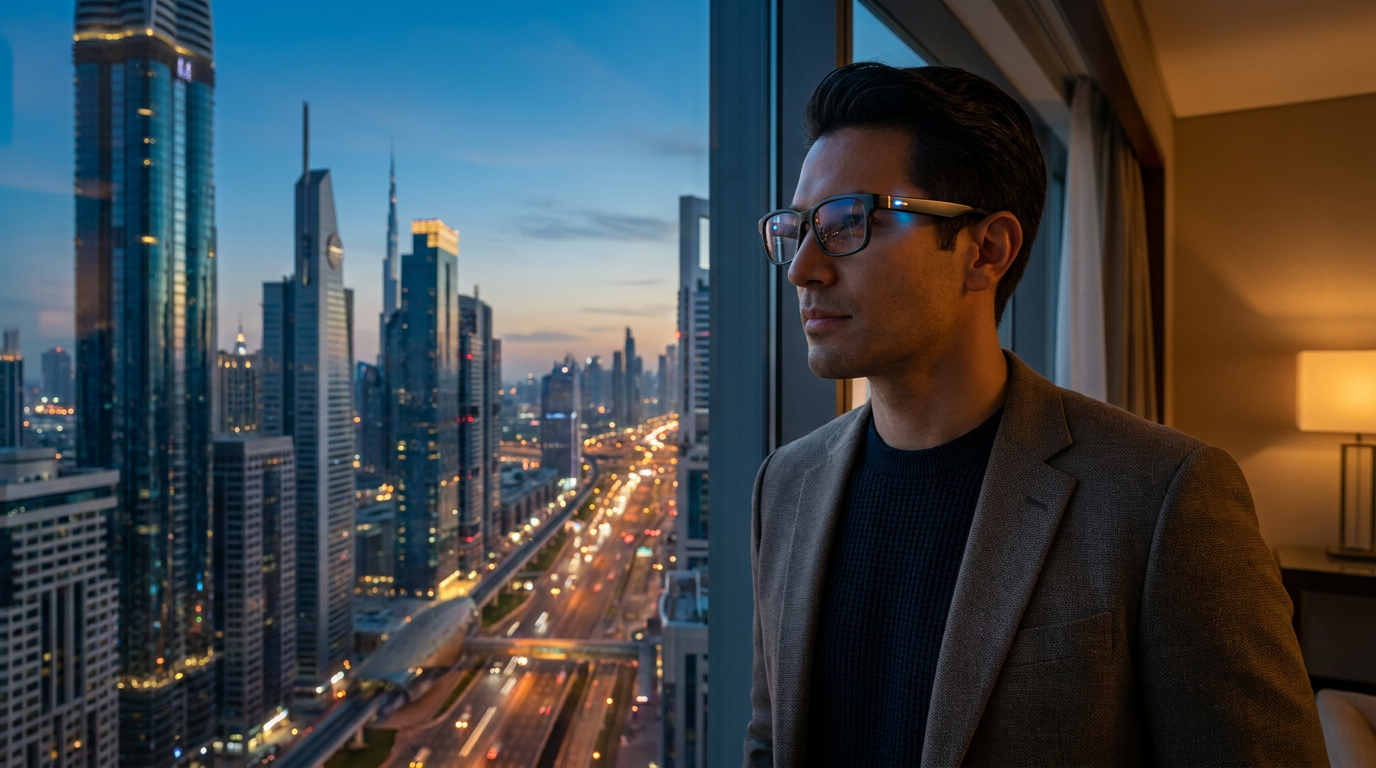
The screen-staring paradigm that defined personal computing for nearly two decades is finally hitting an ergonomic wall. Silicon Valley has realized that holding a glass slab in front of your chest is an absurdly inefficient way to interface with multimodal intelligence. The industry is rapidly shifting its center of gravity toward the bridge of your nose, where always-on AI assistants can perceive the world alongside you in real time.
Look no further than Google's calculated re-entry into the eyewear space. Teaming up with Samsung, Warby Parker, and Gentle Monster to roll out Gemini-powered frames starting at $395 represents a massive tactical shift. Rather than selling a developer novelty, Google is using Samsung's manufacturing muscle and legitimate optical houses to sell eyewear normal people actually want to wear. Starting December 10, buyers across the United States and South Korea can choose from thirty variants across nine distinct silhouettes.
This focus on optical legitimacy highlights the bitter lesson Google learned over a decade ago with Glass. By splitting design across Gentle Monster's avant-garde luxury frames and Warby Parker's accessible everyday acetate, Google avoids looking like a tech demo. More importantly, it secures the retail dispensary infrastructure required to fit prescription lenses correctly. An AI assistant is useless if the chassis carrying it cannot sit comfortably on your face for sixteen hours a day.
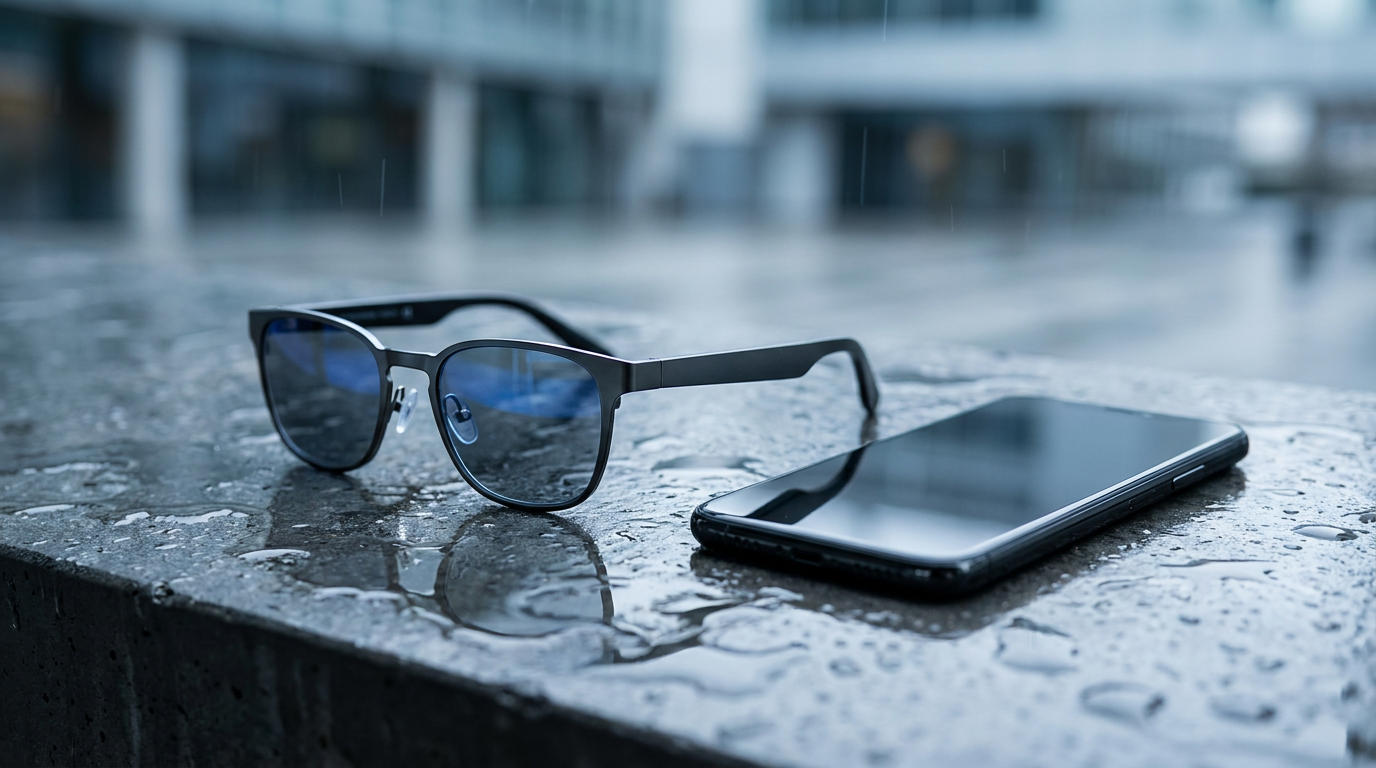
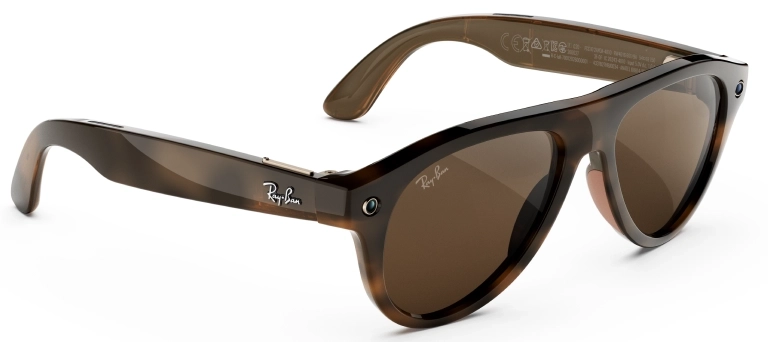
Meanwhile, early category leader Meta is discovering that cramming always-on compute into everyday acetate carries brutal thermal consequences. The social media giant recently scrambled to issue firmware version 130 and offer free hardware replacements for moisture-sensitive first-party frames like the Adventurer, Fury, Nova, and Capri. While Ray-Ban Meta models escaped the defect, the incident exposed the unforgiving physical margins of head-worn electronics. When moisture causes facial hardware to heat up uncomfortably, users will instantly pull the plug.
Thermal throttling and water resistance are not trivial firmware bugs; they are the fundamental physics problem of smart eyewear. Engineers are trying to fit high-density batteries, open-ear audio drivers, camera sensors, and wireless radios into temple arms narrower than a pencil. If your always-on assistant turns into a miniature heat sink against your skull on a humid morning, software intelligence ceases to matter. The threshold for what consumers will tolerate on their faces is infinitely lower than what they tolerate in their pockets.
This hardware friction explains why legacy optical conglomerates are mounting an aggressive counter-offensive. VSP Vision, the healthcare giant that insures tens of millions of eyes in the United States, is mobilizing manufacturing powerhouses Marchon and Marcolin for a connected eyewear push slated for 2027. Nicola Zotta, chief executive of Marchon, knows that Silicon Valley cannot scale face computers without optometrists. While tech companies control neural networks, traditional optical networks control the physical real estate inside independent vision practices.
Even Cupertino is methodically preparing its entrance into the ambient eyewear fray. Electronic equipment suppliers have let slip that high-precision welding and bonding tools are already being prepared for Apple smart glasses and next-generation smart earbuds. A projected 2027 arrival window indicates that Apple is biding its time, waiting for optical miniaturization and thermal management to mature before committing its operating systems to everyday eyewear.
Yet as tech giants race toward feature-dense multimodal systems, an ideological split is emerging around what a face computer should actually do. In one corner, spatial entertainment platforms like Xreal are leaning hard into visual immersion. With Blue Frog Immersive streaming dual 8K concerts in Dolby Atmos and the San Francisco Ballet deploying Xreal Aura glasses for Act I of The Nutcracker, display-first hardware is betting that consumers want wearable personal cinemas. These are high-bandwidth, deliberate viewing experiences designed for sitting down.
In the opposite corner sits a radical minimalist rebellion that rejects cameras, speakers, and bloated feature lists altogether. Hong Kong newcomer AROTI unveiled its R1 frame, weighing in at under 27 grams, which precisely matches standard non-connected prescription frames. By stripping away acoustic drivers and computer vision cameras, AROTI relies on a single-eye monochrome heads-up display dedicated purely to glanceable text. It is an explicit rejection of spatial bloat and wearable fatigue.
Similarly, Even Realities is demonstrating that understated utility wins in practical environments. Having captured an eleven percent market share with its G-series frames, the company is now releasing an enterprise SDK to give workplace developers direct access to microphone streams and motion sensors. By feeding contextual, hands-free notifications directly into peripheral vision without heavy displays or invasive cameras, Even Realities proves that AI eyewear can deliver genuine utility without terrifying the public.
The broader lesson of this market realignment is that the always-on assistant must adapt to human biology, not the other way around. Wearable AI cannot succeed as a phone strapped to your ears, constantly draining batteries and overheating against your temples. The winning interface must be ambient, quiet, and hyper-contextual, activating only when relevant and vanishing when ignored. Whether delivered through a micro-HUD or whispering through low-power open-ear transducers, the assistant must feel like an extension of your own senses.
The battle for your face is no longer about who can cram the most raw silicon into a piece of plastic. It will be won by the players who respect optical aesthetics, solve thermal thermodynamics, and balance AI intelligence with daily wearable restraint. Silicon Valley may provide the intelligence, but optical masters like Warby Parker, Gentle Monster, and Marchon will dictate whether consumers ever let that intelligence touch their skin.
Interactive guide: prices, displays, cameras, battery.
Share this story