Manufacturer News · RayNeo
RayNeo GT Max Brings 120Hz Micro-OLED and Onboard 3DoF to Amazon
RayNeo's GT Max display glasses combine native head tracking and Bang & Olufsen audio into a single-cable monitor setup for 489 euros.
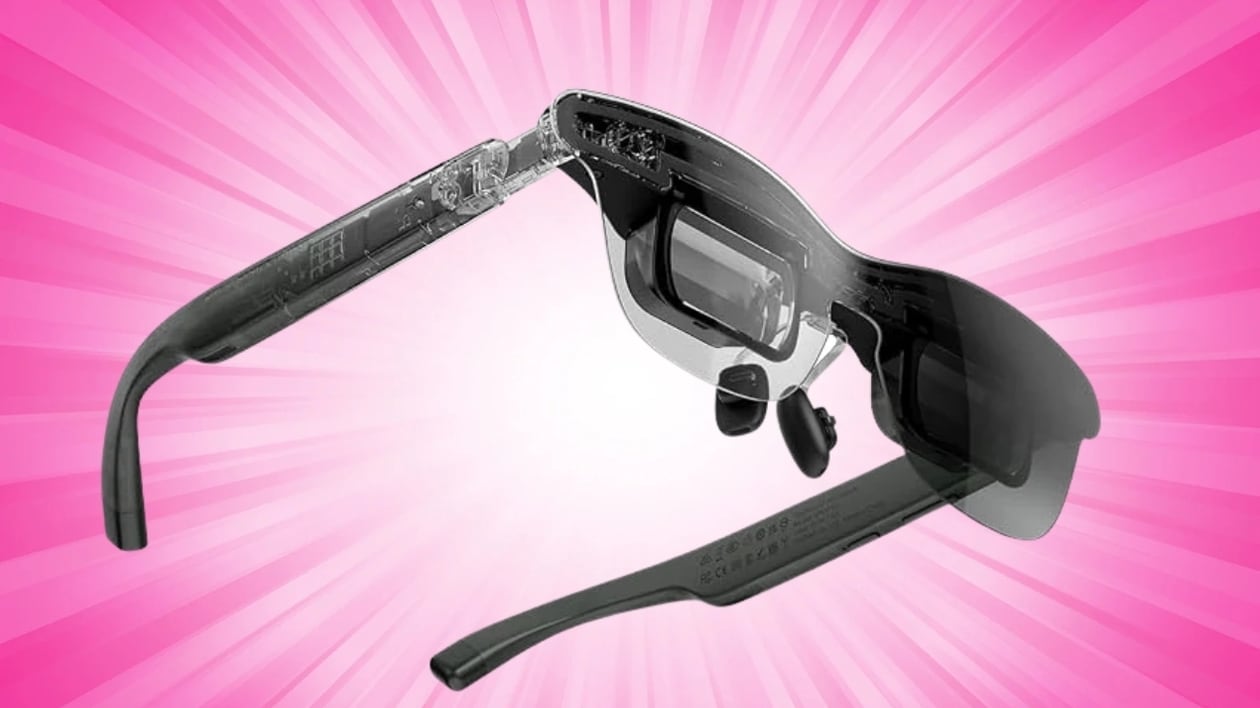
On November 8, 2026, retail listings spotlighted the RayNeo GT Max wearable display glasses hitting Amazon Europe at 489 euros. According to French outlet ouest-france.fr, the glasses have surged up sales rankings as an alternative to mainstream smart eyewear, offering users a portable, high-refresh-rate virtual display designed for on-the-go media consumption and mobile gaming.
Under the hood, the RayNeo GT Max features the proprietary Zone 360 chip, which delivers native three-degrees-of-freedom (3DoF) tracking directly on board. This onboard spatial calculation allows the device to offer three distinct visual modes: Steady, Pinned, and Follow. Crucially, as ouest-france.fr reports, switching between these viewing modes requires no external computing puck or intermediary processing hardware, streamlining the wearable display experience significantly compared to older XR glasses architectures.
Visual output is powered by Micro-OLED panels running at a smooth 120Hz refresh rate, ensuring fluid playback for fast-paced video and high-frame-rate console games. The physical connection relies on a single USB-C cable carrying DisplayPort Alternate Mode signals, making the frames directly compatible with modern smartphones, PCs, tablets, and handhelds such as the Valve Steam Deck or Nintendo Switch, as well as home consoles via compatible adapters. On the audio side, the glasses integrate a quad-speaker acoustic system co-tuned with Danish audio specialist Bang & Olufsen, providing head-tracked spatial audio without forcing users to wear separate earbuds.
What this means: Mainstream shopping coverage frequently compares video glasses like the RayNeo GT Max to camera-centric hardware like the Ray-Ban Meta collection, but the two product classes serve entirely distinct user requirements. Ray-Ban Meta glasses excel at capturing point-of-view media and delivering conversational AI audio, yet they lack any visual display engine. The RayNeo GT Max, by contrast, functions strictly as a high-density private cinema and portable monitor, targeting commuters, gamers, and remote workers who prioritize screen real estate over social media capture.
Our take: Built-in 3DoF tracking is rapidly becoming the baseline for viable XR display glasses. In past generations, users had to tether their frames to proprietary compute boxes or deal with jittery phone-side apps just to pin a virtual screen in space. By baking rotation tracking and multiple viewing modes directly into the silicon of the GT Max, RayNeo eliminates an unnecessary layer of hardware friction. At 489 euros, it directly challenges category rivals from XREAL and Rokid, proving that wearable monitors are winning over gamers by prioritizing plug-and-play simplicity.
Interactive guide: prices, displays, cameras, battery.
Share this story