Manufacturer News · Xreal
XREAL Teams with Google, Qualcomm for Project Aura XR Glasses
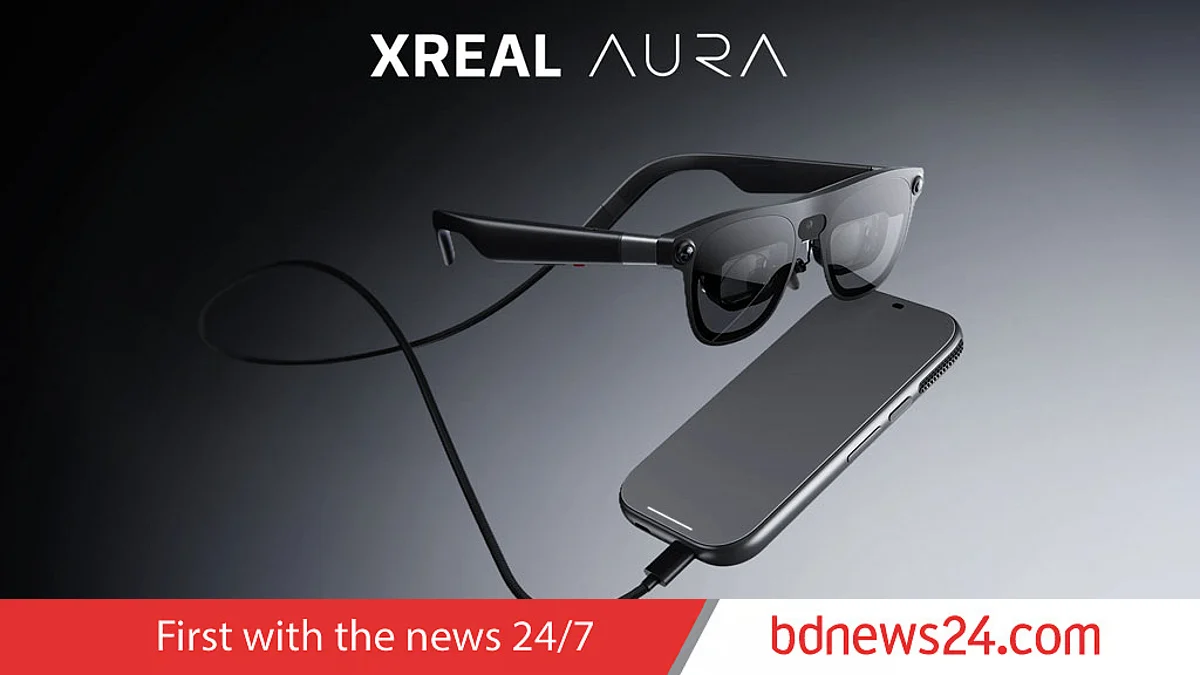
XREAL, Google, and Qualcomm joined forces at Google I/O 2026 to reveal Project Aura, a new set of wired XR glasses. The device integrates Android XR with Gemini AI, promising a powerful spatial computing experience upon its global 2026 launch.

At Google I/O 2026, XREAL, in collaboration with Google and Qualcomm Technologies, unveiled Project Aura, a new set of wired XR glasses. This partnership aims to deliver advanced Android XR experiences and Gemini-powered AI interactions, with a global launch slated for 2026.
Project Aura merges XREAL's expertise in lightweight XR hardware with Google's Android XR platform and Gemini AI capabilities, further enhanced by Qualcomm's Snapdragon processors. According to www.xreal.com, the combination offers a practical and accessible path to spatial computing for both everyday users and developers.
Live demonstrations at Google I/O showcased Project Aura's capabilities. As www.xreal.com reports, attendees experienced immersive Google Maps for spatial navigation, dynamic video content on massive or mini-screens, and YouTube 180/360-degree VR videos. The glasses feature OLED displays and a 70-degree field of view. Other demos included a Gemini-coded WebXR 3D painting app and multimodal AI integration when connected to a laptop, complete with auto-spatialization.
Our take: This trifecta of XREAL's hardware prowess, Google's software ecosystem, and Qualcomm's chip architecture signals a serious push towards mainstream XR. Project Aura's focus on practical, everyday use cases like spatial navigation and multitasking, rather than just niche applications, could be a critical differentiator. The deep integration of Gemini AI from day one positions these glasses as a strong contender in the evolving AI glasses landscape.
## What it means for the spatial display landscape
The collaboration behind Project Aura reflects a major strategic shift in spatial computing. While Silicon Valley giants have repeatedly stumbled over high price tags or overly ambitious standalone headsets, display-centric hardware makers have continued to gain ground by prioritizing practical visual utility.
As we reported on July 19, 2026 ("The Silent Conquest: How XREAL, RayNeo, and Rokid Are Dominating the AR Display War") and again on July 28, 2026 ("The Silent AR Screen Kings: Why RayNeo, XREAL, Rokid Are Winning Where Giants Fail"), dedicated hardware innovators have quietly seized momentum while tech giants delay their augmented reality timelines. Rather than forcing complex, heavy self-contained computers onto users' heads, tethered designs allow companies like XREAL to harness external compute power while keeping the headset sleek, comfortable, and optically refined.
By joining forces with Google and Qualcomm, XREAL bridges the gap between dedicated wearable optics and a mainstream operating system. Android XR gives developers a standardized target, solving the software fragmentation that previously limited early smart glasses. Combined with Gemini AI multimodal features and high-resolution OLED panels, the hardware aims to make wearable displays a genuine everyday companion rather than a temporary novelty.
## Update: From Google I/O preview to market arrival
Since this article was published in May 2026, the Project Aura initiative moved rapidly through public trade shows and straight onto retail shelves.
As we reported on September 28, 2026 ("Xreal Aura's IFA Debut: Android XR Gets Wearable Screens"), Xreal formally showcased the finished Aura smart glasses at IFA Berlin. The appearance marked a key milestone for Android XR, proving that Google's spatial platform could operate successfully on a lightweight wearable screen instead of remaining confined to bulky VR headsets or audio-only frames.
The competitive landscape around XREAL also heated up considerably over the summer. As we reported on August 15, 2026 ("Viture Pro 2 Arrives, Challenges XREAL in Entry-Level AR Market"), rival hardware makers moved to capture value-minded shoppers. Meanwhile, XREAL broadened its gaming footprint: as we reported on August 28, 2026 and October 16, 2026 ("ASUS Debuts ROG XBOX Ally X20, Bundles XREAL Gaming AR Glasses"), ASUS partnered with the brand to bundle custom ROG XREAL R1 Edition 20 glasses with its flagship handheld console.
XREAL also continued iterating its standalone display lineup. On October 15, 2026, the company announced the One Pro+ AR glasses, featuring brighter displays, improved wearability, and a camera-free design (as we reported on October 22, 2026). That approach aligned with broader consumer sentiment: as we reported on September 19, 2026 and November 1, 2026 ("Forget Meta's Cameras: RayNeo, XREAL, and Rokid Own the Display War"), shoppers have increasingly favored private, wearable spatial monitors over intrusive cameras.
The Aura project finally reached consumers at the end of October. In an unexpected retail move, Xreal and Google slashed launch-day prices by up to $200 and issued automatic refunds to early preorder backers (as we reported on October 31, 2026). The aggressive pricing strategy underscored Google and XREAL's joint commitment to driving Android XR adoption directly into the hands of everyday users.
Interactive guide: prices, displays, cameras, battery.
Share this story