Analysis · —
The Invisible Brain: Why Always-On AI Lives in Camera-Free Glasses
The smart eyewear industry is finally pivoting towards ubiquitous AI assistants, but a fundamental hurdle remains: cameras. The future demands discretion, not covert surveillance, and some brands are getting it right.
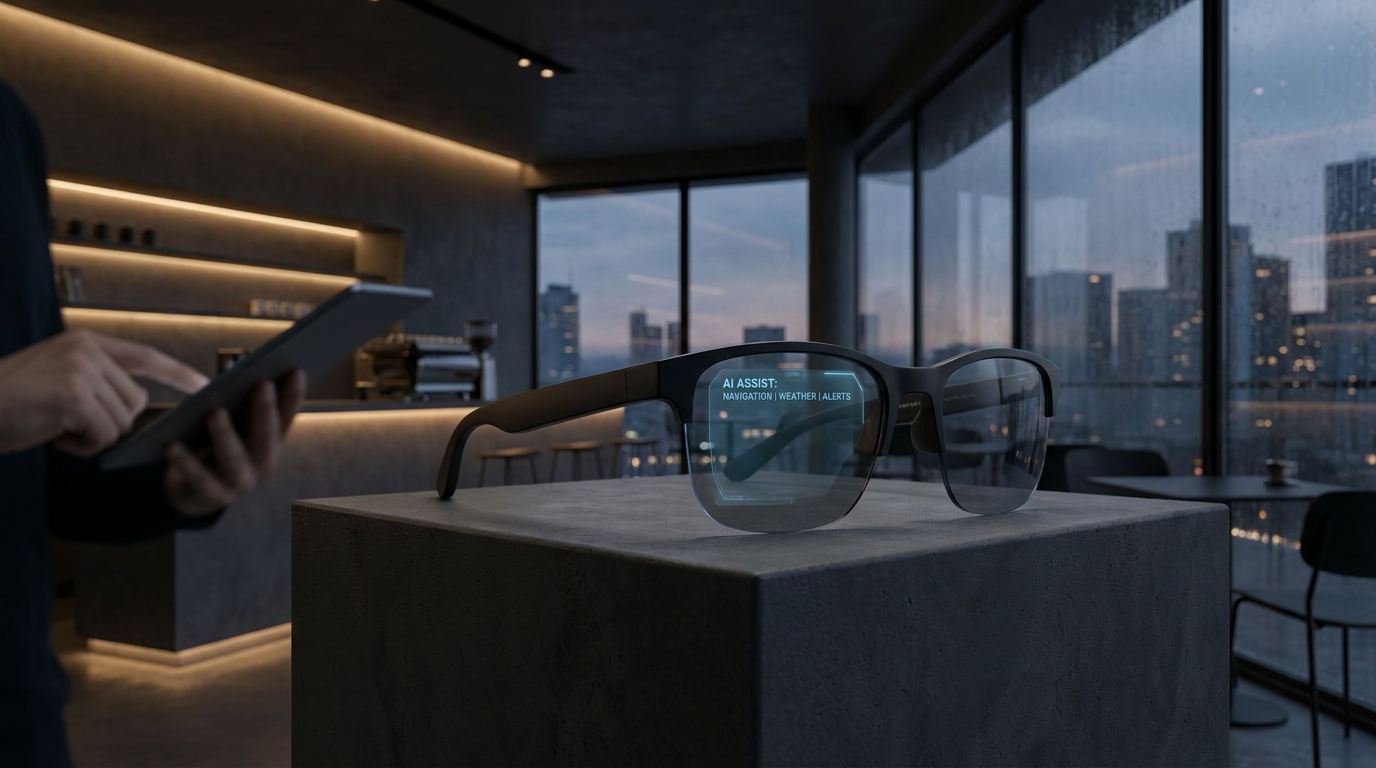
The smart eyewear industry is undergoing a seismic shift, one quietly but profoundly altering its trajectory. The grand visions of immersive virtual realities are giving way to a more intimate, integrated future: always-on AI assistants, seamlessly woven into lightweight glasses. This isn't a distant roadmap; it is the immediate present, shaped by strategic pivots from the sector's biggest players.
Consider Apple's decisive move, trimming Vision Pro and Siri teams to prioritize "Meta-like AI smart glasses". This signals a clear strategic choice, confirming that the mainstream future of wearable tech lies not in high-fidelity, high-cost spatial compute, but in discreet, AI-first eyewear. The message is unmistakable: the era of the personal, ubiquitous AI assistant is moving from our pockets to our faces.
Yet, this promising trajectory is still plagued by a fundamental misunderstanding of the everyday user's core needs: trust and real-world utility. The persistent inclusion of cameras, particularly, remains an insurmountable social hurdle for mass adoption. The industry, for all its revolutionary bluster, continues to trip over the mundane reality of privacy.
Meta, a volume leader in the smart glasses market, exemplifies this struggle. Their recent 'kill switch' patent, a hardware privacy control, is a tangible response to sustained public criticism over potential unauthorized recording. However, this technical fix suggests the company believes engineering can resolve a deep-seated social trust deficit, often manifesting in the derisive moniker "pervert glasses".
The proliferation of camera-equipped smart glasses has ignited a digital arms race. New Bluetooth detection apps now offer users a defense against unseen cameras, exposing the intensifying conflict between wearers and those concerned about covert surveillance. This situation underscores how poorly the industry has managed the perception and reality of integrated recording devices.
Against this backdrop, RayNeo's recent launch of its iO smart glasses represents a sharp, strategic divergence. These glasses, set to launch in September, make a striking choice: they include no cameras, deliberately sidestepping the "voyeur glasses" accusations common with other smart eyewear. This isn't a limitation; it is a feature, a profound acknowledgement of user sentiment.
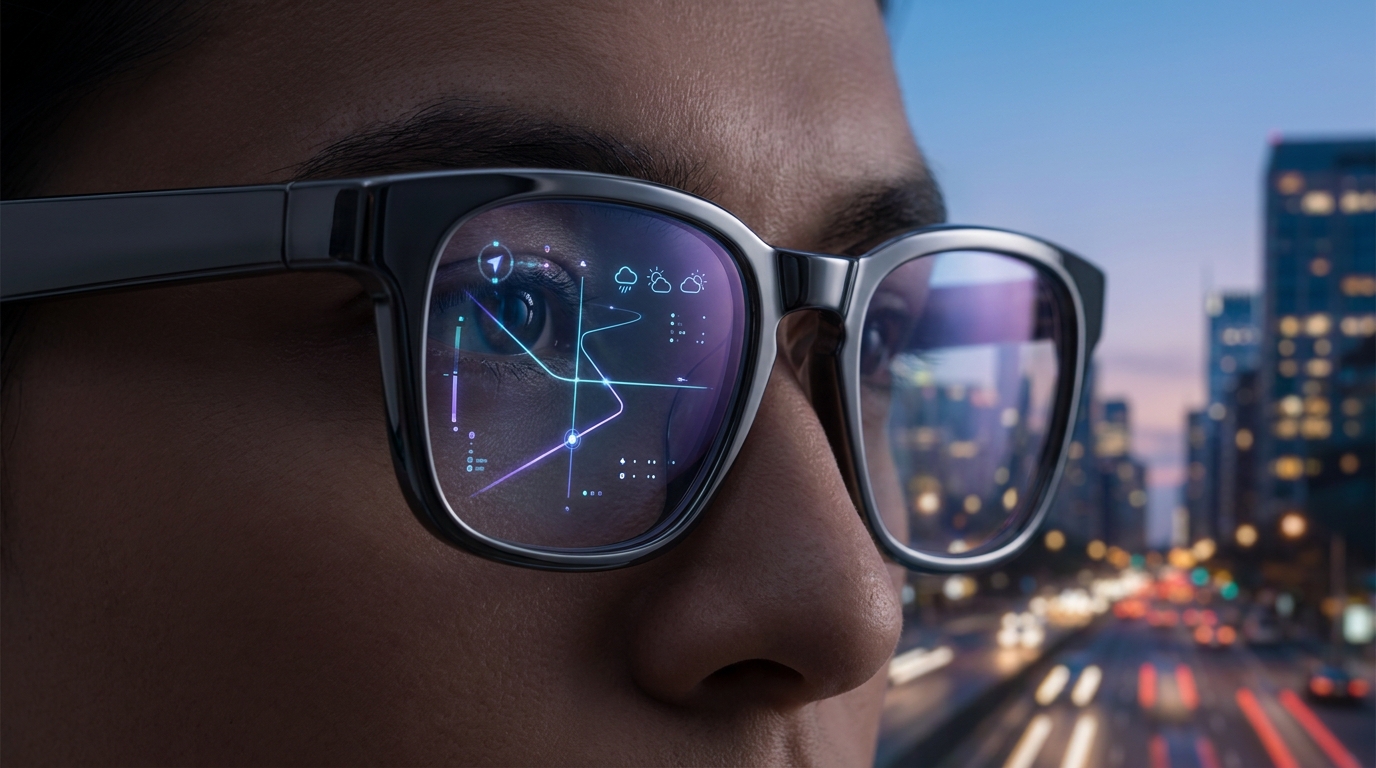
The RayNeo iO's focus is squarely on robust AI capabilities and a subtle, monochrome green display for essential information: time, notifications, translations, and teleprompter text. By prioritizing discreet, always-on AI assistance over visual capture, RayNeo is carving out a market segment based on utility and trust, not surreptitious recording. This 'double offer strategy,' separating productivity from entertainment, directly challenges the generalist approach of competitors.
The industry is finally embracing discreet AI and affordability as twin pillars for mainstream adoption. Companies like Rollme are democratizing access with aggressive pricing, launching the ProView at an unprecedented $99.99. The focus is shifting to lightweight, less obtrusive hardware that fades into the background, not demands attention.
The concept of decoupling the "brain" from the "body" of smart glasses further propels this trend. XRPAK's "Portable Spatial Computer" promises to offload compute, battery, and thermal management to a pocket-sized device, allowing for significantly lighter, more comfortable eyewear. This separation enhances performance and battery life, but crucially, it enables a truly ambient AI layer, freeing the glasses to be merely the unobtrusive interface.
The operating system landscape also plays a critical role in shaping the AI-first future. While Meta clings to a tightly controlled, closed ecosystem, which has historically been synonymous with privacy blunders, the rise of open-source platforms like MentraOS and Android XR offers a different path. These open ecosystems are vital for fostering innovation and allowing a "hacker vanguard" to truly build out the capabilities of always-on AI assistants.
This is the silent revolution. It is not about escaping into virtual worlds or capturing every moment with a covert camera. It is about an invisible digital intelligence becoming an everyday reality, right before our eyes, serving us with real-time information and assistance without demanding our full attention or violating the trust of those around us.
The choice is clear: will smart glasses continue to be perceived as intrusive recording devices, or will they evolve into truly indispensable, trusted AI assistants? The market is sending a strong signal. The future of smart eyewear belongs to the devices that prioritize seamless, camera-free AI integration, understanding that for the everyday user, utility, discretion, and trust will always trump the urge to record.
Interactive guide — prices, displays, cameras, battery.
Share this story