Manufacturer News · RayNeo
RayNeo's iO Glasses Bring AI, Display, and Zero Cameras
TCL-incubated RayNeo has revealed its iO smart glasses, launching September 4 with a subtle display, robust AI capabilities, and a deliberate absence of cameras. This move aims to sidestep privacy concerns common with other smart eyewear.

Announced August 21, 2026, the RayNeo iO smart glasses are set to launch September 4, priced at $479. Developed by TCL-incubated RayNeo, these glasses distinguish themselves with a striking choice: they include no cameras. This strategic design diverges sharply from much of the smart eyewear market, particularly models like Meta's Ray-Ban series, which heavily integrate cameras.
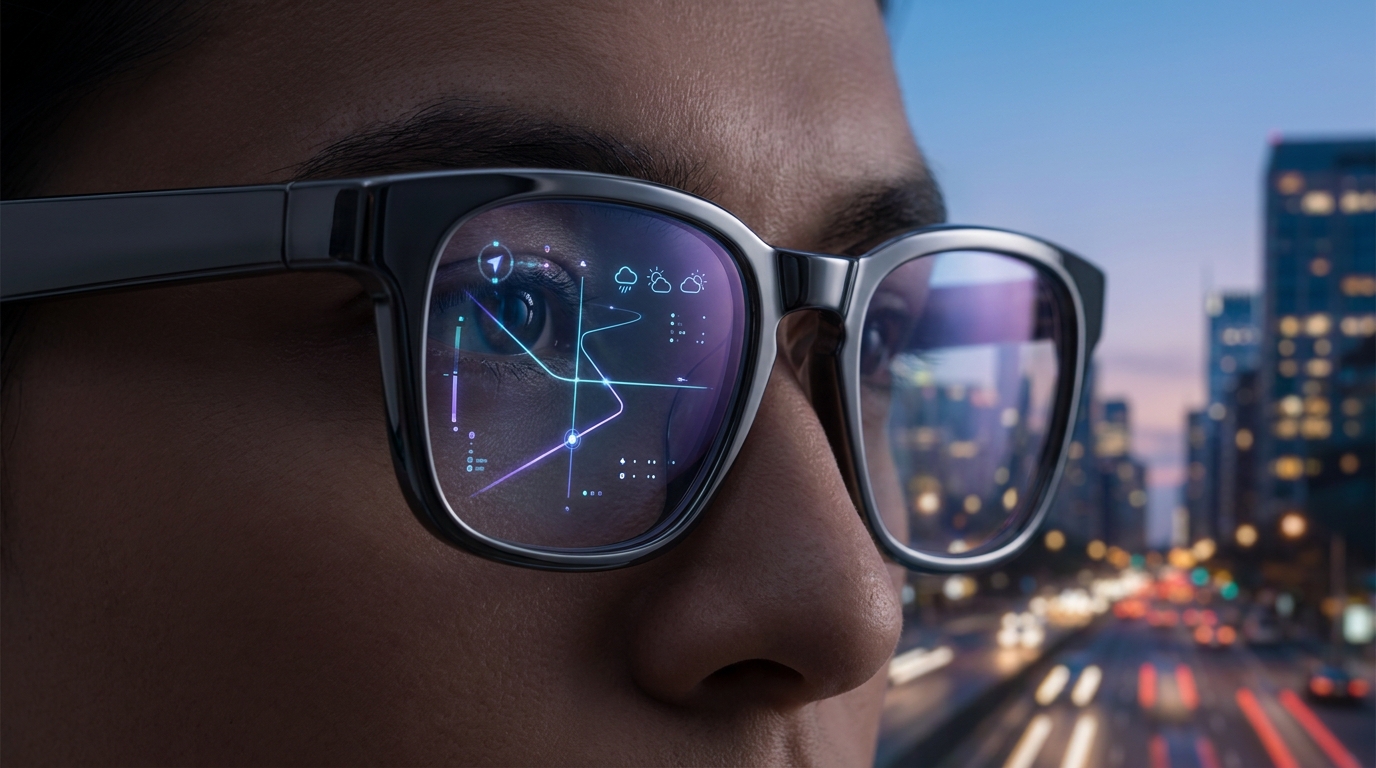
Frandroid notes that by omitting cameras, RayNeo intends to avoid the "voyeur glasses" accusations often leveled at camera-equipped smart glasses. Weighing just 33 grams, the iO presents a standard metal frame, subtly housing a monochrome green display. This transparent (97% clarity) screen offers a 23.5-degree field of view for essential information like time, notifications, translations, and teleprompter text.
The iO eschews speakers, opting instead for four microphones and a bone conduction sensor, promising clear transcription even in noisy environments. Navigation is managed via a physical "Smart Crown" dial, used for turning and clicking inputs. Its 240 mAh battery aims for up to two days of typical use.
At its core, the iO integrates RayNeo AI and Gemini 3.1 Flash Lite. An optional $9.99 monthly subscription unlocks access to other LLMs, including ChatGPT, Claude, and DeepSeek, configurable via a companion app. The glasses boast real-time translation for 55 languages, with Frandroid reporting approximately one second of latency, displaying subtitles directly in the user's field of vision. A unique "Ambient AI Life Log" feature continuously records daily context.
Our take: RayNeo's camera-free approach is a bold gamble in a market increasingly focused on visual capture. While it addresses legitimate privacy concerns and could appeal to a niche user base, the lack of visual input severely limits the device's potential for advanced AR or multimodal AI features. The success of the iO will hinge on whether users prioritize discreet AI assistance and privacy over the broader capabilities offered by camera-equipped competitors.
Interactive guide — prices, displays, cameras, battery.
Share this story