Apps & Use Cases · Meta
Smart Glasses Privacy: New Apps Expose Hidden Cameras
As smart glasses proliferate, privacy concerns over covert recording are escalating. A new wave of Bluetooth detection apps now offers users a digital defense against unseen cameras.
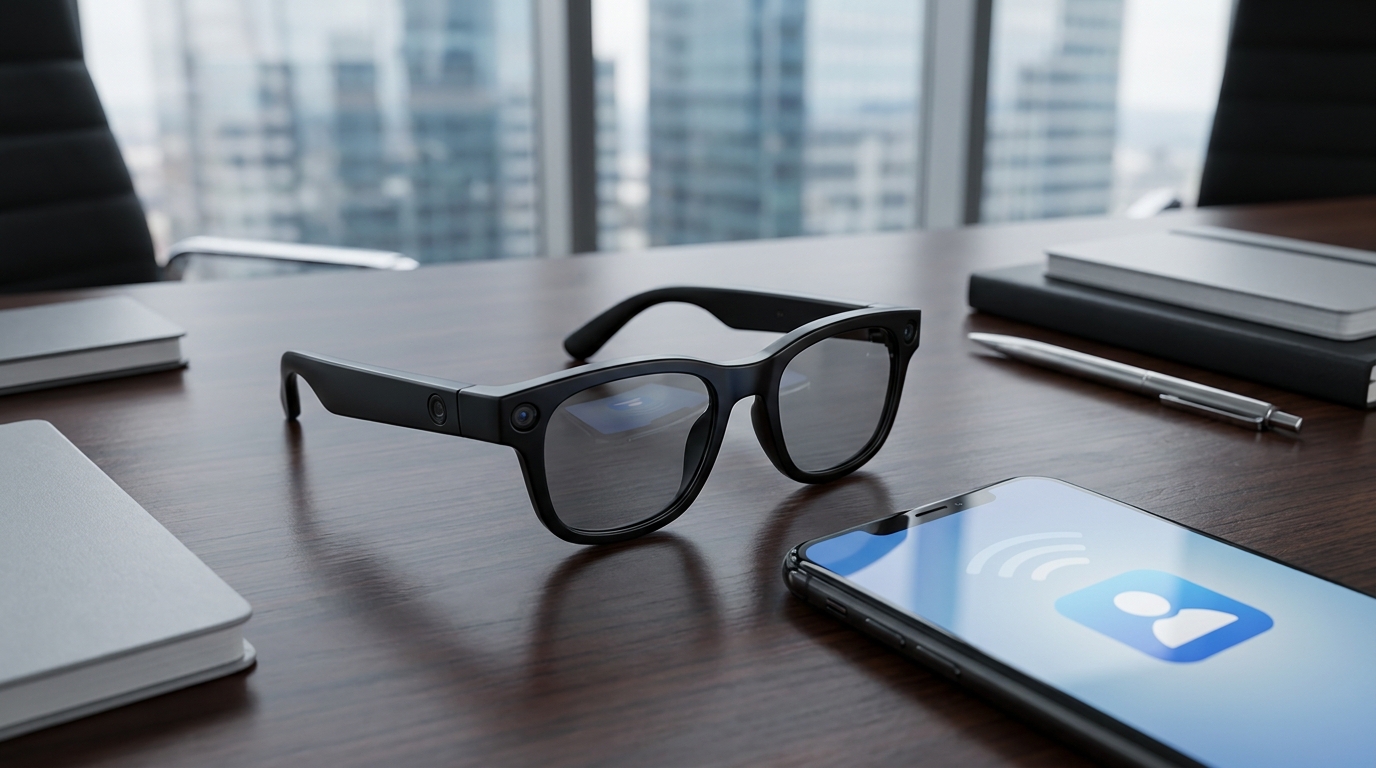
What was once a simple pair of glasses can now be a covert recording device. On August 24, 2026, the rise of detection apps underscored a growing public pushback against smart eyewear's hidden surveillance capabilities. With [Meta AI smart glasses growing in market presence](https://www.cnet.com/tech/mobile/meta-tops-smart-glasses-market/) and other wearables following suit, concerns over privacy have ignited a technical arms race, as CNET reports. Smart glasses can record, stream, and process video without easily alerting those nearby, with CNET questioning the adequacy of their often-subtle recording indicator lights.
This escalating conflict pits those who modify wearable cameras to obscure their recording indicators against developers creating counter-technologies. At the forefront of this counter-movement is Zuckoff, a free Apple iOS app designed to identify nearby smart glasses.
Named as a direct challenge to Meta's CEO, Mark Zuckerberg, the Zuckoff app joins a nascent ecosystem of tools like Antizuck Smart Glasses Scanner and Nearby Glasses. These apps sweep local Bluetooth frequencies to detect vendor IDs and hardware signatures associated with smart glasses, providing approximate device proximity. However, as Zuckoff's website clarifies, "Glasses advertise loudest while powering on, pairing or leaving the case. Once paired to their owner’s phone, they can go quiet, so silence is not proof that nobody is recording, and a detection is not proof that anyone is. Signal strength gives a rough distance and no direction at all." They cannot confirm active recording or AI use.
Pawel Szydlowski, Zuckoff's developer, told CNET that the underlying Bluetooth detection technology was already something he was exploring, simply repurposed for smart glasses. "It’s just the same technology wrapped in a different paper," he noted. The urgency for such tools is clear: CNET reports on smart glasses being used for issues ranging from bullying in schools to capturing unwilling subjects in viral videos.
Our take: The emergence of these detection apps signals a maturing battleground for smart glasses. As innovation pushes the boundaries of wearable tech, the onus shifts to manufacturers to bake in robust, transparent privacy safeguards. Relying on third-party apps to confirm basic privacy expectations is a temporary fix, not a sustainable solution for widespread adoption.
Interactive guide — prices, displays, cameras, battery.
Share this story