Guides · XRPAK
XRPAK's Novel Play: Detaching the Smart Glasses From Their Brain
A new entrant, XRPAK, challenges the integrated smart glasses paradigm with a dedicated 'Portable Spatial Computer.' This architectural shift could redefine performance and form factor in the evolving AR landscape.
Smart glasses have long grappled with an uncomfortable truth: power and portability are at odds. The more compute packed into an eyewear frame, the heavier, hotter, and less aesthetically pleasing the device becomes. Most manufacturers accept this compromise, pushing for incremental improvements in on-board processing.
Enter XRPAK, a new voice on the smart-glasses radar, proposing a radical rethink. Instead of cramming the 'brain' into the glasses, XRPAK suggests detaching it entirely. This bold thesis posits that the next leap in spatial computing isn't in miniaturization for its own sake, but in intelligent modularity.
Their initial move, the 'Portable Spatial Computer,' is not just another accessory; it's a foundational challenge to how we conceive of smart glasses architecture. If successful, XRPAK could unlock a new generation of truly lightweight, powerful, and comfortable AR eyewear by shifting the computational burden off the user's face.
XRPAK emerges as a fresh face in an industry desperate for innovation beyond simple display improvements or camera integration. Their public persona hints at a technical core, focused on solving the fundamental compute challenge that has constrained smart glasses since their inception. They aren't just selling a device; they're selling an architectural philosophy.
The startup's timing is strategic, arriving just as the market pivots from experimental, developer-centric hardware to more refined, consumer-adjacent experiences. The current landscape is ripe for a solution that can elevate the user experience without sacrificing performance or driving up bulk, a sweet spot XRPAK aims to occupy.
Their target segment isn't necessarily end-users directly, but rather the entire smart-glasses ecosystem—from hardware manufacturers looking to offload compute, to developers seeking robust processing power for complex spatial applications. XRPAK positions itself as the enabling technology, the missing piece for truly next-gen AR eyewear.
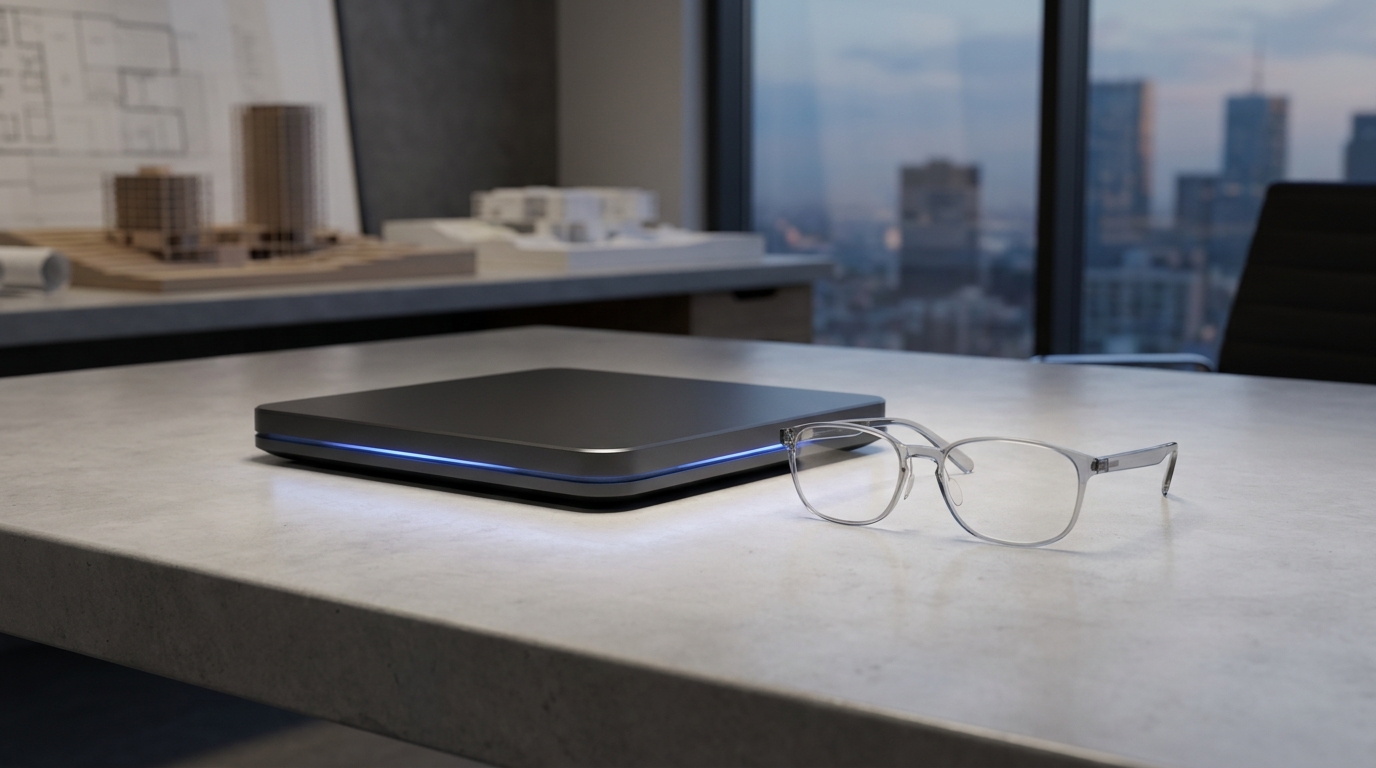
XRPAK's flagship product, as currently understood, is not a pair of smart glasses at all, but a "Portable Spatial Computer." This external processing unit is designed to provide the necessary computational muscle for any compatible XR glasses, effectively acting as the dedicated brain for spatial experiences.
The core promise of this device is two-fold: to lighten the load on the smart glasses themselves, making them more comfortable and less obtrusive for extended wear, and to enhance overall performance beyond what current integrated solutions can offer within practical thermal and power constraints.
While the concept is compelling, concrete product specifications for the Portable Spatial Computer remain publicly undisclosed. We know its ambition is to power a wide array of XR glasses, suggesting a robust and versatile architecture, but details on processing power, battery life, connectivity, or specific compatibility are not yet available.
When positioning XRPAK against established players, its unique proposition becomes starkly clear. Competitors generally adopt an integrated approach, striving to embed all necessary compute directly within the eyewear, often resulting in compromises on form factor or raw power.
Microsoft's HoloLens 2, for example, sets the enterprise standard for integrated mixed reality, delivering powerful, self-contained experiences. However, its considerable size and weight are a direct consequence of its on-board processing. XRPAK directly challenges this by suggesting the 'brain' doesn't need to be in the headset. Similarly, while Viture's Pro XR and Luma Pro offer advanced spatial display capabilities, they largely rely on tethered smartphones or PCs for compute; XRPAK's PSC could become a dedicated, optimized spatial engine for such devices.
Even Samsung's anticipated Galaxy XR headset and Android XR glasses, while aiming for a more holistic ecosystem, are expected to feature integrated designs. XRPAK offers an alternative paradigm: a dedicated, portable compute core that could potentially serve as a universal engine for a new class of lighter, more powerful, yet less proprietary XR glasses.
The SGD verdict on XRPAK is cautiously optimistic. This isn't a company for the casual smart-glasses buyer today; it's a play for the future, aimed at industry partners and developers who recognize the fundamental limitations of current integrated designs. Its strengths lie in its modular approach, promising lighter eyewear, potentially greater processing power, and a more open ecosystem for smart glasses manufacturers. Weaknesses include the inherent challenge of convincing an industry to adopt a detached compute model, the lack of a full end-to-end solution from XRPAK itself, and the absence of clear product specs or pricing.
In the next 12 months, critical developments to watch will be XRPAK's ability to secure partnerships with actual smart glasses makers, the release of verifiable performance benchmarks for their Portable Spatial Computer, and any indications of a developer ecosystem forming around their platform. If they can deliver on their promise of superior performance and lighter eyewear, XRPAK could indeed reshape the smart glasses landscape, proving that sometimes, the smartest move is to detach the brain.
Interactive guide — prices, displays, cameras, battery.
Share this story