Reviews · Xreal
Xreal Aura Review: Strong AR Hardware Trapped in Google's Android XR Growing Pains
Xreal's $1,099 Aura glasses deliver sharp optical see-through displays and clever compute hardware, but Android XR still feels undercooked.
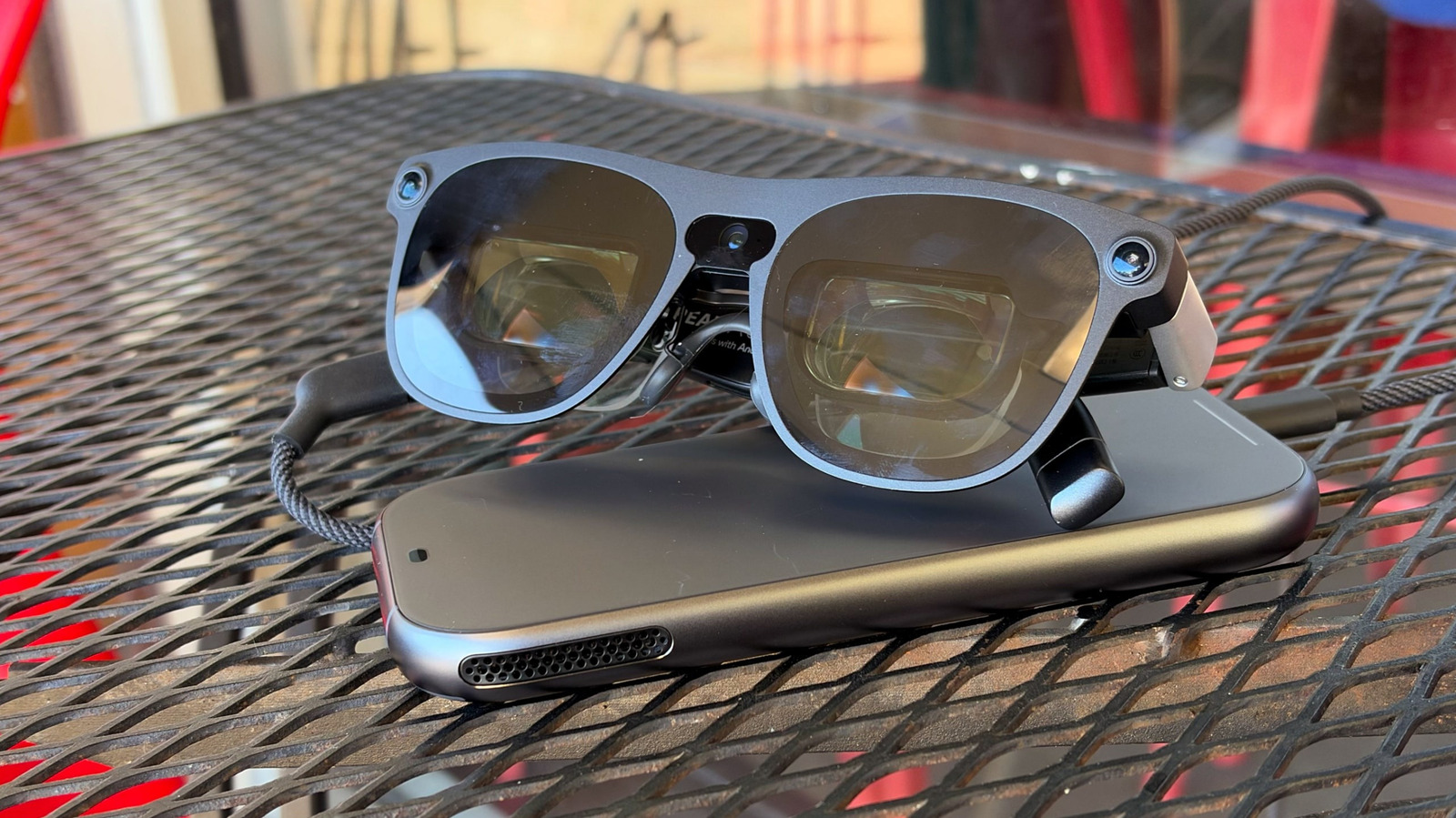
On November 18, 2026, Engadget published its comprehensive review of the Xreal Aura, marking the arrival of the most intriguing consumer hardware yet built for Google's Android XR platform. Priced at $1,279, with an introductory promotion discounting the package to $1,099 through December, the Aura positions itself as an accessible, lightweight alternative to bulky spatial headsets like Apple's Vision Pro. Rather than encasing the wearer in video pass-through goggles, Xreal builds directly on its proven smart display lineage to deliver a true optical augmented reality experience.
The core system splits the hardware into two distinct parts: a sunglasses-style frame and a tethered external unit called the Compute Puck. The glasses closely resemble Xreal's earlier display frames, such as the One Pro, but incorporate built-in sensors for spatial mapping, camera capture, and hand tracking. Under the hood, the accompanying Compute Puck runs on Qualcomm's Snapdragon Reality Elite chipset paired with Xreal's proprietary X1S spatial processor, shipping with either 12GB or 16GB of RAM and up to 512GB of internal storage. The top surface of the pocket-sized puck doubles as a capacitive trackpad, providing tactile navigation without requiring users to hold their hands aloft in midair.
Visually, the Aura relies on twin micro-OLED panels running at 1920 by 1200 resolution per eye, capable of reaching up to 1,058 nits of peak brightness. Engadget's Devindra Hardawar notes that while the panels can refresh at up to 120Hz when driven by external computers, the native Android XR interface caps playback at 72Hz. The optical system expands Xreal's viewing area to a 70-degree field of view. While that remains narrower than the 100-degree coverage of Apple Vision Pro or the 110 degrees on Meta Quest 3, transparent lenses allow natural environmental viewing, complemented by an electrochromic dimming layer that can shade the lenses when deep immersion is required.
Where the hardware shines, however, the software stumbles. According to Hardawar's testing for Engadget, Android XR remains prone to instability and continues to suffer from a barebones application catalog. Two years after Google first introduced the platform, and following the muted reception of Samsung's $1,800 Galaxy XR headset, the operating system still lacks standout experiences that demonstrate why spatial computing matters. Hardawar observed that the Compute Puck can run noticeably warm during heavy tasks, while basic utility often boils down to floating familiar Android windows in mid-air.
Thankfully, Xreal preserved the pragmatic versatility that made its previous eyewear popular. Users can bypass the Android XR puck entirely by plugging the Aura frames straight into a laptop, smartphone, or gaming console, turning the glasses into a zero-latency personal monitor. When auxiliary devices connect directly through the puck, their feeds populate an interactive Android XR window that sits neatly alongside native spatial widgets.
Our take: Xreal has delivered the exact form factor Google desperately needed to make Android XR relevant, demonstrating that everyday mixed reality belongs in transparent spectacles rather than heavy plastic face-helmets. Yet excellent industrial design cannot compensate for an absent software ecosystem. Until Google recruits major developers and polishes system performance, the Aura will remain what it is today: superb hardware waiting for a platform worthy of its price tag.
Interactive guide: prices, displays, cameras, battery.
Share this story