Reviews · RayNeo
RayNeo IO Review: Ditching the Camera Does Not Solve the Privacy Dilemma
RayNeo's $499 IO smart glasses trade built-in cameras for a monochrome display and always-on audio logging, proving that optical sensors are not the only privacy risk on your face.
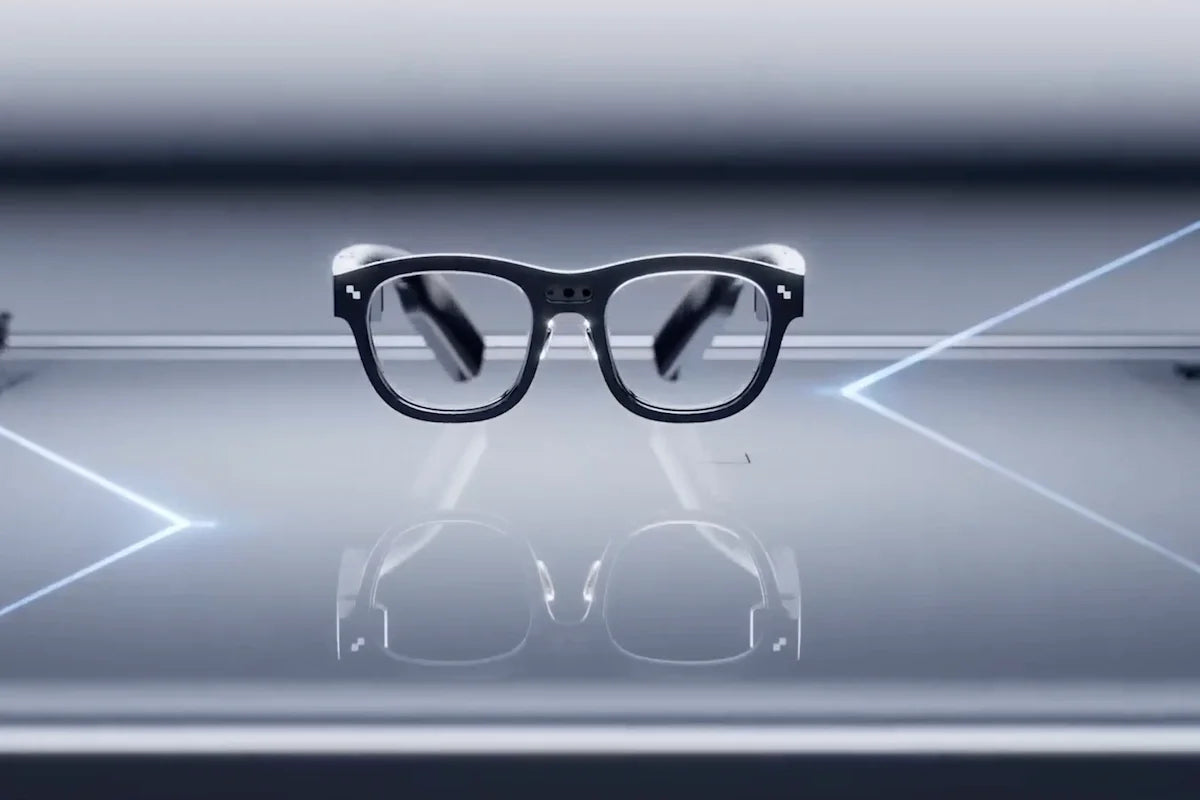
Published on November 20, 2026, a review by James Pero of Gizmodo takes aim at the $499 RayNeo IO, testing whether dropping cameras from smart frames makes them any easier to welcome into daily public life. The hardware belongs to a fast-growing category of minimalist heads-up displays, side-stepping the persistent societal friction around discreet video capture while attempting to deliver practical, text-first utility straight to your line of sight.
Instead of dual image sensors, the RayNeo IO incorporates a bright monochrome heads-up display and a dedicated physical smart dial for menu navigation. According to Gizmodo's testing, the physical dial feels responsive and intuitive, while the high-contrast display remains easy to read in varying lighting conditions. The review highlights native productivity workflows, including real-time speech transcription, live language translation, and a discreet teleprompter mode, all of which Pero noted perform reliably well in everyday scenarios.
Yet stripping out cameras does not instantly resolve the privacy question. Gizmodo reports that the RayNeo IO leans heavily into ambient acoustic capture through features like Lifelog, an audio-driven contextual recording tool designed to transcribe and summarize conversations. As Pero points out, the glasses feature an ambient LED indicator to signal when recording is active, but the light is small and easy for bystanders to miss. Gizmodo ultimately concluded that the resulting automated summaries do not provide enough daily value to justify the social awkwardness of passive listening.
Interestingly, the hardware configuration makes a distinct trade-off compared to conventional audio frames. While Meta's camera-free experiments focus almost exclusively on open-ear speakers and microphones, the RayNeo IO skips audio playback speakers entirely. Wearers look at text prompts and read transcriptions silently via the waveguide display, relying purely on the internal microphones for system input. This puts the IO directly in the crosshairs of devices like the Even Realities G1, which similarly leverages dual green MicroLED waveguides to show turn-by-turn prompts and meeting notes without broadcasting audio to the room.
Our take: The industry is undergoing a tactical split between high-visibility multimedia cameras and covert ambient intelligence. Hardware makers assume that removing lenses eliminates the 'creepy factor' that has dogged connected eyewear since the original Google Glass. But as Gizmodo's review illustrates, an unobtrusive microphone array silently parsing private dialogue can be just as unsettling to colleagues and strangers as a camera lens. If hardware vendors want ambient summarization to stick, transcription quality and user utility must vastly outweigh the awkward reality of wearing a silent stenographer on your face.
Interactive guide: prices, displays, cameras, battery.
Share this story