Analysis · Industry
The Screen Is a Trap: Why Display-Less AI Glasses Are the True Mass-Market Play
Silicon Valley spent billions forcing floating pixels onto our faces. Meanwhile, pragmatic optical design, conversational audio, and screen-free frames are quietly winning the consumer hardware war.
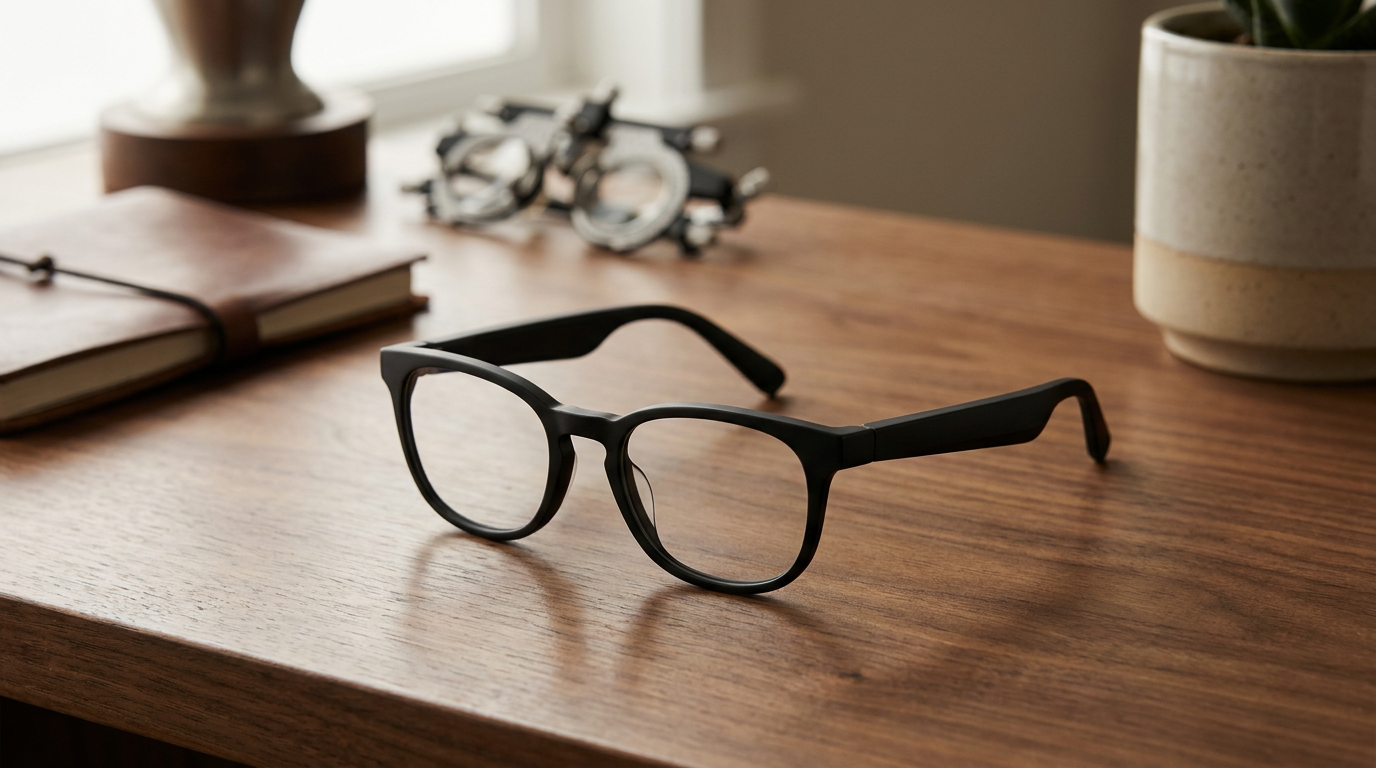
Silicon Valley has spent the better part of a decade operating under a stubborn delusion: that consumers will not embrace smart glasses until they can see floating digital screens in front of their eyes. Hardware teams have poured billions into complex optical waveguides, Micro-OLED panels, and spatial compute pucks to manifest that sci-fi dream. Yet every single attempt to put a miniature monitor on the bridge of the human nose crashes into the same stubborn realities of physics, battery limits, and social repulsion. The real revolution is already happening right under the industry's nose, and it does not have a screen at all.
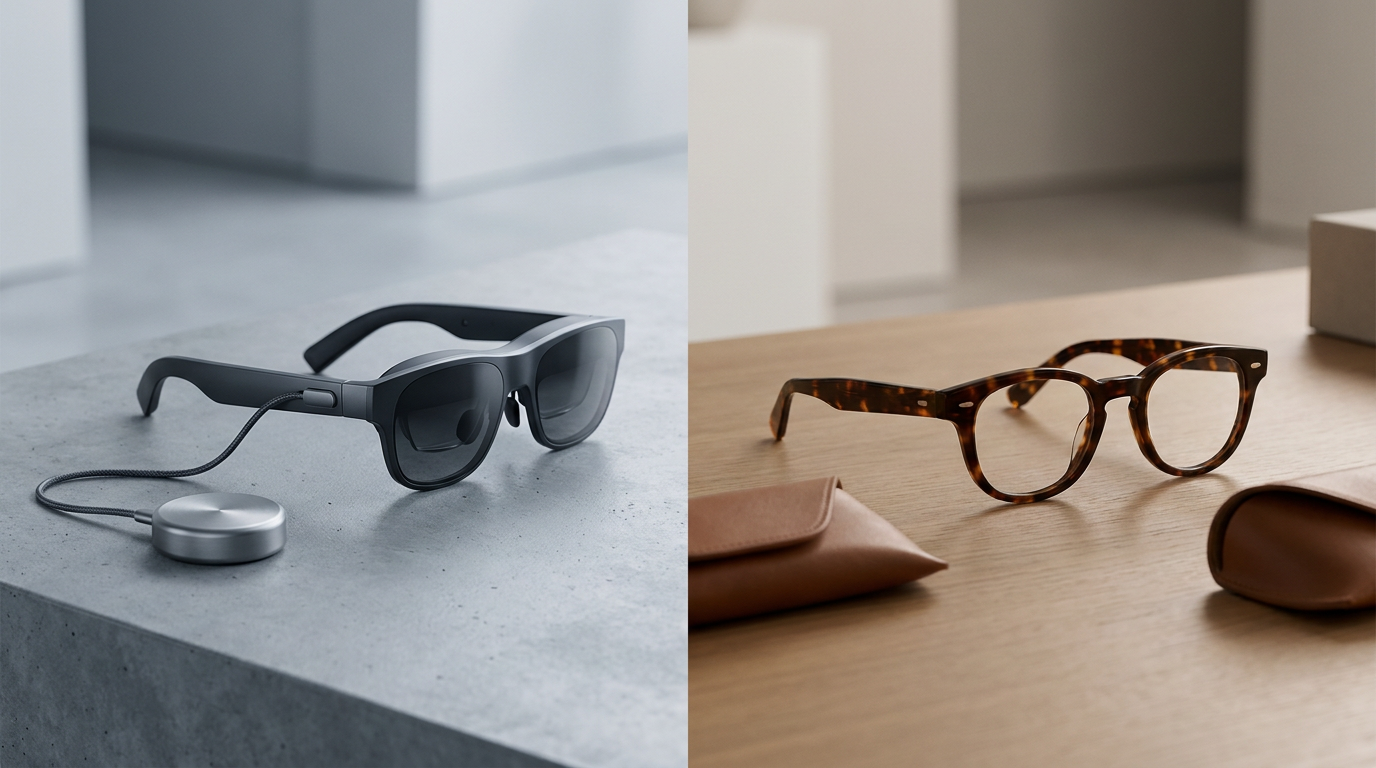
Look at the latest crop of display-centric hardware to see how bloated the visual AR vision remains. Xreal recently opened pre-orders for the Aura at a staggering $1,099, saddled with an awkward tethered compute brick to handle Android XR. RayNeo continues to pitch its GT glasses as a personal cinema, but the hardware is still essentially a corded 68-gram monitor that locks users into sedentary media consumption. Even clever engineering triumphs like the Rokid AI Glasses, which managed to trim a Micro LED frame down to 49 grams, are forced to settle for a narrow 23-degree field of view and a cramped 480 by 398 resolution. In trying to build a heads-up computer, display evangelists keep building compromised novelties.
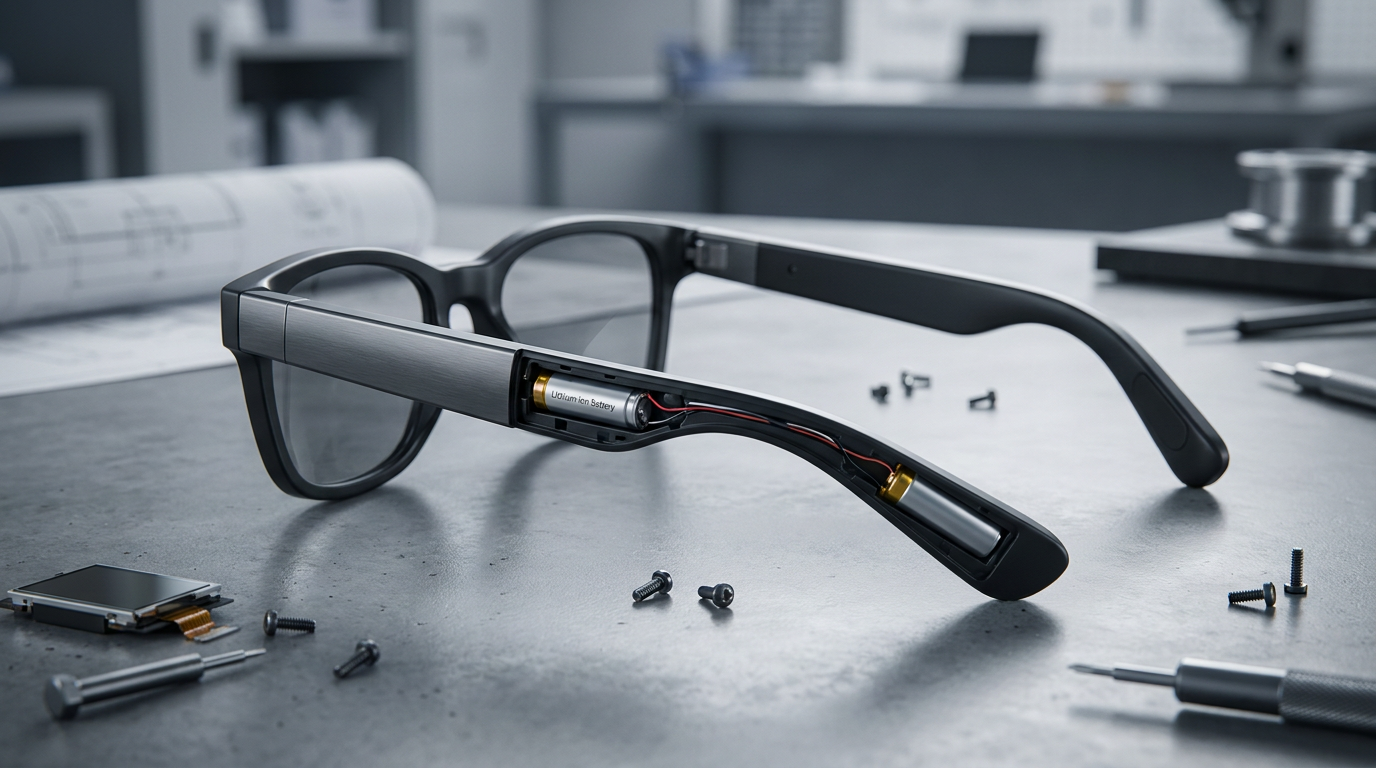
The engineering penalty for a visual display is simply too high for everyday wear. A display engine demands hefty battery reserves, aggressive thermal dissipation, and complex optical stack coatings that ruin the clarity of everyday vision. When glasses try to project graphics, they balloon into chunky, front-heavy silhouettes that no sane consumer wants to wear for eight continuous hours. Worse, they force the wearer into an alienating cognitive state, dividing human attention between physical surroundings and a jittery floating interface.
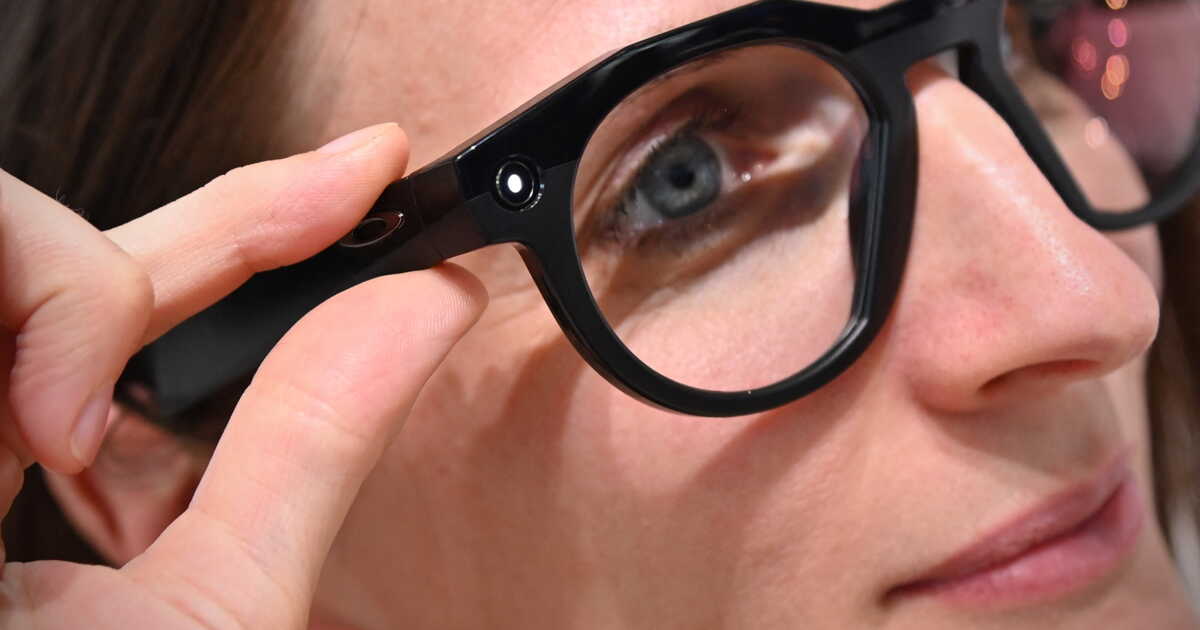
Display-less AI frames strip that entire computational liability away. By ditching the waveguide, designers can reclaim the sacred territory of regular eyewear: sub-40-gram frame weights, classic acetate silhouettes, and multi-day battery endurance. Meta demonstrated this blueprint with the runaway success of its EssilorLuxottica collaboration. The Ray-Ban Meta frames, alongside the newly minted Oakley performance line, offer all-day utility and up to 50 hours of endurance via charging cases without asking wearers to look like cyborgs.
This strategic divergence is now playing out across global retail channels. As Meta and EssilorLuxottica expand their lifestyle frames into high-growth markets like the Philippines, they are leaning entirely on natural voice interfaces, prescription versatility, and localized AI models. They are not selling a confusing spatial computing operating system. They are selling handsome sunglasses and prescription frames that happen to hear, speak, and capture the world seamlessly.
Traditional opticians understand this consumer dynamic far better than tech executives in Silicon Valley. European optical titan Alain Afflelou recently entered the connected eyewear market by deliberately skipping both cameras and displays in favor of swappable audio temples. Afflelou recognized a fundamental truth: before eyewear can be smart, it must first be comfortable, aesthetically diverse, and serviceable by a neighborhood optician. When technology respects the optical craft instead of trying to replace it, mainstream adoption ceases to be a fantasy.
The same retail pragmatism is fueling European upstarts like Sportconnect. By offering camera-equipped smart frames powered by OpenAI brains at an aggressive 249 euros, the Paris brand is bypassing direct-to-consumer pop-ups to sell directly through independent optical networks. Optical customers do not want a multi-thousand-dollar headset tethered to their pocket. They want a dependable pair of glasses from a licensed professional, backed by clear warranties and real lens options.
The interface itself has fundamentally evolved past the need for pixels. Ambient voice, ultra-low-latency microphones, and multimodal language models have made conversational AI the primary operating system for the face. You do not need a floating green arrow hovering over the asphalt to navigate a subway station when an intelligent whisper in your ear gives you the exact turn. Removing the display actually improves the AI experience by keeping the interaction ambient, fast, and completely hands-free.
Even Snap's latest financial data reveals this underlying platform shift. While the company crossed 30 million paid subscribers thanks to surging interest in generative AI tools and AR services, CTO Bobby Murphy is still grinding through hardware updates to make the fifth-generation Spectacles optical engine 35 percent more transparent. Snap is doing brilliant work on developer tooling and agentic workflows, but the bulk of its user base and monetization sits firmly in software, not in expensive AR goggles. Consumers want generative AI utility, but they do not want to sacrifice their social comfort to get it.
The social barrier against intrusive face computers is only hardening. Venue operators are already moving to restrict smart eyewear, while indie developers engineer scanning apps to detect active headsets in public spaces. Samsung is confronting these exact bystander privacy hurdles as it finalizes its upcoming smart glasses. When you strap a bright, glowing waveguide display to your face, you instantly telegraph your disconnection from the room. A clean, display-free frame preserves natural eye contact and avoids turning normal human interactions into a surveillance spectacle.
Silicon Valley's insistence on visual augmented reality mirrors the early mistakes of the smartphone boom, when manufacturers assumed mobile computing meant shrinking a desktop keyboard and monitor onto a pocket device. True platform shifts do not shrink the previous paradigm; they create an entirely new modality. For the face, that modality is context-aware ambient audio paired with intelligent vision sensors, not a synthetic screen floating two inches in front of your pupils.
The spatial computing camp will keep burning billions refining waveguides, chasing micro-displays, and releasing thousand-dollar tethered experiments. But the mass market has already cast its vote. The smart glasses that ordinary people actually buy, wear, and love will look like classic eyewear, cost a fraction of a flagship phone, and never feature a single pixel.
Interactive guide: prices, displays, cameras, battery.
Share this story