Analysis · Meta
The Ambient Computing Mirage: Nobody Is Solving the Battery Problem
High fashion campaigns and multimodal AI promises cannot disguise the brutal physics inside an eyeglass temple. Until someone breaks the thermodynamic ceiling, smart glasses remain tethered to charging cases.
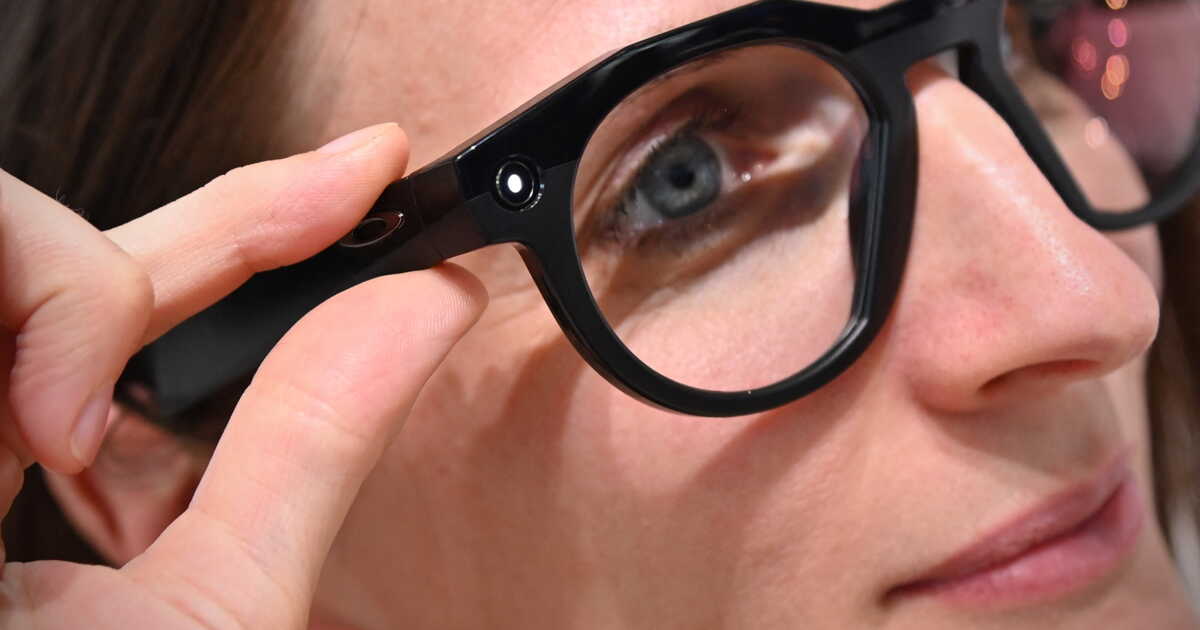
Silicon Valley wants you to believe that the ambient computing revolution has arrived on your face. Between Gentle Monster enlisting Joaquin Phoenix for a surreal Google-backed campaign and Meta pushing its Ray-Ban hardware across Asian luxury hubs, the aesthetic war appears won. The frames look sharp, the prescription lenses fit seamlessly, and the marketing feels like high art rather than sterile consumer electronics. Yet beneath the designer acetate lies an inconvenient physical reality that hardware executives prefer to ignore on stage. Smart glasses do not have an optics crisis or a software crisis. They have an existential battery crisis.
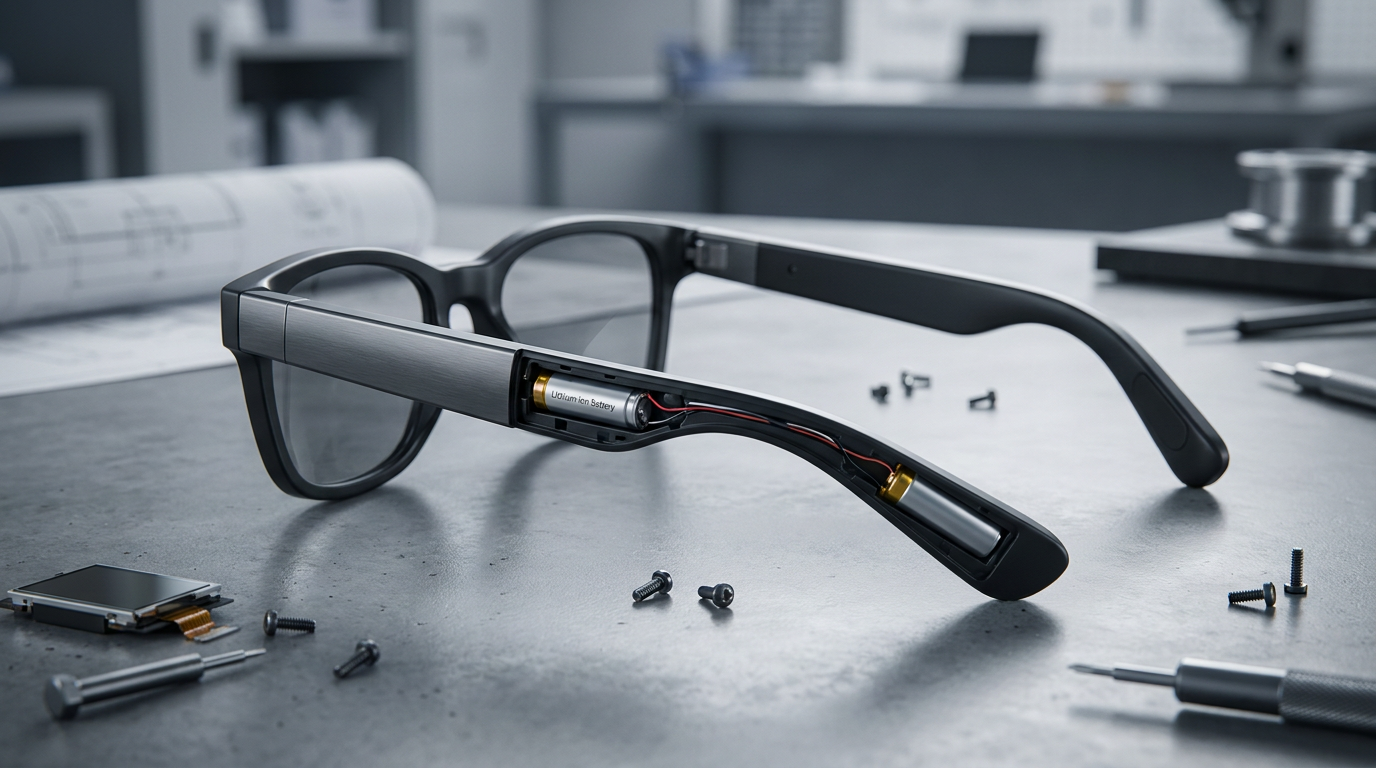
Look at the engineering reality of a pair of connected frames. Unlike a smartphone, which shelters a massive lithium-ion pack behind slabs of insulated titanium and glass, an eyeglass frame offers virtually no usable volume. The battery must squeeze into a hollow temple arm resting directly against the human skull. You cannot increase cell density without risking catastrophic thermal runaway, nor can you add bulk without destroying the silhouette that made consumers buy the product in the first place. Every single milliwatt must be rationed like fresh water on a lifeboat.
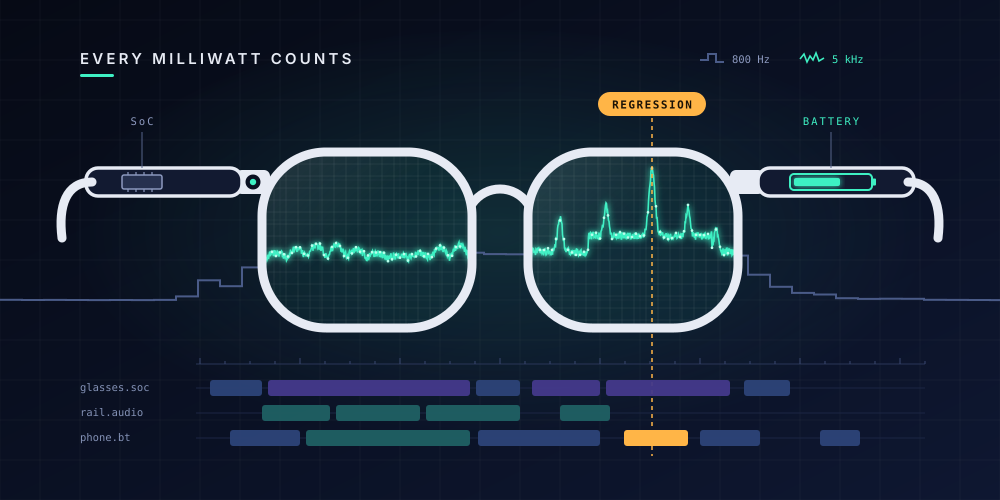
Meta understands this terror better than anyone, even if its retail marketing downplays it. Internal details from Meta engineering reveal the sheer desperation behind keeping Ray-Ban Meta frames running through a standard day. The company relies on an automated hardware testing apparatus dubbed Power CI, running continuous regression benchmarks across physical device farms to detect single-milliwatt software leaks. When a company must build an industrial testing pipeline merely to hunt micro-drains in operating code, it is not innovating. It is surviving on the razor edge of physical limits.
This millimeter-scale survival strategy makes the broader industry roadmap look like collective delusion. As Meta preps upcoming Oakley frames and expands Ray-Ban distribution into Hong Kong and Macau, it is loading more demands onto the same starved architecture. Multimodal AI queries, spatial audio playback, live camera translation, and constant microphone polling all draw heavy current. You can celebrate the accessibility triumphs of visually impaired veterans using Meta AI to read street signs, but that transformative utility drops to zero the second the right temple stem gets warm and powers down.
The upcoming Gentle Monster release with Samsung and Google proves that new entrants are running straight into the same wall. The Seoul label brings undisputed cultural cachet, pairing avant-garde design with Google Gemini and the Android XR ecosystem. Hiring Jonathan Glazer to direct Joaquin Phoenix in a hotel-set fever dream creates immense cultural buzz ahead of US preorders. However, Android XR is notoriously compute-heavy, and running Gemini models requires persistent processing overhead. Unless Google and Samsung have rewritten the laws of electrochemical energy storage, those sculptural temples will drain fast.
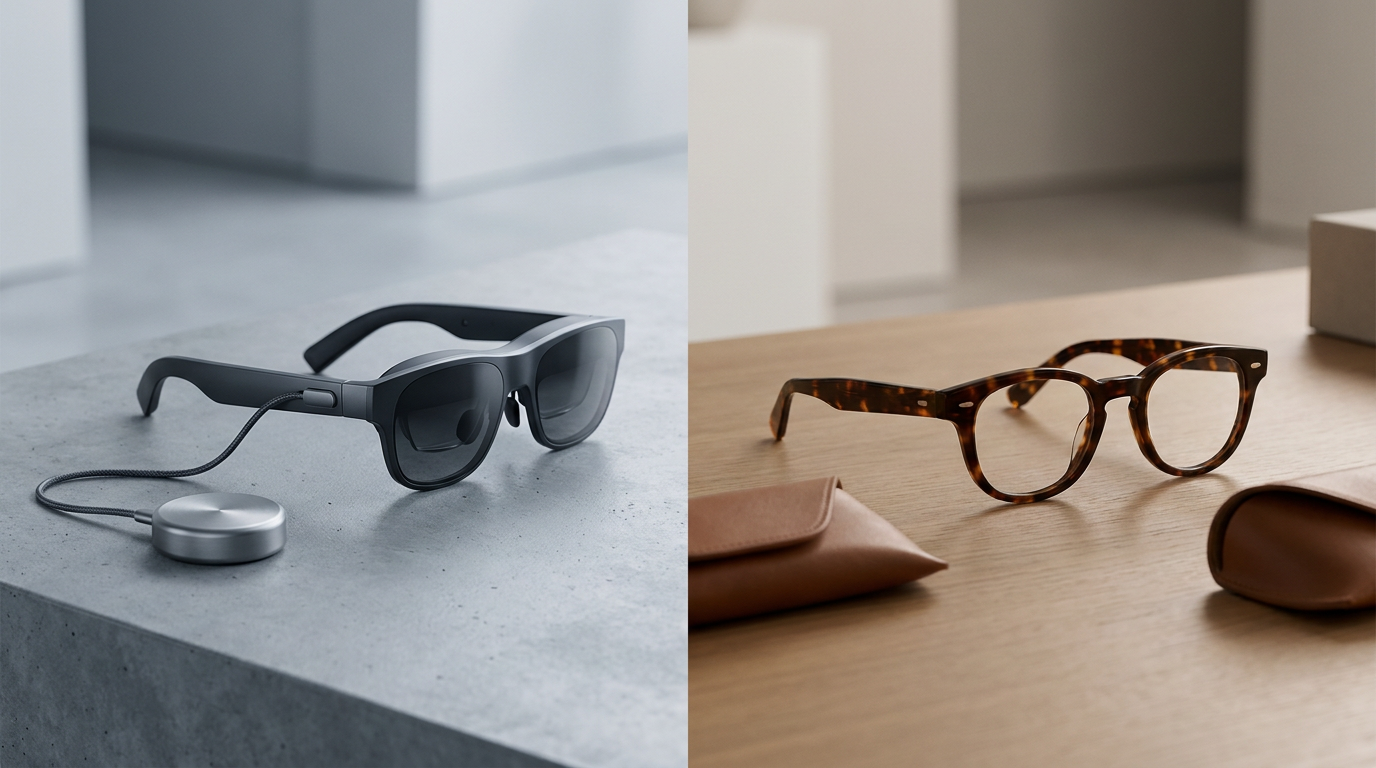
Consider the drastic compromises made by brands that actually achieve all-day longevity. Xiaomi recently pushed its Mijia Smart Audio Glasses into broader European retail, advertising up to twelve hours of continuous playback on a single charge. The device hits that longevity milestone precisely because it is an intellectual downgrade. It contains no 12 MP camera, no on-device computer vision pipeline, and no power-hungry neural processing unit. It is an open-ear Bluetooth headset disguised as a browline spectacle, and that absence of ambition is the only reason its battery survives the workday.
At the opposite end of the spectrum sits Snap, attempting to reframe its Spectacles line as a practical enterprise productivity tool. Trying to bring augmented reality to desk workers and remote collaboration sounds noble until you calculate the thermodynamic cost of dual optical engines and real-time spatial mapping. Current enterprise AR prototypes frequently exhaust their cells inside of forty-five minutes of continuous rendering. Expecting an office professional to adopt a tool that demands hourly dockings in a bulky case is fantasy, not commercial strategy.
The consumer electronics industry spent twenty years relying on battery improvements that simply will not translate to eyewear. Solid-state battery breakthroughs remain perennially three to five years away from scaled commercial yield, and offloading computation to a companion smartphone only trades frame processor heat for continuous wireless radio drain. Bluetooth Low Energy and custom silicon have delivered astonishing efficiencies, but they have reached the point of diminishing returns. You cannot optimize your way around the raw energy consumption of sensors and image processors.
This creates a bizarre user experience characterized by profound battery anxiety. When you wear Ray-Ban Meta frames, you instinctively ration your interactions. You hesitate before shooting a video clip, you deliberate before asking Meta AI to parse your surroundings, and you keep audio volume at conservative levels. A wearable device that forces the user to calculate power consumption before every interaction is fundamentally broken. Ambient computing requires frictionless, unconscious trust, not continuous mental arithmetic about battery percentages.
The smart eyewear industry is currently surviving on the novelty of short bursts. Snapping a quick point-of-view photo, taking a two-minute phone call, or asking a quick voice query fits neatly within the existing power envelope. But the future being promised by Google, Meta, and Snap relies on persistent spatial awareness and continuous contextual assistance. That future demands an order of magnitude more energy than modern battery chemistry can deliver in a fifty-gram package.
Until hardware manufacturers solve the power paradigm, no amount of celebrity casting or luxury retail expansion will turn smart glasses into genuine smartphone replacements. We are building sports-car software and dropping it into frames powered by lawnmower fuel tanks. Gentle Monster will sell its initial run, Meta will move units over the holidays, and tech reviewers will praise the multimodal features. But sooner rather than later, users will confront dead plastic on their faces, waiting for a technological leap that the industry still has not figured out how to make.
Interactive guide: prices, displays, cameras, battery.
Share this story