Manufacturer News · Savage
Savage Opens $799 Deposits for Lightweight Orrorin Smart Glasses
Hong Kong startup Savage Technology is accepting reservations for its 45-gram Orrorin glasses, promising binocular displays and camera-driven pinch controls by 2027.
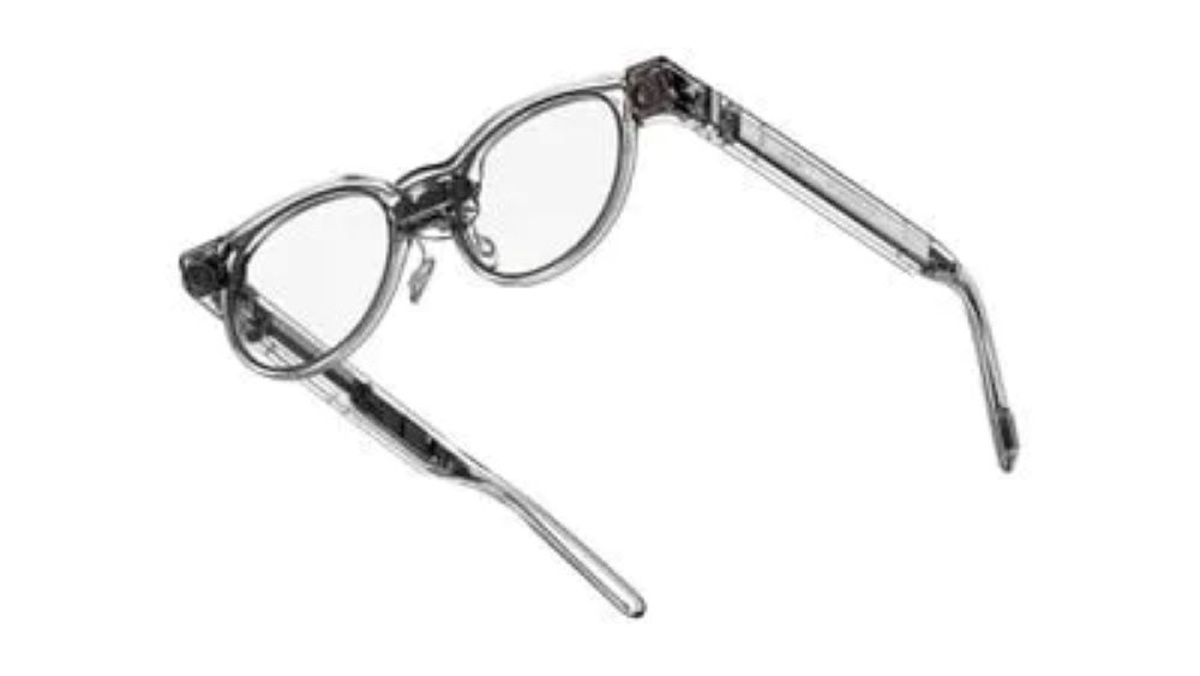
On November 27, 2026, Hong Kong startup Savage Technology opened reservations for its Orrorin Glasses, a $799 pair of binocular smart glasses promising camera-driven pinch controls inside a lightweight 45-gram frame. Savage is offering prospective buyers three deposit tiers toward the total retail cost, with initial customer shipments scheduled to begin in March 2027.
According to hardware specifications released by Savage, the Orrorin frame features binocular color micro-displays delivering 500 by 380 pixels per eye, a 60 Hz refresh rate, up to 1,800 nits of brightness, and a 25-degree field of view. The glasses are also equipped with a six-axis motion sensor, dual eye-tracking cameras, Bluetooth 5.4, 64 MB of system memory, and a 450 mAh battery. However, the company has not revealed the specific processor architecture driving the device.
The centerpiece of Savage's pitch is what it brands "Spatial Pinch" control. The startup asserts that onboard cameras handle hand and eye tracking entirely on the device using approximately 20 MB of memory, eliminating any requirement for an external controller or wrist accessory. Yet, as techtimes.com points out, no independent press outlets have tested the hardware. Coverage from PhoneArena noted that the sole public demonstration has been a smartphone-recorded video shared on co-founder Elena Shi's personal social media feed, with the glasses currently in an early engineering validation phase.
Relying solely on frame-mounted computer vision introduces notable practical questions. Existing micro-gesture solutions rely on specialized wearables, such as Meta's surface EMG Neural Band or wrist-motion tracking via smartwatches. As techtimes.com highlights, an initial report from iDevice stated the glasses can recognize subtle finger pinches made while a user's hand rests at their side, yet Savage has not explained how optical sensors on the eyewear can maintain visibility of a dropped hand. Furthermore, techtimes.com emphasizes that Savage's public privacy documentation makes no mention of data protection policies regarding its onboard microphones, motion sensors, or eye-tracking feeds.
Savage is positioning the Orrorin against heavyweight competition at the same $799 price point occupied by Meta's Ray-Ban Display and its bundled Neural Band. While Orrorin advertises two displays and a svelte 45-gram build compared to Meta's heavier 69-gram single-lens design, Meta offers significantly higher optical clarity. Distributing 500 horizontal pixels across a 25-degree field yields roughly 20 to 25 pixels per degree, substantially trailing the 42 pixels per degree found on Meta's 600 by 600 panel. That lower density could impact text sharpness during day-to-day reading tasks.
Our take: Shoppers should approach these pre-orders with healthy skepticism. Delivering dual-display AR optics, real-time computer vision tracking, and usable battery performance inside a standard 45-gram frame is an exceptionally difficult engineering challenge. With commercial shipping slated for 2027, unverified interaction mechanics, and lingering questions around smartphone compatibility, Savage Technology has substantial ground to cover before proving the Orrorin Glasses can deliver on their promises.
Interactive guide: prices, displays, cameras, battery.
Share this story