Reviews · RayNeo
RayNeo GT Hands-On: Six Weeks Living With TCL's Display Glasses
TCL's RayNeo brand serves up a compact 68-gram display wearable with built-in 3DoF tracking, offering travelers and mobile pros an instant external monitor.
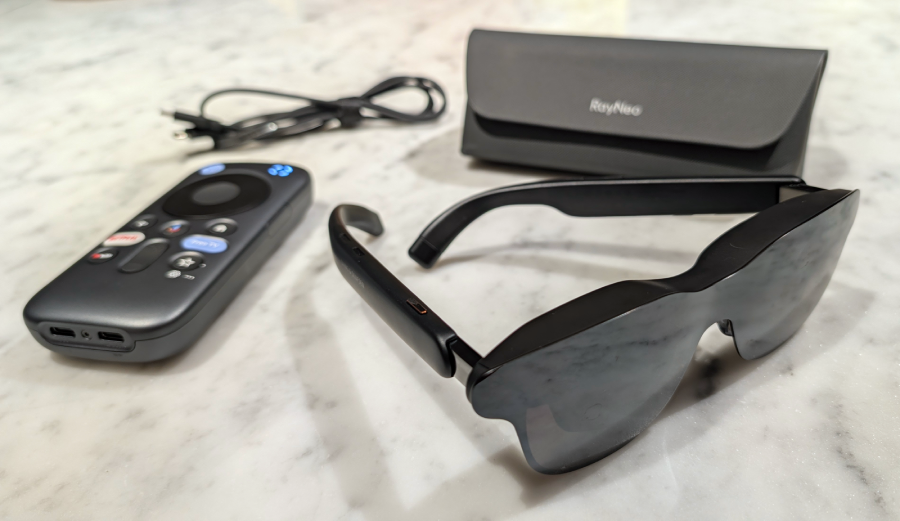
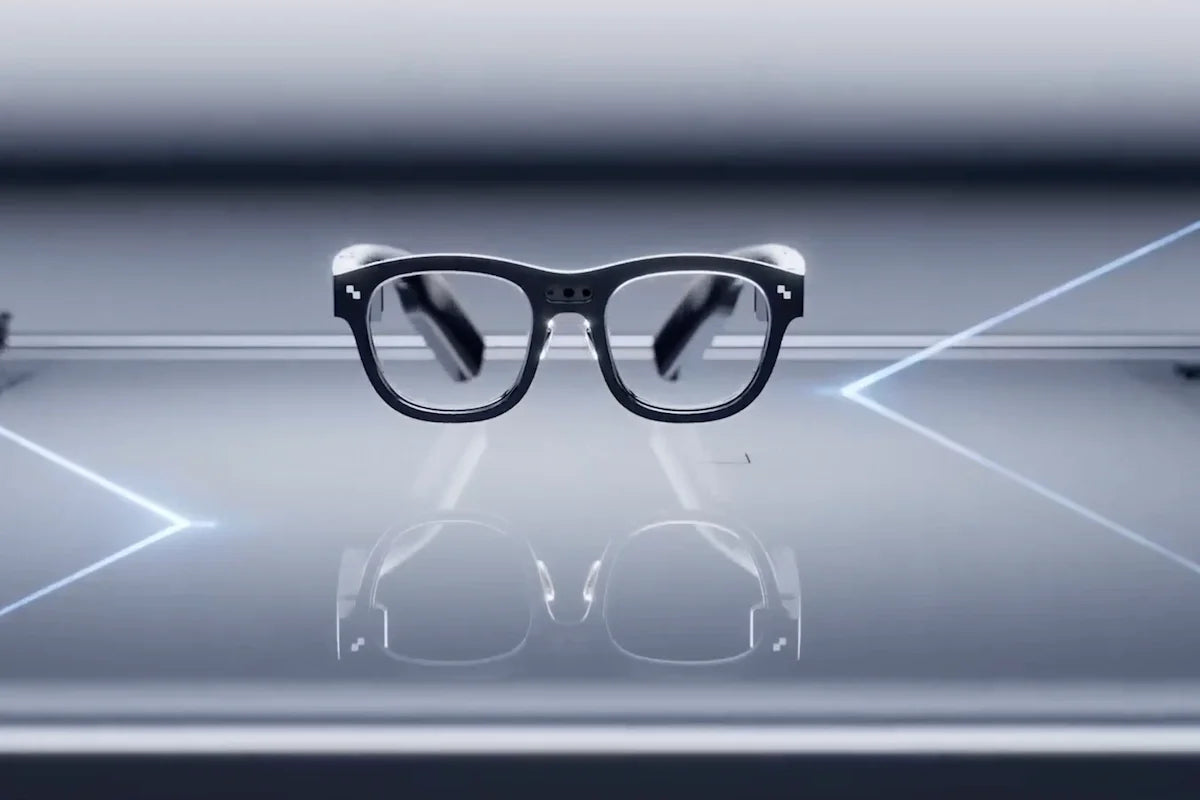
Published on November 27, 2026, a six-week evaluation from auganix.org takes an extensive look at the RayNeo GT, the latest display wearable from TCL's XR subsidiary. Designed to cast a personal, high-resolution monitor directly into the wearer's line of sight, the GT aims to replace bulky portable monitors and cramped airline seatback displays with a compact, plug-and-play form factor.
Hardware specifications place the RayNeo GT firmly in the mainstream display glasses tier. The wearable weighs 68 grams and features a pair of 0.6-inch SeeYa Micro-OLED panels running at 1080p resolution per eye, supporting 120Hz refresh rates in 2D and 60Hz in stereoscopic 3D. RayNeo rates the optical engine at a 46-degree field of view (FOV), delivering 49 pixels per degree and a peak perceived brightness of 1,200 nits. Internal processing is powered by a proprietary Vision 4000 display chip paired with a Zone 360 processor for native three degrees of freedom (3DoF) orientation tracking.
Unlike full AR headsets with external cameras and spatial meshing, the device functions primarily as a portable virtual display fed via USB-C DisplayPort. According to auganix.org, connectivity proved friction-free: the glasses worked instantly when tethered to a MacBook, extending the desktop within seconds without requiring extra software or firmware updates. When plugged into an Android handset like a Google Pixel, the connection offered an immediate prompt to switch between standard phone mirroring and a desktop computing environment with floating, resizable app windows.
TCL built three distinct spatial viewing presets into the wearable: Follow, Steady, and Pinned. Follow anchors the virtual display directly to the user's gaze, while Pinned freezes the monitor in a fixed spatial coordinate so users can look away from it naturally. The reviewer at auganix.org noted that Steady mode, intended to damp subtle vibrations during commutes, suffered from noticeable tracking latency when following head turns, making Follow and Pinned the far more usable options for daily productivity and film watching.
Physical ergonomics generated mixed feedback during testing. The 68-gram frame is notably lighter than its stablemate, the 78-gram GT Max (which steps up to a 59-degree FOV and multiple interpupillary distance sizes). However, the GT relies on a fixed 64mm interpupillary distance, which may limit sharpness for users outside that optical average. Swapping out the swappable nose bridge also proved stiff, requiring substantial force that auganix.org felt was uncomfortable on a fresh piece of hardware.
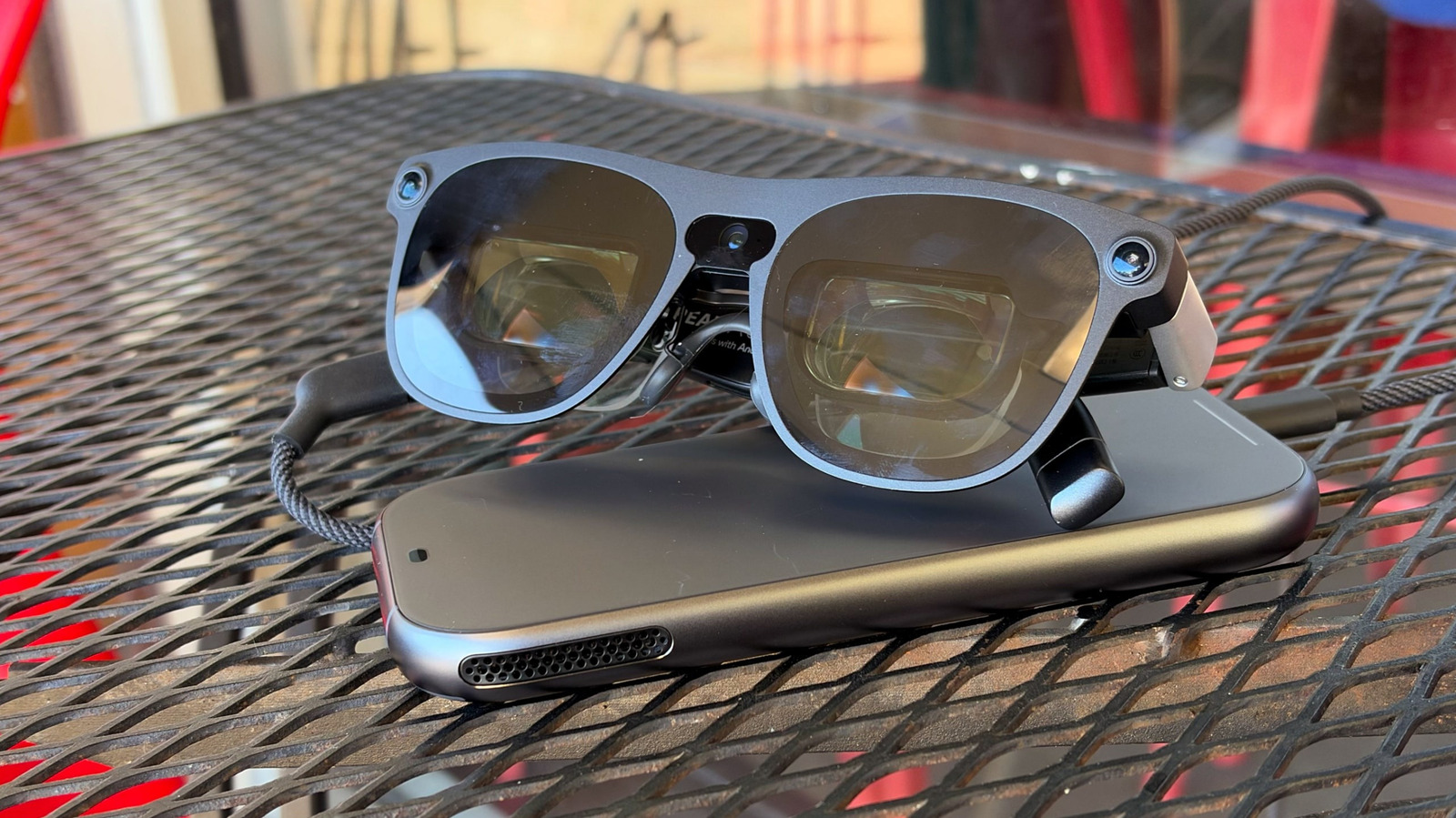
Long-haul travel emerged as the strongest real-world showcase for the hardware. Tethered to TCL's puck-style Pocket TV Pro running Google TV, the glasses transformed short and medium flights lacking in-flight entertainment into a comfortable, private home theater setup. While RayNeo touts AI-driven 2D-to-3D video conversion, that particular software trick remains restricted to recent flagship iPhone models.
Our take: The RayNeo GT reflects the maturing state of the video-glasses segment. Instead of over-promising on complex optical AR that glasses at this price and weight cannot yet sustain, RayNeo focused on display quality, native 3DoF tracking, and zero-fuss connectivity. For frequent flyers and remote workers who want a massive dual display without hauling a heavy portable monitor, the GT hits a practical sweet spot.
Interactive guide: prices, displays, cameras, battery.
Share this story