Guides · Apple
Meta Quest 3 vs Apple Vision Pro: Choosing Between Gaming and Spatial Computing
At six times the price of the Meta Quest 3, the Apple Vision Pro targets an entirely different audience. Here is how the two mixed-reality headsets actually compare.
Head-to-head comparisons between the Meta Quest 3 and the Apple Vision Pro resurfaced this week as shoppers evaluate whether Apple's ultra-premium headset justifies its massive price gap over Meta's mainstream hardware. With the Quest 3 priced at $599 and the Vision Pro starting at $3,699, the two devices occupy drastically different tiers of the mixed-reality market. Yet prospective buyers frequently pit them against each other simply because both represent the most visible consumer face of spatial hardware today.
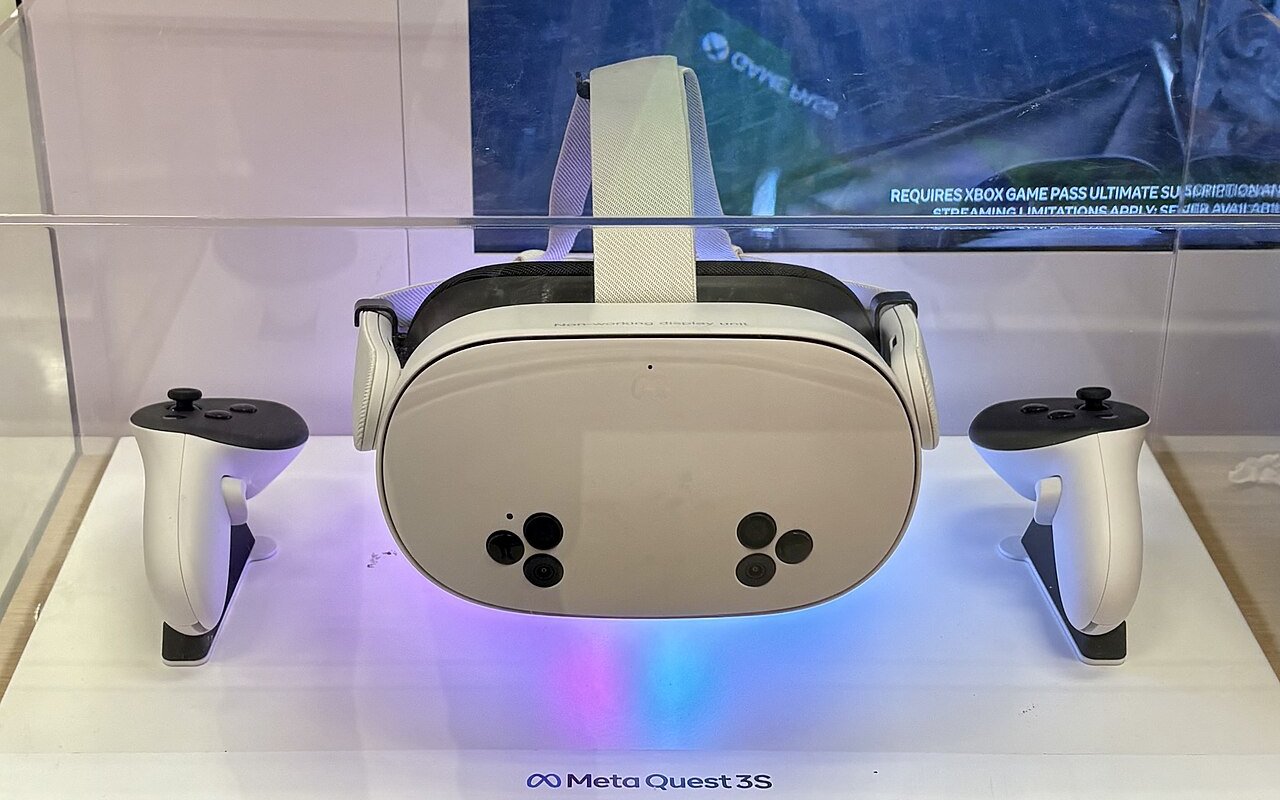
According to an evaluation by vr.org, framing these two headsets as direct rivals misunderstands their core purposes. vr.org argues that the Quest 3 remains the premier VR gaming device on the market, backed by an established library of games, dedicated Touch Plus motion controllers, and an all-in-one chassis with no tethered battery pack. In contrast, vr.org describes the Vision Pro as an uncompromising spatial computer geared toward personal cinema, multi-window productivity, and interface navigation driven entirely by eye and hand tracking.
The hardware divide reflects those contrasting design philosophies. The Quest 3 relies on dual LCD panels delivering roughly 2064 by 2208 pixels per eye, powered by Qualcomm's Snapdragon XR2 Gen 2 chipset. The Vision Pro answers with custom dual micro-OLED displays outputting approximately 23 million pixels across both eyes, paired with Apple silicon and a dedicated R1 chip for sensor processing. While Meta keeps the battery internal for complete physical freedom, Apple offloads the battery to a tethered external pack to trim facial weight. In-home PC VR support is also seamless on Quest through wired Link or wireless Air Link, whereas Apple offers no official SteamVR pipeline, leaving users to rely on community solutions like ALVR.
What this means: The sixfold price premium of the Vision Pro buys breathtaking display clarity, best-in-class pass-through, and a polished operating system, but it does not buy a superior gaming ecosystem. For traditional virtual reality experiences, fitness apps, and room-scale action titles, the Quest 3 is objectively the more practical and versatile choice. Apple designed the Vision Pro as a high-end platform for spatial apps and video consumption, deliberately passing on physical controllers in favor of intuitive pinch-and-gaze navigation.
How it compares: If your mixed-reality priorities revolve around playing immersive titles like Beat Saber or connecting to a gaming PC, the Quest 3 offers unbeatable value per dollar. The Vision Pro is strictly a luxury workstation and media pod for early adopters embedded deeply in the Apple ecosystem who prioritize text legibility and micro-OLED color depth over interactive entertainment. Unless you have $3,700 burning a hole in your pocket for productivity experiments, Meta's $599 headset remains the sensible default for almost everyone.
Interactive guide: prices, displays, cameras, battery.
Share this story