Guides · Meta
Meta Quest 3 vs. Quest 3S: Is the $250 Upgrade Worth It?
With identical processors running the exact same library, choosing between Meta's flagship and budget headsets comes down to optics, display fidelity, and mixed reality depth.
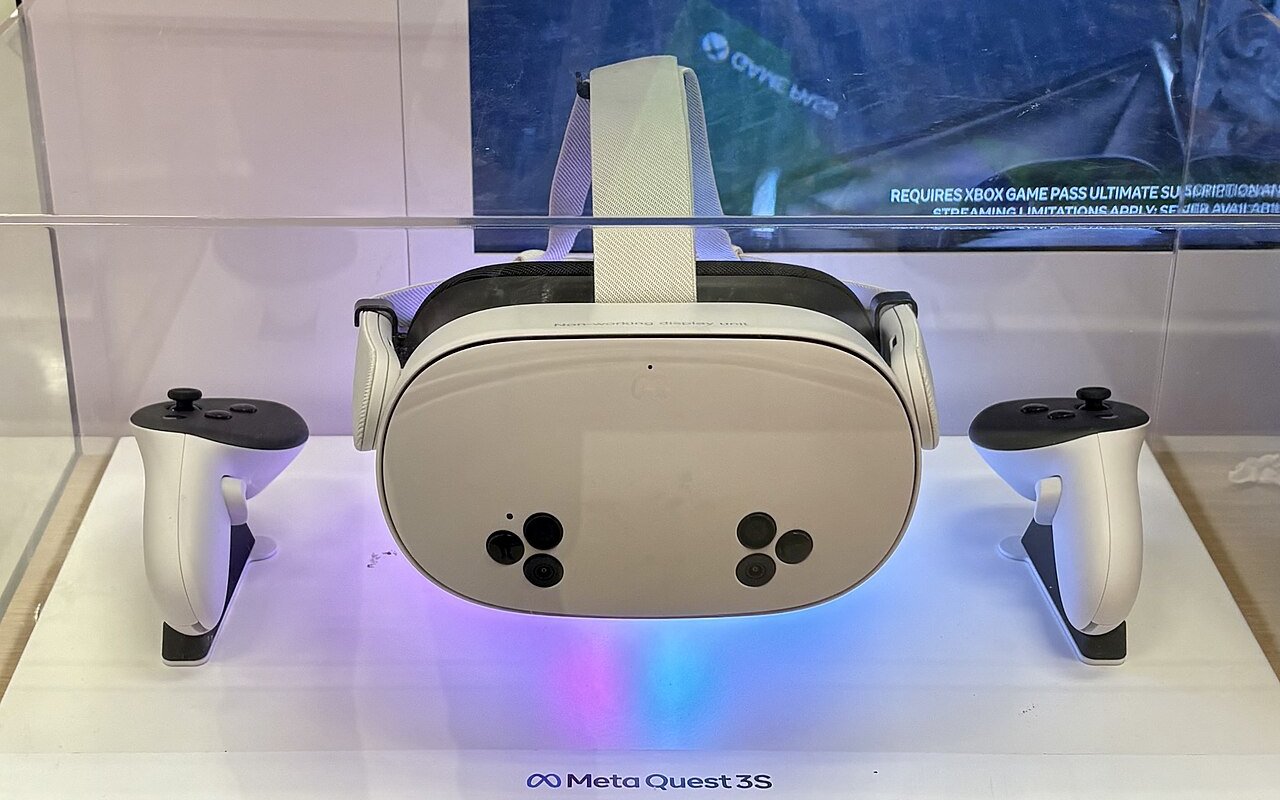
Meta's spatial computing lineup solidified its two-tier strategy this week, leaving consumers with a clear but consequential choice: the $599.99 Quest 3 or the $349.99 Quest 3S. Both headsets share the same underlying silicon and access to the exact same software catalog, yet a $250 price gap separates the baseline models. Deciding which one belongs on your face is no longer about which games you can play, but how clearly you want to see them.
At the heart of both headsets sits Qualcomm's Snapdragon XR2 Gen 2 platform, meaning raw performance, frame rates, and game compatibility are virtually identical across both price points. According to buying data tracked by vr.org, the $349.99 entry-level Quest 3S packs 128GB of storage (with a 256GB tier at $449.99) while delivering roughly 2.5 hours of battery life, slightly edging out the standard Quest 3 on run time. For budget-conscious shoppers looking strictly to jump into the Quest ecosystem and play modern VR titles, the Quest 3S provides the full software experience without compromise.
The $250 premium for the Quest 3 buys critical optical and sensory hardware. As vr.org points out in its breakdown, the Quest 3 features pancake lenses with edge-to-edge clarity, a 110-degree field of view, roughly 30 percent more pixels, a built-in headphone jack, and a dedicated depth projector. The Quest 3S, by contrast, relies on older Fresnel lenses inherited from the Quest 2 generation, limiting its field of view to 96 degrees and introducing optical sweet-spot constraints and chromatic blur toward the peripheral edges.
The sensory package makes a decisive difference for mixed reality. While the Quest 3S includes color passthrough, it lacks the hardware time-of-flight depth sensor found on the flagship Quest 3. That omission forces the 3S to calculate room geometry and depth via computer vision algorithms alone. The result is slightly less reliable spatial mapping, more passthrough distortion during close-up hand interactions, and a lower resolution view of your physical surroundings.
What this means: The Quest 3S is fundamentally a gaming console strapped to your face, whereas the Quest 3 acts as a true spatial computer. If your primary use case involves active VR gaming like 'Beat Saber' or multiplayer shooters, the Fresnel lenses and lower resolution of the 3S are minor concessions that easily justify saving $250. However, if you plan to use the headset for productivity, virtual desktop monitors, reading text, or watching high-bitrate films, the pancake optics on the Quest 3 are non-negotiable. Fresnel lenses cause eye fatigue when reading fine typography, while pancake optics keep the entire panel crisp from center to edge.
Our take: Meta pulled off a rare feat by giving its budget hardware the exact same processing muscle as its flagship, avoiding the fragmented ecosystem that plagues other consumer tech categories. But optics remain the soul of head-mounted displays. If you have the budget, buy the Quest 3 for its edge-to-edge optical clarity and superior mixed reality fidelity. If you simply want to play games without breaking the bank, the Quest 3S remains the best pound-for-pound value in consumer extended reality today.
Interactive guide: prices, displays, cameras, battery.
Share this story