Manufacturer News · Meta
Meta Aids Blind Veterans with Free Smart Glasses, AI Training
Meta is offering free smart glasses and nationwide AI training to legally blind veterans, spotlighting accessibility as a core use case.
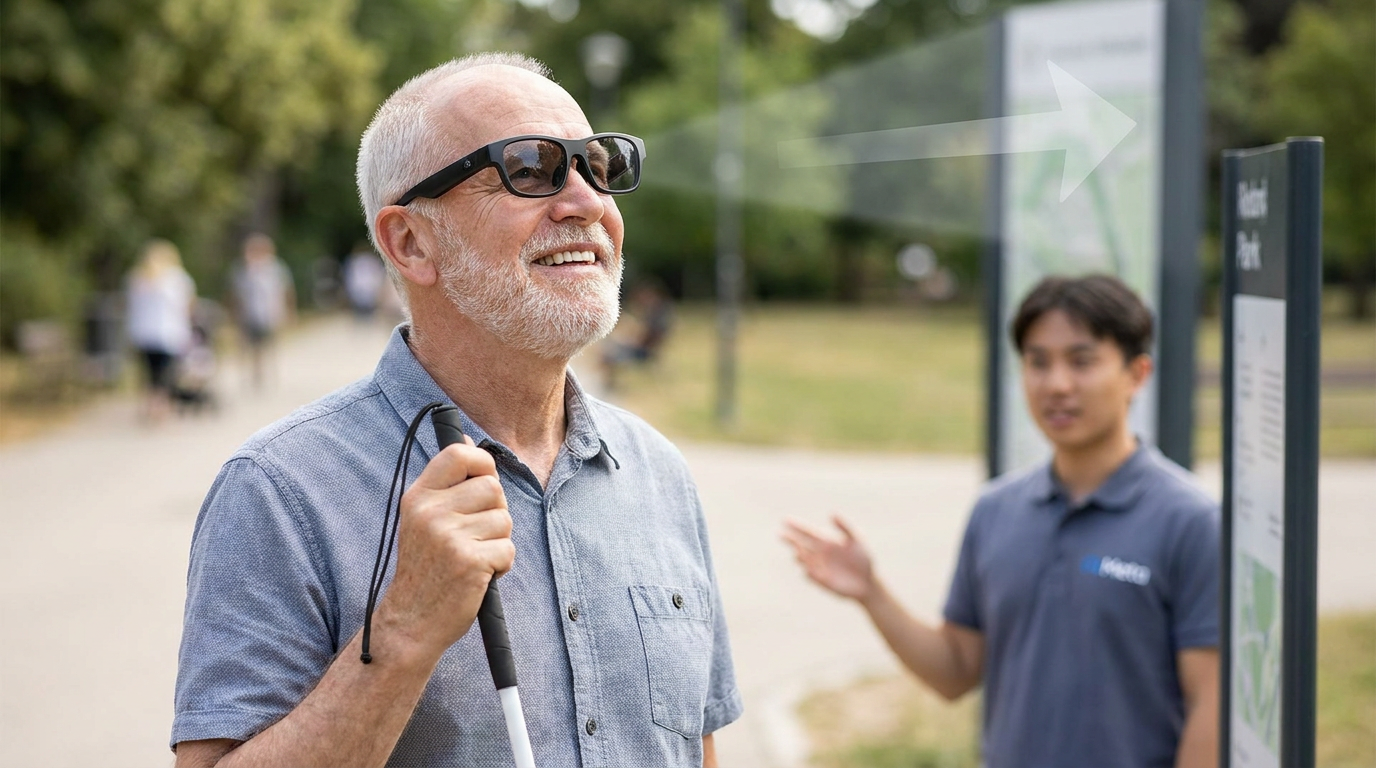
On June 25, 2026, Meta announced a massive accessibility initiative offering free Ray-Ban Meta smart glasses to every legally blind US veteran, an outreach effort covering more than 130,000 eligible individuals. Beyond supplying the hardware at zero cost, the company pledged to pair every single device with comprehensive onboarding and practical training, ensuring recipients can immediately leverage the wearable's multimodal artificial intelligence features.
Hardware alone rarely solves assistive challenges without sustained community support. To bridge the digital divide, Meta is partnering with the Blinded Veterans Association (BVA) and nonprofit technology network TechSoup. Together, the organizations will distribute detailed instructional guides, host monthly training webinars, and organize hands-on, in-person workshops across the United States. According to UploadVR, the program was championed by US Army veteran Don Overton, who lost his vision during the Gulf War and stated that using smart glasses helped restore his daily independence. Eligible veterans can request their frames directly through the BVA portal.
For blind and low-vision wearers, the core utility of the Ray-Ban Meta glasses centers on visual interpretation powered by Meta AI. Using the outward-facing camera sensor, users can ask the system to inspect what lies ahead, identify household objects, locate misplaced items, or read printed text aloud through the open-ear speakers. Meta expanded these capabilities with a dedicated "Detailed Responses" accessibility mode, which instructs the underlying vision model to deliver rich, descriptive breakdowns of a scene rather than the concise conversational snippets served to general consumers.
The frames also incorporate integration with Be My Eyes, an established global visual assistance platform. The integration enables wearers to initiate hands-free, point-of-view video calls connecting them directly to sighted volunteers or customer service agents who can help navigate tricky real-world obstacles. However, as UploadVR observes, generative vision models remain prone to hallucinations, and Meta explicitly warns users not to rely on automated machine descriptions for safety-critical navigation or high-risk tasks.
Highlighting the wider mission behind the project, Meta Chief Technology Officer Andrew Bosworth framed the hardware rollout as a debt of gratitude. "These veterans sacrificed their sight in service to our country," Bosworth stated, emphasizing that delivering assistive spatial tools represents a profound honor that validates the engineering effort behind the company's wearable hardware roadmap.
Our take: Accessibility has quietly become the single most practical, life-changing application for modern AI glasses. While industry analysts frequently debate displays, mixed-reality pass-through, and form factors, visually impaired users are deriving genuine utility today from display-free, lightweight camera frames. Providing up to 130,000 devices to blind veterans is certainly good corporate stewardship, but it also creates the world's largest focused testbed for real-world assistive AI. The continuous feedback gathered from this deployment will give Meta indispensable telemetry to refine low-latency computer vision, voice interaction, and scene understanding far faster than its competitors.
Interactive guide: prices, displays, cameras, battery.
Share this story