Manufacturer News · HTC
HTC and Hololight Team Up to Power 5G Enterprise XR Streaming
HTC is pairing its G REIGNS private 5G platform with Hololight's remote rendering tech to stream heavy CAD models directly to headsets.
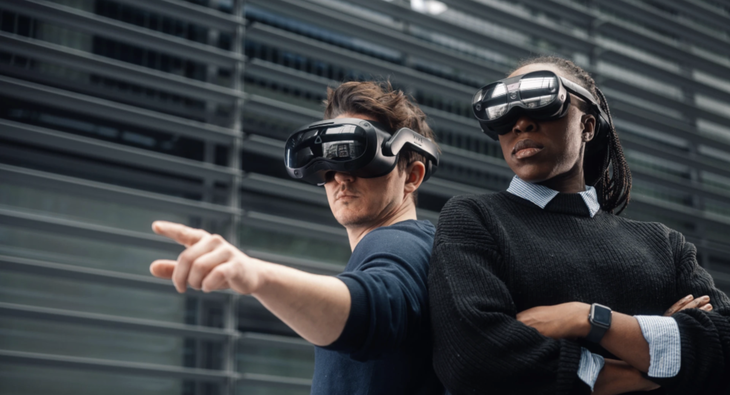
Announced this week, HTC has entered a strategic partnership with enterprise XR streaming specialist Hololight to integrate HTC's G REIGNS private 5G infrastructure with Hololight's remote rendering technology. The joint offering targets industrial organizations looking to deploy heavyweight 3D visualization, immersive training, and collaborative digital twins across standalone headsets without tethering users to desktop workstations or relying on congested local Wi-Fi.
According to HTC VIVE Blog, the core mechanism of the system relies on real-time pixel streaming rather than local data processing. Instead of pushing multi-gigabyte computer-aided design (CAD) assemblies directly onto the client headset's onboard storage, the heavy rendering workload executes entirely on on-premises edge servers. The private 5G pipeline then streams the resulting video frames back to the operator with minimal latency, while returning tracking and input telemetry back to the host machine.
This split-rendering architecture tackles two of the most persistent bottlenecks in enterprise spatial computing: graphics compute limits and intellectual property protection. Industrial blueprints, defense mockups, and proprietary automotive assets never leave the secured on-premise server environment. Because the headset only receives encrypted video streams, organizations can visualize polygon-dense engineering models that would otherwise crush the mobile chipsets powering standalone smart glasses and mixed reality headsets.
On the connectivity side, HTC is positioning its G REIGNS platform as the dedicated transmission backbone. Built by HTC's telecom arm, G REIGNS delivers localized, portable private 5G networks that can be quickly deployed inside factory floors, defense testing grounds, or aerospace hangars. HTC reports that the combined solution remains device-agnostic, allowing enterprises to stream high-fidelity content not only to HTC VIVE headsets like the Focus Vision and XR Elite, but across other major third-party spatial computing hardware.
The companies demonstrated the joint architecture live at the I/ITSEC 2025 defense training simulation conference in Orlando. In comments published by HTC VIVE Blog, Hololight co-founder and CEO Florian Haspinger highlighted that the combined technologies make it possible to experience complex 3D content anywhere securely and without compromise. Dan O'Brien, President Americas at HTC, noted that the collaboration enables organizations to harness private 5G and XR for faster, more connected field operations.
What this means: The enterprise XR market is bumping against unavoidable thermal and battery constraints. Standalone spatial headsets cannot pack desktop-class GPUs into lightweight chassis without overheating or burning through power in thirty minutes. For defense, manufacturing, and aerospace teams handling proprietary CAD files, remote edge rendering over high-throughput private 5G is the only viable path forward. By packaging Hololight's streaming stack with its own G REIGNS hardware, HTC is smartly shifting its commercial focus beyond selling headsets and toward providing essential enterprise spatial infrastructure.
Interactive guide: prices, displays, cameras, battery.
Share this story