Manufacturer News · Google
Google Unveils $395 Gemini Smart Glasses Built with Samsung and Warby Parker
Co-developed with Samsung, Gentle Monster, and Warby Parker, Google's camera-equipped AI frames land December 10 with a heavy emphasis on user privacy.

Announced November 13, 2026, Google officially launched pre-orders for its new intelligent eyewear collection, signaling a high-profile return to the category it pioneered over a decade ago. Built in collaboration with Samsung and eyewear stalwarts Warby Parker and Gentle Monster, the connected frames are scheduled to ship to retail stores on December 10, initially rolling out across the United States and South Korea.
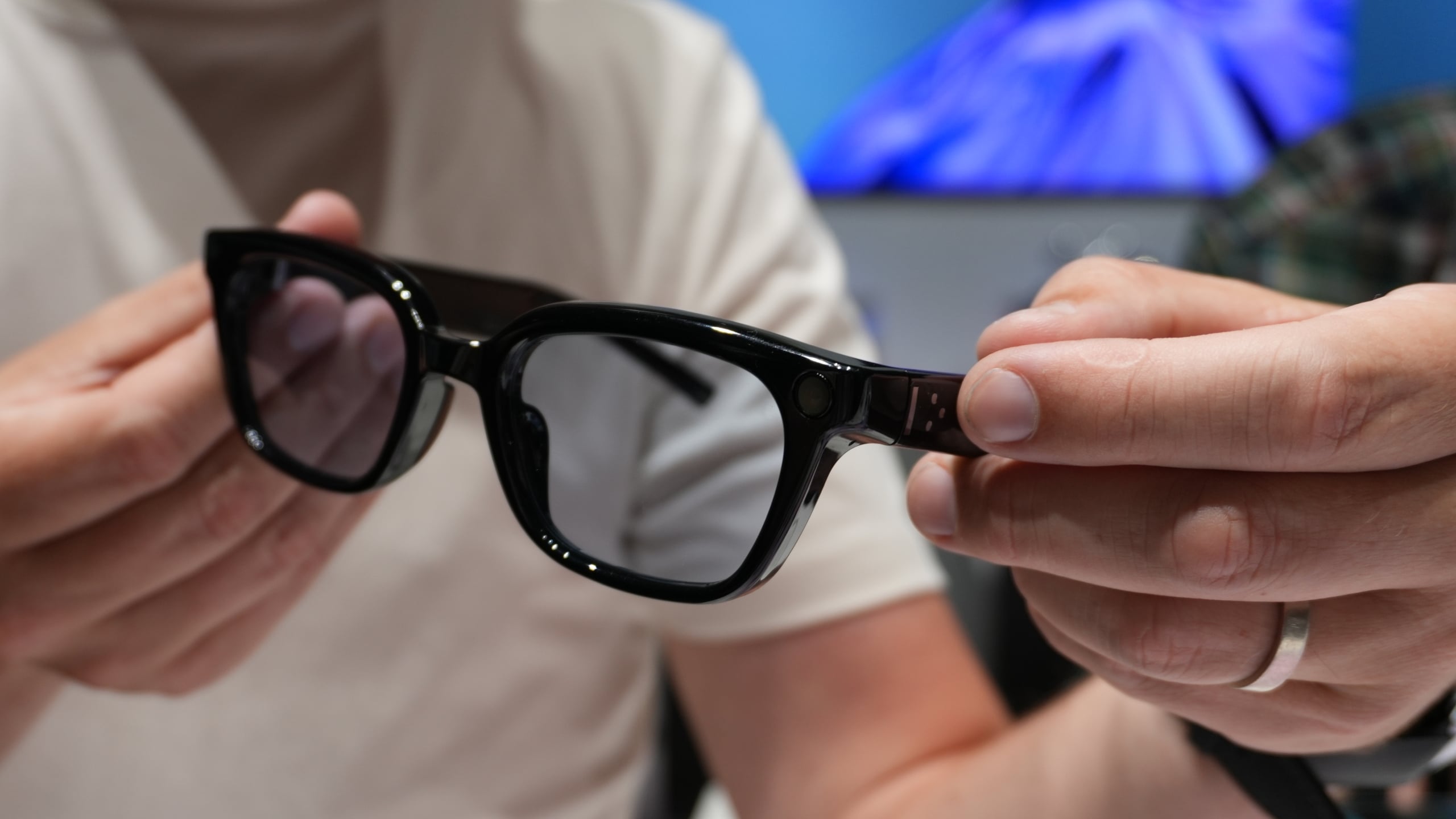
Rather than treating eyewear as an isolated tech novelty, Google is leading with optical pedigree. Pricing starts at $395 for Warby Parker styles and ranges between $449 and $489 for Gentle Monster silhouettes. The initial lineup spans nine distinct frames, including six from Gentle Monster and three from Warby Parker, split into roughly 30 variants covering regular prescription lenses, tints, and sunglasses. On average, the frames weigh approximately 41 grams without lenses and are rated for up to nine hours of continuous battery life on a single charge.
Under the hood, the hardware relies on Qualcomm's Snapdragon AR1 Gen 1 platform paired with 2 GB of RAM and 64 GB of onboard storage. Connectivity is handled by Wi-Fi 6E and Bluetooth 5.4. For imaging, a centered 12-megapixel sensor captures up to 3K video at 30 frames per second, dropping to 2K when HDR processing is engaged. Much like market-standard audio frames, there is no integrated display here. Google is leaning entirely on open-ear stereo speakers, temple touchpads, and directional microphones to drive the user interface.
Gemini sits at the core of the experience. The assistant can process visual context from the camera, pull details from the environment, and read or summarize inbound smartphone alerts. Standalone capabilities are sparse: without a live phone connection, the glasses drop down to a basic camera and volume-controlled audio accessory. Google is also keeping device compatibility fairly tight out of the gate. Pairing requires a Pixel 7 or newer running Android 17, a modern Samsung Galaxy S, FE, or Z model on One UI 9.0 or later, or an Apple iPhone 13 Pro or newer running iOS 26.6 with at least 6 GB of RAM.
Mindful of the backlash that doomed the original Google Glass, Google is mounting a proactive privacy campaign. As Frandroid (FR) notes, Google dedicated an entire policy brief to securing privacy on both sides of the lens. A prominent physical LED illuminates during photo and video capture, and the system automatically shuts down camera functions if the indicator light is obstructed or tampered with. Google has also barred third-party developers on Google Play from using the hardware for real-time facial recognition or direct social livestreams. Crucially, the company pledges that visual inputs analyzed by Gemini will not be funneled into advertising profiles or recycled to train future AI models.
How it compares: By launching at $395 and $449, Google is positioning this device well above Meta's entry-level $299 Ray-Ban tier. As detailed by Wired, Google and Samsung are trading aggressive hardware subsidies for premium materials, optometry-first retail channels, and Gentle Monster's avant-garde styling. Meta still holds the advantage in price and existing market momentum, but Google is betting that consumers who rejected earlier iterations will pay a premium for certified privacy safeguards and deeply integrated Gemini reasoning.
Our take: This launch shows Google finally learning the lesson of consumer optics: you do not sell a computer on someone's face without making it look like real glasses first. Partnering with Warby Parker and Gentle Monster solves the aesthetic dilemma, while Samsung's engineering heft ensures tight manufacturing. The real hurdle will be the tethered compatibility wall. If Google wants these frames to dominate daily wear, it must loosen the leash and make Gemini equally frictionless on standard iPhones and non-flagship Android hardware.
Interactive guide: prices, displays, cameras, battery.
Share this story