Guides · VeriSilicon
VeriSilicon's Smart Glasses Play: Inside the Silicon Quietly Powering Next-Gen Eyewear
VeriSilicon isn't building consumer frames—it's building the ultra-low-power silicon subsystem that could finally break Qualcomm's grip on standalone AI glasses.
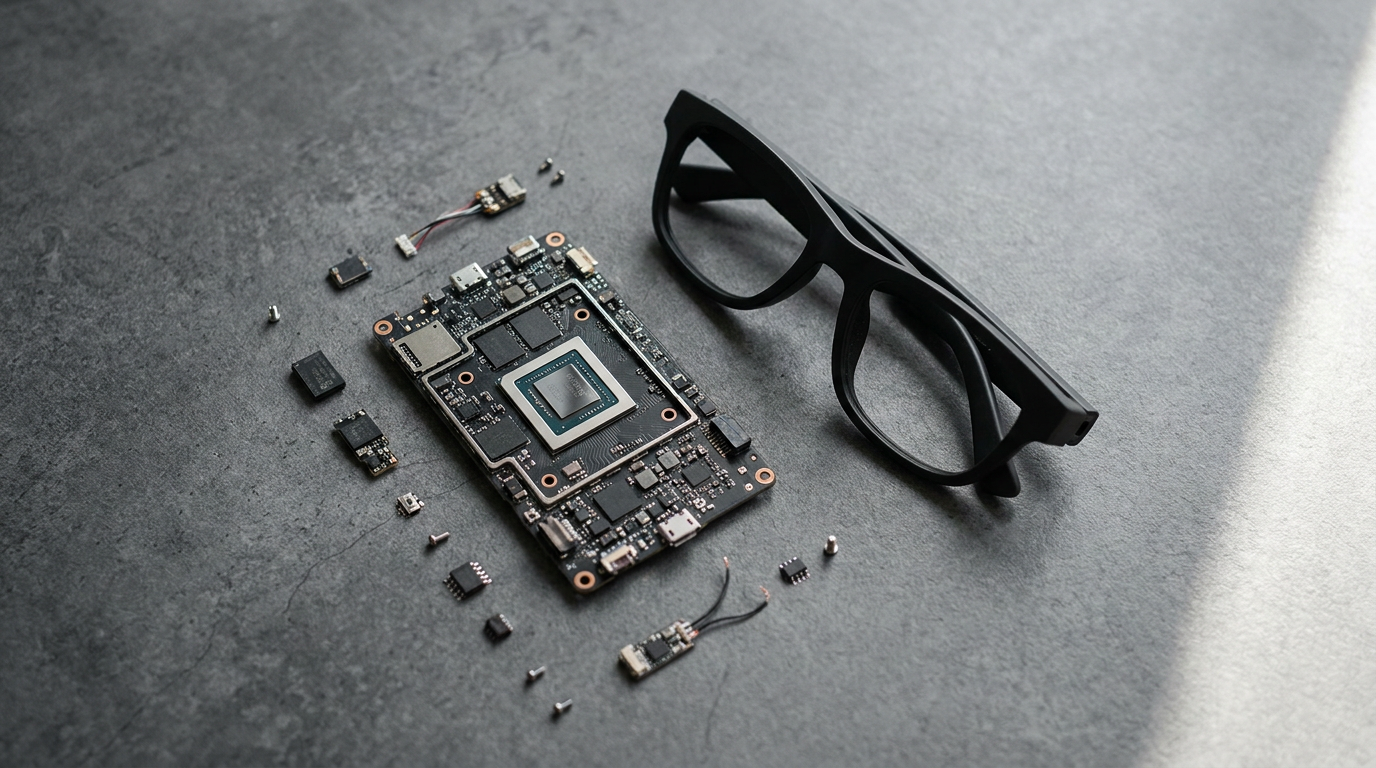
The hardest engineering problem in smart glasses has never been the glass; it is the thermal math. Cramming continuous sensor ingest, on-device neural processing, and micro-display driving into a forty-gram frame without burning the wearer's temples is the graveyard where most wearable ambitions go to die. For the past two years, the consumer market has lived on extremes: either dumbed-down audio frames with decent battery life, or heavy, tethered spatial viewers that chew through handheld packs.
Enter VeriSilicon. While retail headlines fixate on product drops from Silicon Valley and Shenzhen, this Shanghai-headquartered custom silicon powerhouse just laid down an architecture that could fundamentally reshape who gets to build viable smart glasses over the next three years. With its newly unveiled low-power subsystem silicon tailored specifically for next-gen AI and AR eyewear, VeriSilicon is attacking the hardware bottleneck right at the gate level.
Our thesis is straightforward: VeriSilicon does not want to be your next consumer eyewear brand. It wants to be the indispensable silicon engine room for the dozens of hardware makers desperate to bypass Qualcomm's steep price premiums and Meta's walled-garden supply chain.
To understand why VeriSilicon matters now, you have to understand its pedigree. Founded in 2001, the company pioneered Silicon Platform as a Service (SiPaaS). Rather than peddling standard off-the-shelf commodity chips, VeriSilicon licenses comprehensive in-house processor IP—neural network processing units (NPUs), image signal processors (ISPs), digital signal processors, and graphics engines—and packages them into custom system-on-chip (SoC) architectures for third parties.
Its intellectual property has quietly shipped in everything from automotive ADAS platforms and high-end surveillance gear to IoT microcontrollers. But the consumer hardware landscape is shifting. Smartphones are saturated, and wearables have replaced them as the premier proving ground for custom silicon density.
Smart glasses represent the apex challenge for this business model. In an earbud or a smartwatch, workloads are bursty and thermal surfaces are forgiving. In optical smart eyewear, ambient vision models and always-on voice engines demand continuous compute inside a structural footprint that cannot tolerate a heat sink.
VeriSilicon is entering the fray now because the window for generic silicon has slammed shut. Running a stripped-down smartphone application processor inside an everyday frame yields a two-hour battery and unacceptable heat. The industry needs bespoke, subsystem-level silicon designed specifically for milliwatt-budgeted computer vision and micro-display pipelines.
The core of VeriSilicon's smart-glasses footprint is its newly introduced low-power subsystem. Rather than forcing device manufacturers to stitch together discrete components—a separate Bluetooth audio MCU, a generic image processor, and an external co-processor—VeriSilicon is delivering a consolidated, highly integrated architecture built from the silicon up for eyewear.
What we know from public disclosures centers on an optimized IP blend: dedicated low-power NPU blocks tuned for on-device multimodal AI, a high-efficiency ISP capable of handling low-latency camera streams for environmental awareness, and a display processing engine engineered to interface with modern microLED and microOLED panels without draining the system battery.
Because VeriSilicon operates as an IP licensor and turnkey ASIC design provider, you will never see a retail box stamped with its logo at an optometrist's shop. Instead, this subsystem is delivered as customizable silicon IP blocks or fully verified turn-key chipsets ready for tape-out, allowing original equipment manufacturers (OEMs) and original design manufacturers (ODMs) to bring differentiated hardware to market in fraction of the time.
VeriSilicon has not yet published explicit clock speeds, nanometer process nodes, or milliwatt benchmarks for public consumption. However, the architectural intent is unambiguous: driving active sensor fusion and local AI inferences well inside the sub-300-milliwatt envelope required for all-day wearable reliability.
When positioned against the broader market, VeriSilicon's platform represents a direct counterweight to Meta's proprietary moat. Meta's Ray-Ban smart glasses lean on Qualcomm's Snapdragon AR1 Gen 1—a capable platform, but one tied to Qualcomm's ecosystem pricing and roadmap priorities. By contrast, VeriSilicon offers mid-tier OEMs a way to build bespoke, specialized silicon tailored to specific workloads without surrendering product identity to San Diego.
Contrast this with where companies like Viture and Xiaomi currently stand. Viture has carved out an enviable display-first niche with its Pro XR and Luma Pro frames, but those devices remain fundamentally tethered to external host compute via USB-C to sidestep onboard thermal limits. Xiaomi has split the difference, selling straightforward Mijia smart audio glasses while teasing standalone AR concepts in concept labs. A platform like VeriSilicon's gives players in Xiaomi's or Viture's orbit the architectural bridge needed to build untethered, standalone frames without engineering an entire custom SoC from scratch.
The differentiator boils down to ownership and efficiency. Off-the-shelf mobile silicon forces smart-glasses designers to inherit deadweight silicon blocks they do not need. VeriSilicon's modular subsystem strips the fat, giving hardware houses exactly what eyewear requires: rapid wake-to-infer times, low-latency sensor ingestion, and razor-thin idle draw.
VeriSilicon's strength lies in its proven IP portfolio and its ability to drastically slash the non-recurring engineering (NRE) costs of building custom wearable chips. Its glaring vulnerability is developer mindshare: unlike Qualcomm or Apple, VeriSilicon does not control an end-to-end consumer software ecosystem. It relies entirely on its hardware partners to build compelling operating environments, tune optical drivers, and ship polished consumer firmware.
Over the next twelve months, do not look for VeriSilicon on consumer store shelves. Watch the spec sheets of tier-two consumer brands, lifestyle eyewear collaborations, and Asian hardware ecosystems announcing sub-fifty-gram AI frames. If a sudden crop of agile competitors starts delivering all-day battery life and responsive on-device AI without a Snapdragon badge inside, VeriSilicon's fingerprints will be all over the silicon.
Interactive guide: prices, displays, cameras, battery.
Share this story