Guides · Even Realities
Smart Glasses Turn Into Discreet Teleprompters: How Waveguides Shine
Waveguide-equipped smart glasses from Even Realities and XGIMI offer hands-free teleprompting that keeps eyes focused on the audience without traditional hardware.
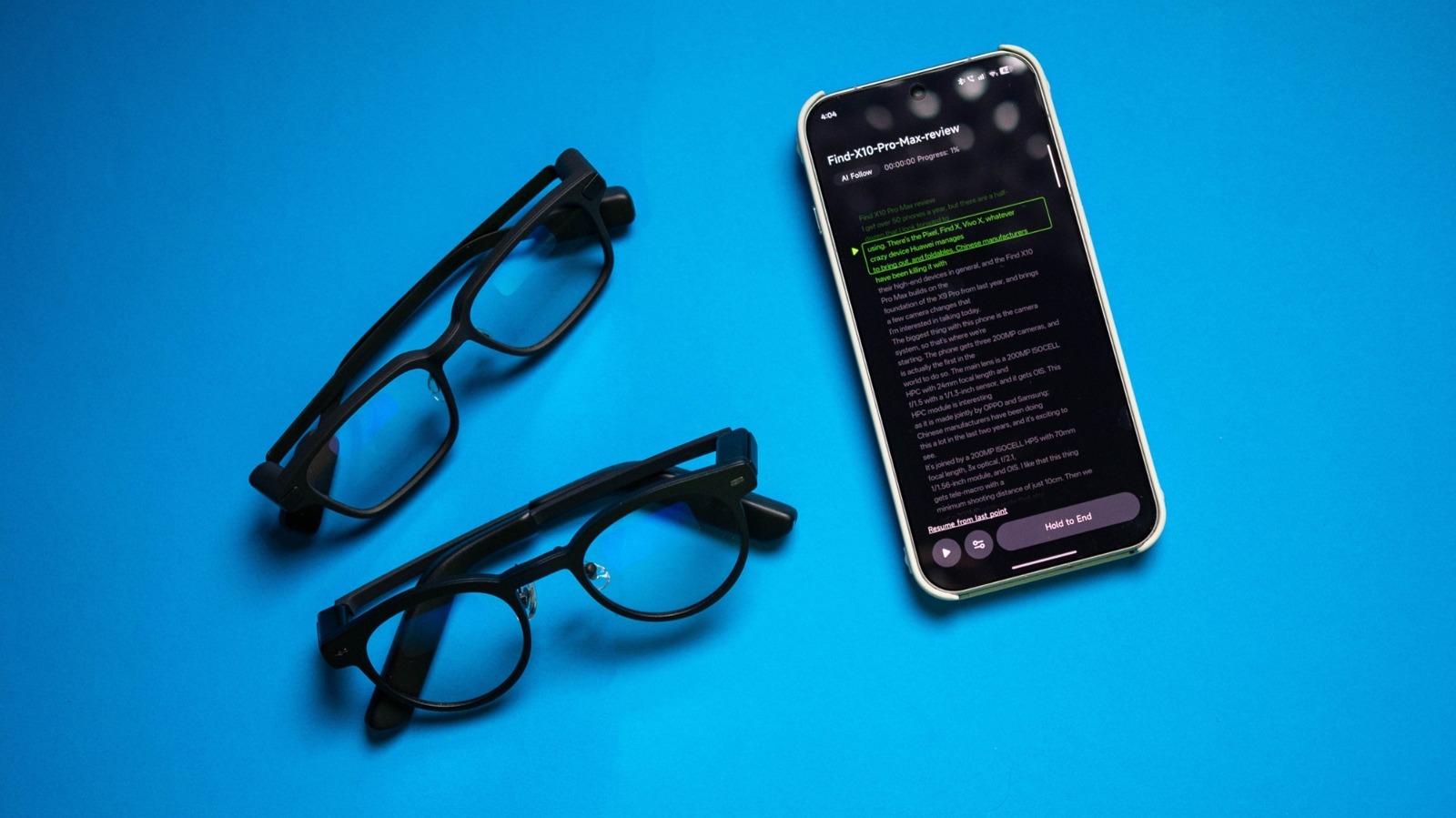
Smart glasses with heads-up waveguide displays are evolving past simple notification hubs, carved out as practical tools for public speakers and video creators. Detailed on November 22, 2026, by Harish Jonnalagadda of engadget.com, camera-free waveguide frames like the Even Realities G2 and the XGIMI MemoMind One serve as unobtrusive personal teleprompters. By superimposing scrolling text directly into a presenter's line of sight, these frames allow speakers to deliver remarks without glancing down at physical cue cards or monitor stands.
Setting up teleprompter modes on these devices relies on mobile companion apps that push scripts over Bluetooth directly into the microLED optical engines. According to engadget.com, the Even Realities G2 supports TXT, DOCX, and PDF formats, whereas the MemoMind One handles TXT and DOCX files. Presenters upload their scripts in advance and can tweak scroll pacing to match their typical speaking tempo.
Formatting controls differ between the two headsets. Jonnalagadda notes that the MemoMind One provides deeper customization options, allowing users to tweak font size, display scaling, and line width specifically for teleprompter playback. Both devices incorporate speech-cadence tracking, using onboard microphones and onboard processing to listen to the speaker's voice in real time and automatically advance or pause text when the speaker speeds up, slows down, or pauses.
Visual feedback during presentation playback goes beyond just the words themselves. In his hands-on testing with a smartphone review script, Jonnalagadda reported that the monochrome microLED waveguides displayed an elapsed session timer, current battery percentage, and the time of day alongside the script without blocking his normal peripheral vision. He also observed that the green waveguide glow remains virtually undetectable to an audience standing further than 15 centimeters away, preserving the illusion of unprompted speech.
Outdoor visibility remains a key differentiator among waveguide optics. Engadget.com highlighted that while both the MemoMind One and Even Realities G2 provided legible monochrome text in outdoor lighting conditions, the MemoMind One achieved higher peak brightness levels when battling direct sunlight. The lack of integrated camera sensors on both models also bypasses common privacy concerns in public speaking halls and boardroom settings.
Our take: The teleprompter use case proves that smart glasses do not need bulky spatial computing chips or conspicuous cameras to deliver real, professional utility. Lightweight monochrome waveguides paired with acoustic speech tracking eliminate the awkward eye-tracking drift typical of studio glass rigs and podium monitors. While the software still requires basic manual preparation and file formatting, waveguide teleprompting represents one of the cleanest, lowest-friction enterprise applications the eyewear category has produced to date.
Interactive guide: prices, displays, cameras, battery.
Share this story