Guides · TOZO
TOZO Brand Guide: From Budget Earbuds to the Virtual Big Screen
Budget audio powerhouse TOZO is pivoting to face-wear with the gaming-focused VIZO Z1 Pro. Here is what their entrance into wearable displays means for the smart eyewear race.
Amazon audio juggernaut TOZO is making a play for your face. Best known for shifting millions of ultra-affordable true wireless earbuds to everyday consumers, the direct-to-consumer hardware brand is officially stepping up into head-mounted displays.
It is a calculated, opportunistic leap. Instead of entering the hypersaturated multimodal AI race dominated by Silicon Valley tech giants, TOZO is anchoring its initial foray on pure visual utility: delivering high-brightness personal screens to console gamers and media enthusiasts.
If TOZO can translate its mastery of aggressive supply-chain pricing and solid consumer electronics fundamentals to display optics, it could quickly disrupt the wearable monitor sector before incumbent smart-glasses makers even register the threat.
To understand TOZO is to understand high-velocity consumer tech. Founded as a value-driven electronics player, the brand built its empire on straightforward audio hardware and wireless charging accessories, earning millions of customer reviews by undercutting legacy brands without collapsing on build quality.
Why jump into smart glasses now? The true wireless stereo earbud market is commoditized to the bone. Hardware margins on basic Bluetooth audio have evaporated, forcing ambitious accessory makers to search for the next peripheral frontier.
Eyewear is that logical frontier, but building ambient AI glasses requires costly software engineering and cloud infrastructure. By pivoting toward tethered display glasses instead, TOZO sidesteps the software overhead and addresses a concrete, existing consumer demand: a pocketable gaming monitor.
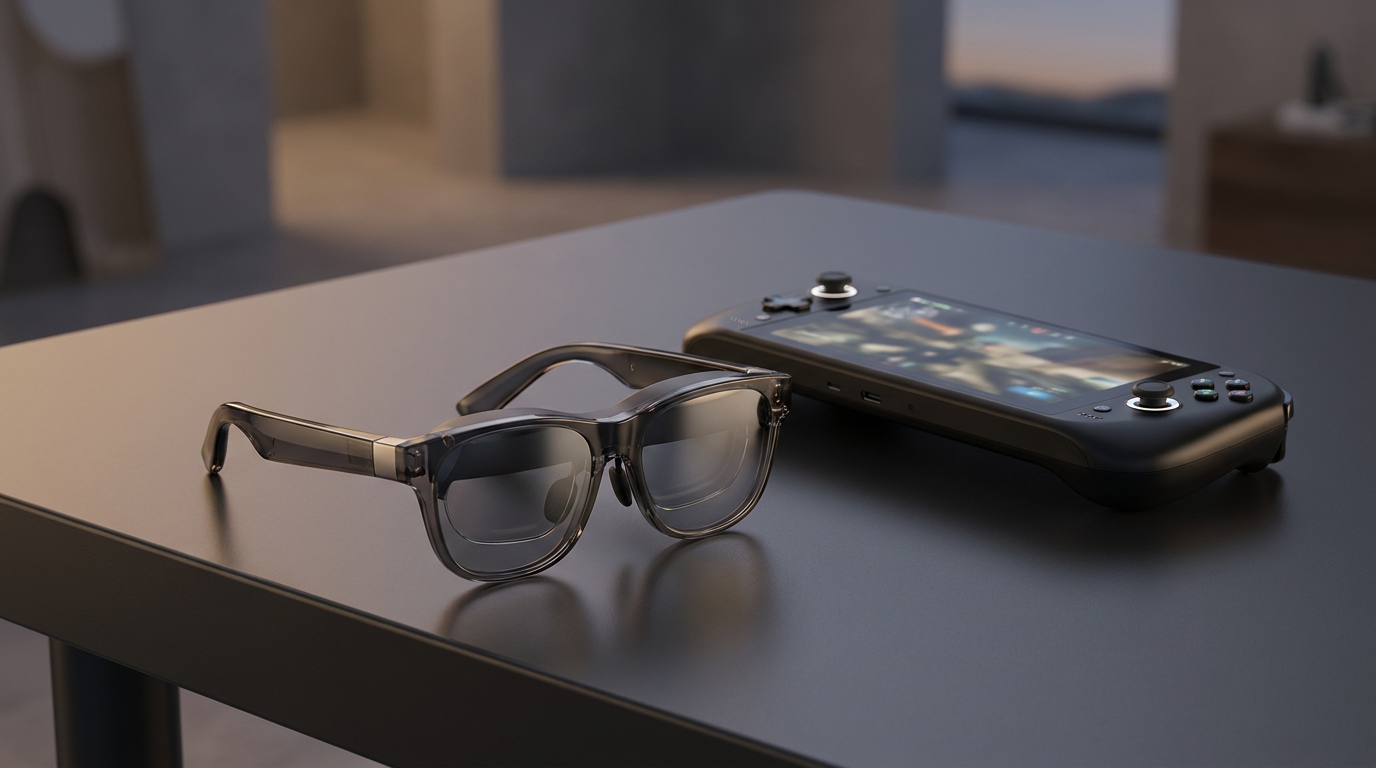
Leading this charge is the TOZO VIZO Z1 Pro AR Glasses, the brand's inaugural wearable display designed specifically for console gaming and portable media. It represents a dramatic philosophical shift from ambient smart frames toward dedicated entertainment hardware.
The core proposition centers on sheer display presence. The VIZO Z1 Pro projects an expansive 160-inch virtual screen directly before the wearer's eyes, backed by an impressive 1,800 nits of peak brightness engineered to combat ambient daylight washout.
Ergonomics often make or break first-generation display frames, and TOZO addressed a key friction point out of the gate by incorporating built-in myopia adjustment. That native accommodation removes the hassle of prescription lens inserts for nearsighted gamers, streamlining out-of-the-box utility.
Positioned against the broader smart-glasses landscape, TOZO is carving out a completely different niche than Meta. While the Ray-Ban Meta line dominates social media capture, ambient audio, and multimodal AI assistance, it features zero display capability; TOZO offers no camera or onboard AI, focusing entirely on micro-display immersion.
Compared to Huawei's Eyewear line—which remains resolutely audio-only—TOZO is aiming for higher hardware complexity. And while Apple pitches the Vision Pro as a multi-thousand-dollar spatial computing workstation, TOZO is eyeing the pragmatic, budget-conscious end of the spectrum, serving as an external screen for Steam Decks, Nintendo Switches, and PlayStation consoles.
The primary hurdles for TOZO will be comfort, thermal dissipation, and optical clarity. Delivering 1,800 nits in a wearable frame generates heat, and budget hardware manufacturers historically struggle with the nuanced weight distribution required for marathon gaming sessions.
Over the next 12 months, watch the VIZO Z1 Pro's retail price point and user reviews on optical distortion. If TOZO hits its signature value-to-performance ratio, it could establish itself as the go-to wearable display for gamers on the move.
Interactive guide: prices, displays, cameras, battery.
Share this story