Analysis · Multi-brand
The Siri Bottleneck: How Samsung and Google Stole Apple's Eyewear Runway
With Apple's screenless N50 frames reportedly frozen until late 2027 by software delays, Samsung and Google just proved that model velocity beats hardware perfection in the race for your face.
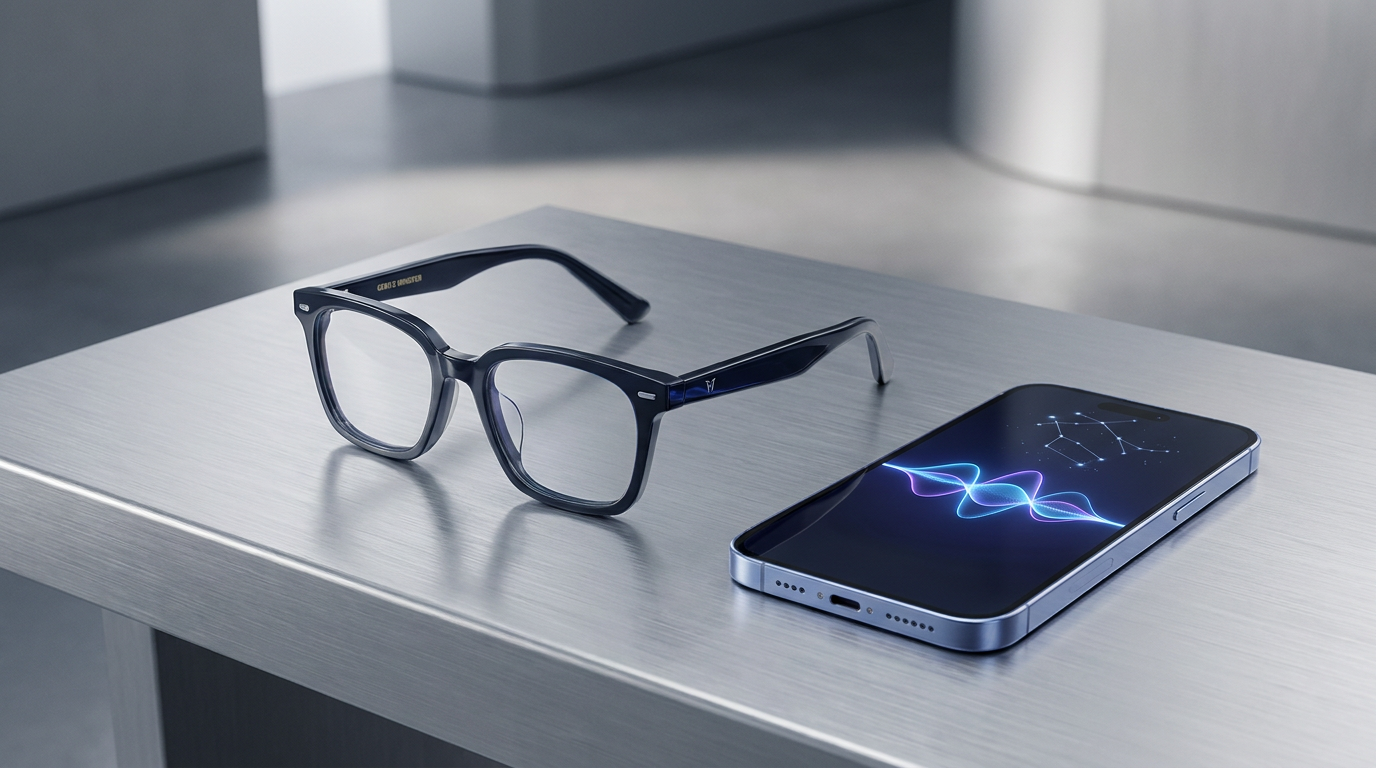
Consumer electronics history usually follows a predictable Cupertino script. Competitors rush half-baked hardware to store shelves, Apple bides its time in secret labs, and then Tim Cook steps onto a keynote stage to deliver the definitive, polished version of the product category. That playbook just broke down entirely in the smart glasses arena. While Apple remains paralyzed by its inability to fix Siri, Samsung and Google have successfully executed an ambush that locks up the consumer market twelve months before Apple even takes the stage.
The evidence arrived with startling clarity this week. Initial preorder allocations for Samsung and Google's Gentle Monster Intelligent Eyewear sold out across South Korea in four days flat, while preview reservations in New York filled almost instantly. Starting at 650,000 won (roughly $490), with base tier Warby Parker frames opening at $395, the hardware ships on December 10, 2026. Consumers are not waiting for holographic science fiction; they are eagerly buying discreet, fashion-forward frames powered by functional ambient intelligence.
Under the hood, the Samsung and Google alliance solved the wearable equation by embracing ruthless pragmatism. Powered by Qualcomm's Snapdragon AR1 Gen 1 silicon and tethered to Galaxy smartphones via split-computing architecture, the frames offload heavy computational processing to the device in your pocket. More importantly, the hardware interfaces directly with Google's newly minted Gemini 4 Hydrogen reasoning model, which delivers 2.5 times faster throughput than previous iterations. The frames act as an agile sensory outpost for frontier cloud models, capturing 12MP visual context without melting on your temples.
Compare that execution to the grim dispatch from Cupertino. Fresh reporting on Apple's inaugural smart glasses, internally codenamed N50, reveals an industrial design that is largely finalized. Like Samsung and Google, Apple has completely abandoned complex waveguide optical engines in favor of a screenless design built on cameras, microphones, and iPhone compute tethering. Yet despite having the physical frame locked down, Apple has reportedly pushed its public preview back to WWDC in June 2027, with retail availability delayed until late that year at the absolute earliest.
The culprit behind Apple's two-year paralysis is neither battery chemistry nor titanium yields. The bottleneck is Siri. For over a decade, Apple's voice assistant has been an industry punchline, but on an iPhone or an Apple Watch, a flawed voice assistant is merely an occasional annoyance bypassed with a touchscreen swipe. On a pair of display-less smart glasses, the conversational assistant is the entire operating system. If your glasses cannot interpret conversational nuance or act on visual input instantly, they are nothing more than an overpriced webcam sitting on your nose.
Apple simply does not possess a reasoning model capable of matching Google's multimodal speed, and its hesitation is fatal. Generative artificial intelligence moves on weekly software milestones, not three-year industrial design cycles. By anchoring hardware release schedules to the glacial overhaul of Siri's backend, Apple is treating ambient AI like standard consumer silicon. But smart eyewear is fundamentally a software-defined product, and hardware without an agile brain is dead on arrival.
Google understood this dynamic and moved decisively. Instead of treating smart glasses as a monolithic moonshot like Google Glass or Apple Vision Pro, Mountain View flooded retail channels with choice. Google paired its Gemini 4 rollout with an 18-part product offensive, spanning Warby Parker boutiques, Gentle Monster luxury showrooms, and the wired Android XR XREAL AURA display glasses. Google realized that smart glasses are consumer accessories first and computing platforms second, requiring diverse retail partnerships rather than single-ecosystem vanity.
The sheer velocity of the underlying AI software is already altering real-world behavior in ways hardware makers are scrambling to govern. When South Korean creators recently showed that off-the-shelf smart eyewear paired with reasoning models could score a flawless 400 on professional tax licensing exams, it triggered emergency meetings at Samsung to install anti-cheating protocols before next month's commercial debut. The intelligence driving these frames is already potent enough to upend social environments, and it is shipping to the public next week, not two summers from now.
By the time Apple tentatively rolls out its N50 frames in late 2027, the market will have endured two years of continuous real-world calibration. Millions of consumers will already be accustomed to querying Gemini through Warby Parker and Gentle Monster frames for daily directions, image recognition, and live translation. Developers will have spent twenty-four months optimizing multimodal workflows for Android XR and split-computing Galaxy pipelines, refining latency down to imperceptible milliseconds.
Cupertino made the catastrophic error of assuming the smart eyewear race would wait for Apple's signature luxury perfectionism. While Apple marooned its spatial computing ambitions in the four-figure luxury ghetto with the Vision Pro, it treated the display-less audio category as an afterthought. That complacency allowed Samsung and Google to transform what was once considered a Meta-dominated novelty into a standardized, essential accessory for the world's largest mobile operating system.
Smart glasses do not need holographic micro-LEDs to win mainstream adoption; they need immediate, flawless utility wrapped in frames that people feel confident wearing to dinner. Samsung and Google delivered that balance by letting high fashion handle the exterior and frontier models handle the cognition. Apple can polish the titanium bevels of its N50 frames all it wants, but until Cupertino builds an assistant that can actually think in real time, it is marooned on the sidelines watching Android capture the face.
Interactive guide: prices, displays, cameras, battery.
Share this story