Analysis · Multi-brand
The Pocket Puck Surrender: Why True Spatial Computing Had to Leave Your Face
XREAL and Meta have both abandoned the all-in-one headset fantasy by pairing Snapdragon silicon with an external puck. As Android XR adds spatial multitasking, the battle for spatial computing moves to your pocket.
For years, Silicon Valley pitched a fantasy where high-performance spatial computing would live entirely on your brow, self-contained and cord-free. Devices like the Apple Vision Pro tried to force that dream into reality by strapping heavy aluminum, cooling fans, and dense batteries onto the human skull. The result was a bulky, isolating, and commercially stagnant category that consumers largely rejected in favor of lightweight frames. Now, extended reality hardware makers are executing a quiet, unanimous course correction. The dream of the monolithic face computer is officially dead.
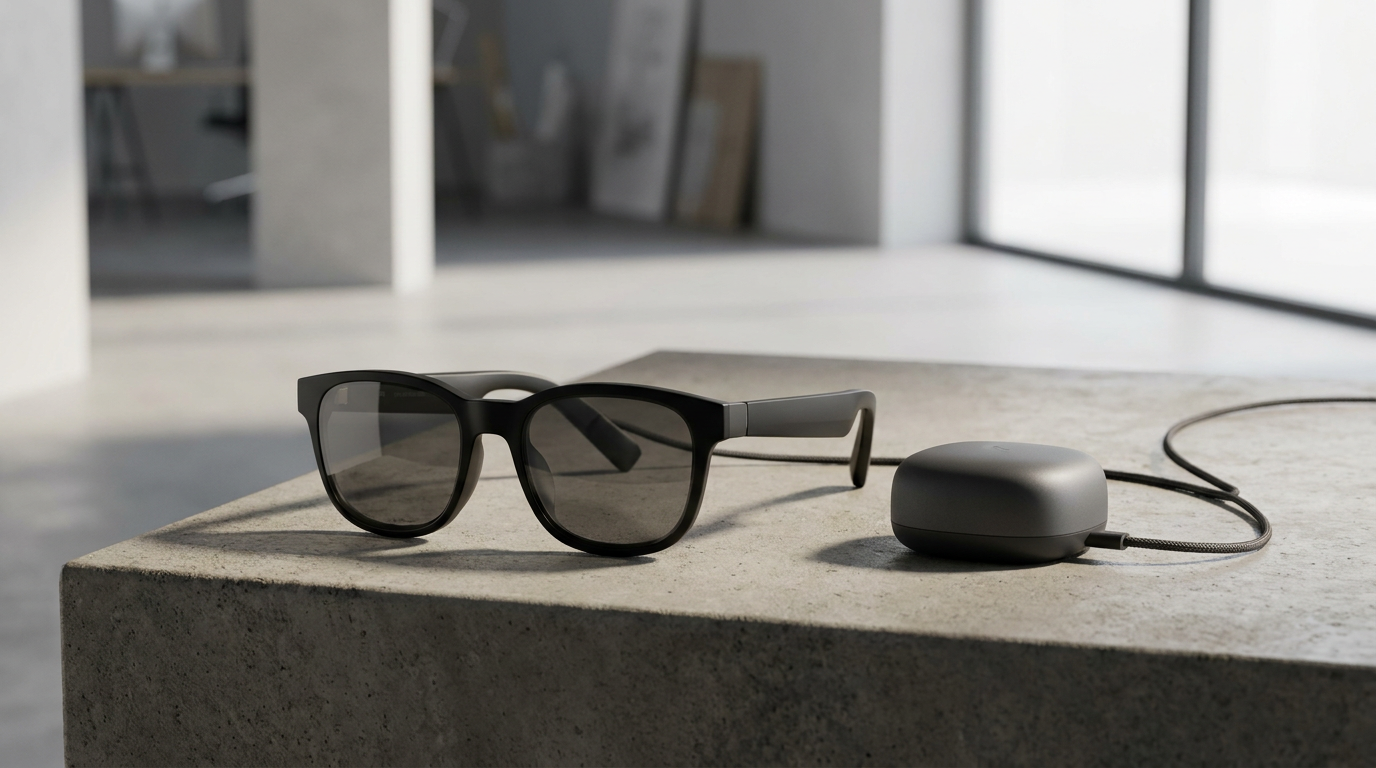
Look no further than the emerging showdown between the XREAL Aura and Meta VR Glasses. Both hardware programs harness Qualcomm's flagship Snapdragon Reality Elite platform, yet both have made the exact same foundational architectural choice. They have severed the primary compute block and battery from the spectacles, banishing both down to a pocket-sized external puck. By admitting that you cannot safely dissipate fifteen watts of desktop-class silicon on someone's nasal bridge, both hardware makers have formally abandoned the standalone helmet dogma.
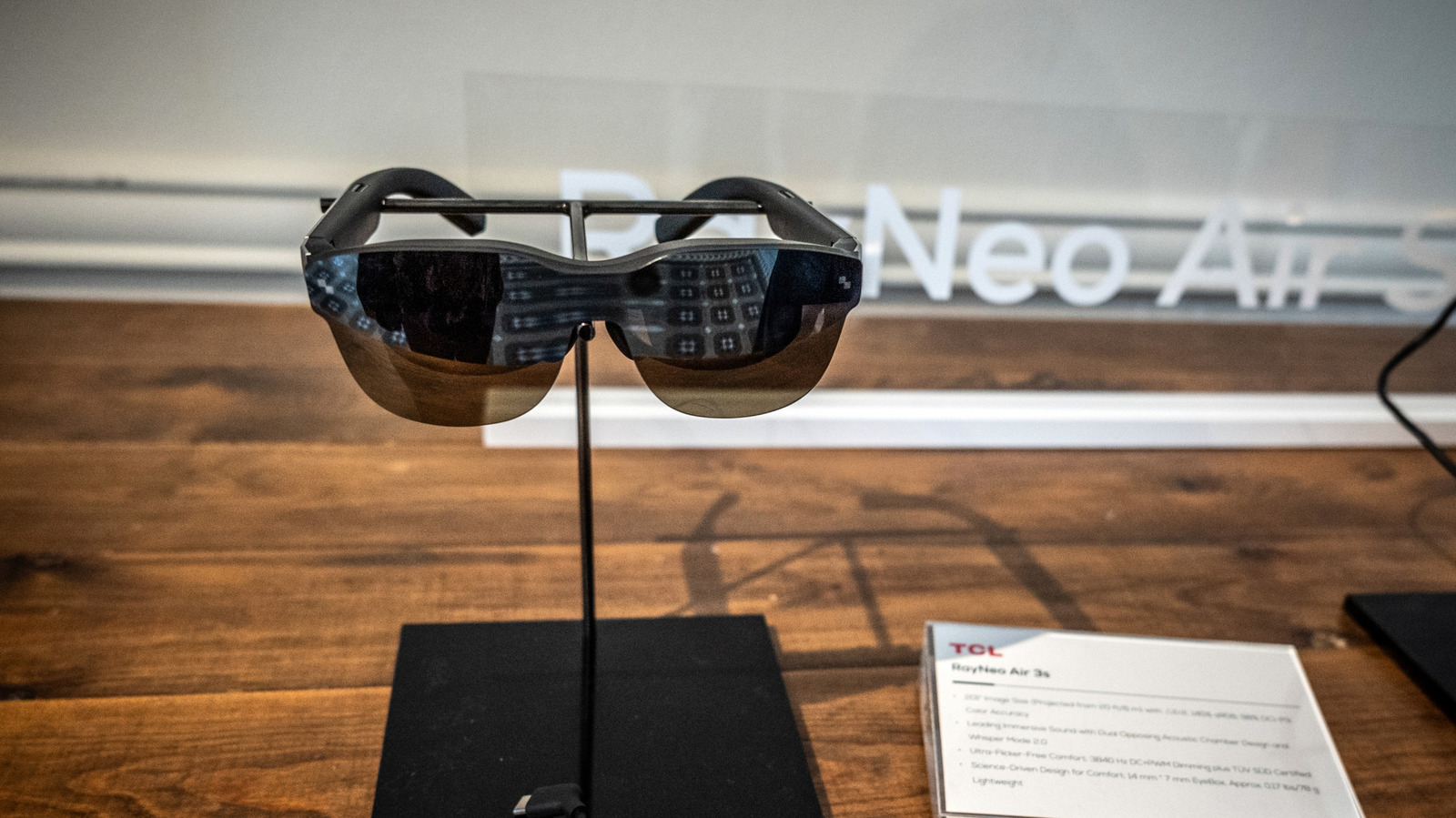
The optical divergence between XREAL and Meta highlights what this compute puck actually unlocks. As recent details reveal, the XREAL Aura pairs its external engine with transparent optical see-through lenses and electrochromic dimming, preserving unobstructed real-world sight while floating digital windows. Meta, in contrast, pushes its tethered puck toward an ultra-light passthrough viewer optimized for high-end immersion and entertainment. Despite their opposing display philosophies, the underlying physical consensus is identical. Spatial computing cannot succeed on your face if the frame must carry its own power plant.
The timing of this hardware pivot is directly tied to the operating system layer. Google just rolled out support for OpenXR Spatial Containers on Android XR devices running Spatial API Level 4. Until this update, launching an immersive session on Android XR monopolized the entire display, locking users into an exclusive, single-app silo. Spatial Containers dismantle that restriction by allowing multi-engine applications to render concurrently inside distinct, bounded 3D boxes or fluidly expand into unbounded workspaces.
True volumetric multitasking sounds miraculous until you calculate the thermal penalty. Running multiple bounded 3D application containers simultaneously demands aggressive scene reconstruction, continuous sensor tracking, and concurrent rendering pipelines. In an all-in-one headset, executing three volumetric windows at once will scorch your forehead within ten minutes. By routing those concurrent pipelines through Android XR to an external compute puck, devices like the XREAL Aura can deliver workstation-grade productivity without cooking the user.
Market data confirms that consumers have zero tolerance for facial thermal bloat. Figures from Counterpoint Research and IDC reveal that while AI eyewear shipments surged over 260 percent in early 2026, bulky mixed-reality headsets hemorrhaged market share, dropping to barely 15 percent of hardware volume. Nearly the entire consumer boom belongs to featherweight, screenless audio frames like the Ray-Ban Meta line. The market has delivered an unmistakable verdict: if spatial displays want mainstream adoption, they must match the weight and social acceptability of regular designer eyewear.
Standalone smart glasses that try to keep all their silicon on the frame are already running into hard physical walls. Consider Rokid's recent rollout of the Rokid Glasses 2 in China. Rokid managed an all-in-one form factor only by downshifting to Qualcomm's lower-tier Snapdragon AR1+ Gen 1, offloading audio to a coprocessor, and relying on a companion Rokid Ring controller. While that architecture works for lightweight micro-displays and audio queries, it cannot touch the volumetric, multi-engine computing that Android XR now demands.
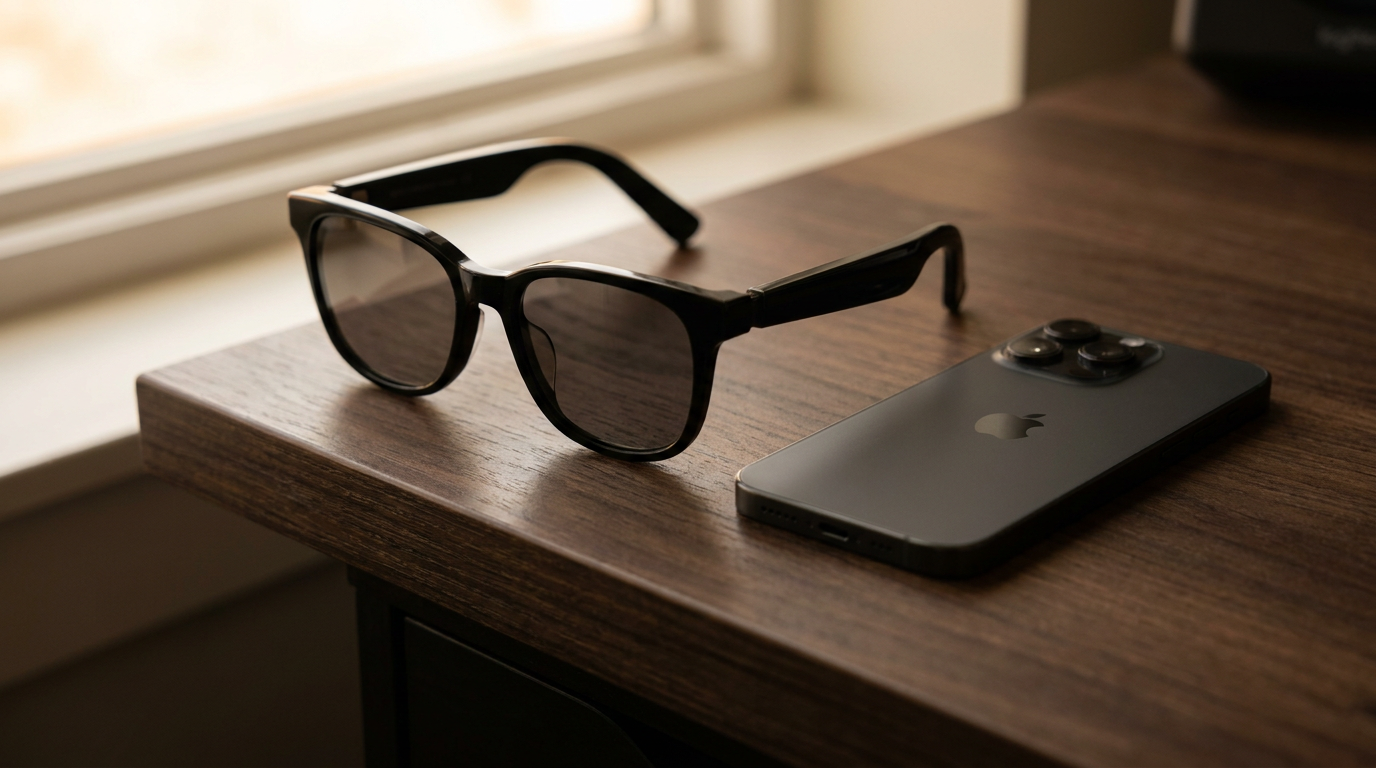
For a decade, the tech industry treated tethered cables as an embarrassing design compromise that needed to be engineered out of existence. Silicon Valley executives spoke of wireless cord-cutting as the ultimate holy grail of wearable computing. Yet in everyday life, human beings already carry a dense lithium-ion brick in their front pockets every single waking hour: the smartphone. Expecting users to accept a sleek, braided wire running from their collar to their pocket is an infinitely smaller ask than demanding they strap half a kilogram of burning glass to their cheekbones.
The split-compute model also solves the brutal upgrade cycle that has plagued early extended reality hardware. When an all-in-one spatial headset becomes obsolete after two years, the optical stack, prescription inserts, cameras, and micro-displays all end up in a desk drawer alongside the outdated silicon. With a puck-based system running Android XR, the glasses become enduring display peripherals. You can swap out the pocket puck for a next-generation Snapdragon processor two years later while keeping your customized, expensive optical frames intact.
Furthermore, the split architecture offers a surprising answer to corporate security anxieties. As industrial giants like Samsung Electronics, SK Hynix, and Hyundai ban smart glasses from cleanrooms and executive suites over covert recording risks, tethered puck systems offer modular reassurance. Compute, connectivity, and storage reside securely in a pocket unit that can be physically decoupled or verified by enterprise IT checkpoints. Modularity gives both corporate gatekeepers and everyday users a degree of physical control that all-in-one hardware permanently denies.
Spatial computing spent ten years paralyzed by an arrogant refusal to accept the basic laws of thermodynamics. Tech companies promised that magical silicon would soon condense an entire desktop workstation into a ten-gram pair of plastic spectacles. That promise was always an engineering mirage. By embracing the pocket puck, XREAL and Meta are not surrendering to compromise; they are finally designing for human biology. The face is for the lenses, the pocket is for the engine, and spatial computing is finally ready to work.
Interactive guide: prices, displays, cameras, battery.
Share this story