Analysis · Meta
The Luxottica Tax Is Dead: How Meta's $254 Adventurer Undercuts Its Own Luxury Trap
By packing identical 12-megapixel optics and 3K capture into the $254 Adventurer, Meta just shattered the illusion of its $449 Ray-Ban Gen 3. The era of paying a fashion ransom for face compute is officially over.
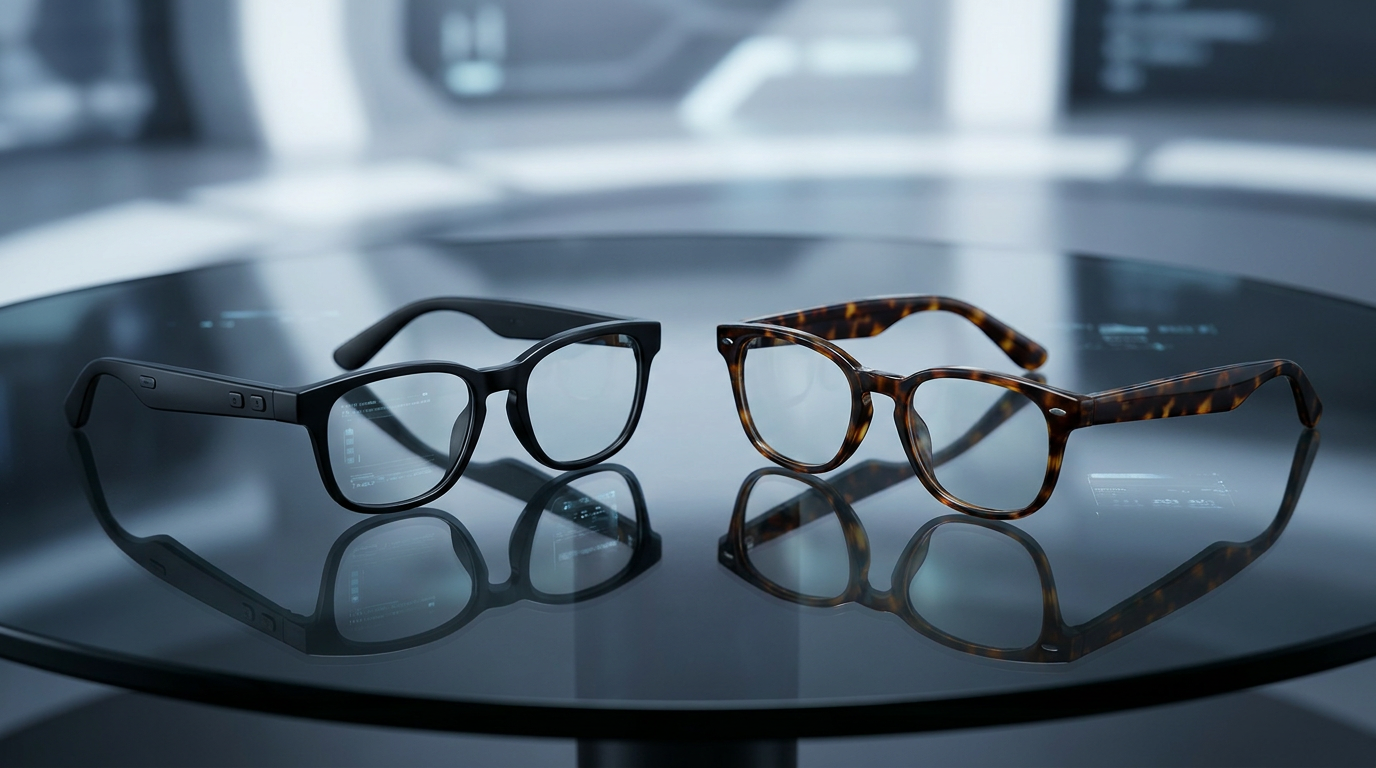
Meta's original pitch with EssilorLuxottica was built on a very simple premise: you needed the cultural heritage of Ray-Ban to make face-mounted cameras socially palatable. For two generations, that arrangement worked brilliantly, allowing Meta to charge premium luxury rates for consumer hardware that cost a fraction of the sticker price to assemble. But the arrival of the Meta Adventurer blows up that delicate arrangement from the inside out.
Retailing at $299 and already discounted to $254 for early holiday promotions, the Adventurer does not cut corners on the core silicon. It carries the exact same 12-megapixel ultra-wide sensor, 100-degree field of view, 3,024 by 4,032 stills, and 3K video recording found inside Meta's flagship lineup. In fact, Meta quietly upgraded the microphone array on the cheaper frame, delivering better voice capture than the hardware costing nearly twice as much.
On the other side of Meta's catalog sits the third-generation Ray-Ban Meta, demanding an eye-watering $449 entry ticket for the updated Wayfarer. For that massive $195 premium, buyers receive cosmetic tweaks like the cat-eye Zena, an Aviator silhouette, and a dedicated Action button. Early reviews have already noted that behind the designer logos and translucent acetate, the actual performance gains over previous models are paper-thin.
For years, hardware makers treated smart eyewear like high-end jewelry rather than functional consumer electronics. Silicon Valley convinced itself that software engineers could not design wearable frames, so tech giants outsourced their industrial design to Milan and paid an exorbitant licensing toll. The Adventurer demonstrates that this arrangement was never an equal partnership. It was an expensive pair of training wheels that Meta is now ready to kick off.
When a platform operator offers identical imaging, identical processing, and identical spatial audio for $195 less under its own sub-brand, it is not widening the funnel. It is deliberately cannibalizing its own luxury tier. Meta knows that early adopters, students, and budget-conscious buyers will not pay a 76 percent price premium solely for a Ray-Ban script logo stamped onto the temple.
Look at Meta's broader promotional blitz this holiday season to see where the company's true priorities lie. While the company is aggressively slicing 25 percent off second-generation Ray-Ban frames and Oakley HSTN designs to drain aging inventory, it is positioning first-party hardware front and center. Meta is setting up walk-in prescription kiosks at Meta Lab flagships to control the entire optical pipeline directly, bypassing traditional boutique opticians entirely.
Strip away the designer acetate, and smart glasses are fundamentally commoditized sensor packages wrapped in plastic. The Adventurer exposes the raw bill-of-materials economics that EssilorLuxottica has spent years obscuring behind lifestyle marketing campaigns. Consumers are finally realizing that almost half the purchase price of a Ray-Ban Meta has nothing to do with multimodal intelligence, battery efficiency, or optical engineering.
This price collapse arrives at a treacherous moment for high-end camera glasses. Regulators like the Dutch Data Protection Authority are actively advising consumers against purchasing connected eyewear, citing covert recording risks, hijackable sensors, and unpredictable AI hallucinations. When European privacy watchdogs are issuing formal consumer alerts, convincing an everyday shopper to gamble $449 on luxury novelty frames becomes an impossible retail sell.
At the same time, the broader wearable market is splitting between practical daily ergonomics and niche computing displays. Emerging hardware brands like EverHarbour AI are launching streamlined products like the 311 Series, ditching cameras entirely to focus on lightweight open-ear audio and all-day voice clarity. When pragmatic utility is emerging at cut-rate prices, Meta cannot defend a $449 display-less camera frame based solely on heritage styling.
Meta's long-term business model has never been about collecting twenty-point hardware margins on Italian eyewear. Mark Zuckerberg needs hundreds of millions of optical sensor arrays gathering real-time visual training data to fuel Meta AI. That scale requires disposable, accessible, mass-market pricing, not gated boutique accessories sold behind locked glass counters.
EssilorLuxottica held the keys to consumer faces because tech companies feared another Google Glass aesthetic catastrophe. But the Adventurer proves that clean, unobtrusive industrial design is no longer a proprietary Italian secret. Meta built an in-house frame that looks entirely normal on human faces without paying licensing royalties to European conglomerates.
The launch of the Adventurer marks the moment smart glasses stopped playing dress-up as luxury fashion items. Meta used Ray-Ban to normalize the concept of face-worn cameras, and now it is systematically undercutting that very partnership to drive volume. The $449 Ray-Ban Gen 3 is not the vanguard of smart eyewear. It is the final, expensive gasp of the designer fashion tax.
Interactive guide: prices, displays, cameras, battery.
Share this story