Analysis · Meta
The $450 Camera Pivot: Why Meta Gen 3 Killed the Wearable Computer
Meta's leaked Gen 3 specs reveal a 50 percent price hike and pro-grade 3K video capture. By turning smart eyewear into a dedicated production rig, the company has abandoned the utopian dream of ambient general computing.
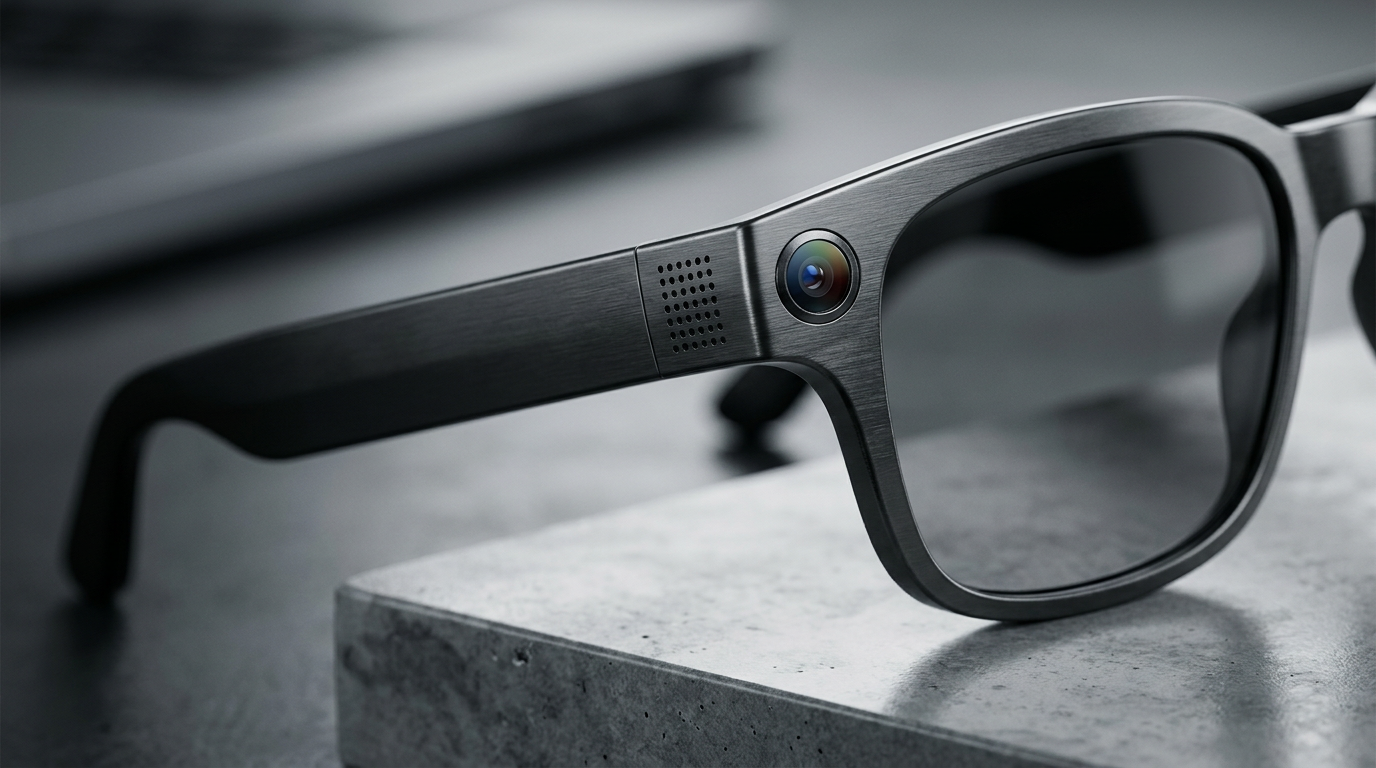
Meta's leaked hardware roadmap just gave up the game. The upcoming Ray-Ban Meta Gen 3 frames carry a steep $449 starting price tag, 3K video recording at 30 frames per second, 32GB of onboard flash storage, and an expanded nine-hour battery reserve. This is not an incremental update designed to nudge hesitant consumers toward subtle voice assistants. It is a full-blown hardware pivot that repositions smart glasses from an ambient lifestyle gadget into a dedicated, hands-free video production rig.
For the past three years, Silicon Valley pitched a grand narrative of ambient computing. We were told that face-worn hardware would serve as a lightweight, invisible gateway to multimodal artificial intelligence, quietly weaning us off smartphone screens. But the Gen 3 spec sheet signals that Meta has shelved that egalitarian vision. Instead of chasing the mass-market casual user, the company is catering directly to the digital creator class, optimizing its hardware to replace GoPros and mobile phone gimbals.
The financial leap tells the real story. Jumping from Gen 2's accessible $299 baseline to a $449 threshold marks a calculated departure from mainstream adoption curves. Everyday consumers do not pay nearly half a grand to listen to podcasts or ask a virtual assistant about local landmarks. That premium is aimed squarely at social media creators who already write off high-end action cameras, handheld stabilizers, and portable microphones as essential tools of the trade.
This hardware evolution is grounded in immediate consumer demand rather than speculative software promises. Point-of-view capture has emerged as the sole undeniable killer application for consumer eyewear. Traditional smartphone videography forces creators into clumsy positions, requiring them to crane their necks over a viewfinder or rigidly extend a glass slab into social situations. First-person frames bypass the screen entirely, capturing raw physical perspectives that traditional cameras cannot reproduce.
A close examination of Meta's Gen 3 bill of materials reveals that every engineering trade-off serves video capture. The 12-megapixel ultra-wide camera pushes 3K resolution, while high-framerate modes at 720p reach up to 120 frames per second for clean slow-motion playback. Paired with a custom six-microphone array designed to suppress wind noise and isolate speech, the device functions as a wearable broadcast studio. This is production gear wrapped in designer acetate, not a personal computing terminal.
This deliberate focus throws the rest of the smart eyewear ecosystem into sharp relief. Consider the Rokid AI Glasses, which recently launched across European retail channels at 700 euros. Rokid attempted to build a true all-in-one wearable computer, cramming a monochrome green micro-LED waveguide display, a 12-megapixel camera, and multimodal artificial intelligence into a 49-gram frame. In real-world testing, that ambitious hardware combination crashed headfirst into severe battery friction and thermal constraints.
While Asian hardware manufacturers and chipmakers like VeriSilicon race to build specialized low-power subsystems to keep complex micro-displays from overheating, Meta took the pragmatic shortcut. By refusing to add an optical display and ignoring spatial graphics entirely, Meta preserved its thermal and battery budgets for high-throughput video encoding. That single choice enables nine hours of operational runtime, while display-heavy rivals struggle through short, compromised sessions.
Yet this capture-first strategy introduces a massive structural bottleneck for the broader market. When smart eyewear embraces the $449 creator tax, it abandons its original ambition to become universal daily eyewear. The vision of smart glasses seamlessly replacing prescription frames for ordinary commuters is taking a back seat to creator monetization. Meta is running toward the money, and that money lives in short-form video pipelines, not ambient conversational agents.
Doubling down on high-fidelity capture also inflames rising cultural and institutional resistance. In South Korea, high-stakes qualification testing has already been disrupted by smart frames and hidden wireless earpieces, triggering intense national scrutiny and public distrust. As consumer eyewear gains 3K sensors, massive local flash storage, and studio-grade directional audio arrays, the social friction around covert recording will only escalate. The better these glasses become as hidden cameras, the more hostile public venues will be to their presence.
Even Google and Samsung's high-fashion counteroffensive highlights the difficult tightrope facing the category. While Google's Android XR eyewear relies on Gentle Monster and Warby Parker to mask sophisticated sensors inside high-fashion frames, the hardware still wrestles with undefined consumer intent. Google wants to build a flexible spatial operating system for everyday computing. Meta, by contrast, has abandoned ideological purity: it knows users will happily pay hundreds of dollars for a personal POV camera, even if they remain skeptical of an ambient face computer.
What we are witnessing is the great sorting of the smart glasses landscape. On one side stand spatial computing purists, struggling against the laws of physics and battery chemistry to turn optical frames into digital workstations. On the other side stands Meta, which realized that people do not actually want a wearable computer buzzing against their temples all day. They want an effortless way to document their lives in ultra-high resolution without holding a phone.
Treating Gen 3 as an iterative milestone in consumer AI misses the true magnitude of Meta's strategic shift. This is an aggressive land grab targeting the creator economy and action camera manufacturers. Meta is no longer waiting for ambient computing to magically solve its battery, social, and thermal crises. It is turning your face into a high-margin broadcast rig right now, and it is charging you $450 for the privilege.
Interactive guide: prices, displays, cameras, battery.
Share this story