Guides · Rollme
Rollme's Smart Glass Offensive: The $99 Disruption Explained
A new contender is shaking up the smart glass market with an aggressive price point. We break down Rollme's strategy to make AI eyewear universally accessible.
The smart glasses market, for all its potential, remains stubbornly exclusive. High price tags, often stretching into the hundreds or even thousands, have kept the most compelling innovations locked behind a barrier for early adopters and enterprise users. But a new player, Rollme, is now challenging this status quo with a debut product that fundamentally redefines what 'affordable' means in this space.
Rollme isn't just another entrant; it's a direct assault on the industry's pricing model. By launching its ProView smart glasses at an unprecedented $99.99, Rollme is attempting to crack open the mainstream market, daring consumers to consider smart eyewear not as a luxury, but as an accessible everyday utility. This isn't merely a cheap gadget; it's a calculated move to democratize crucial AI functionalities, and the industry needs to pay attention.
Emerging onto the scene with little fanfare beyond its shocking price point, Rollme appears to hail from the broader budget tech manufacturing ecosystem, a common origin for brands looking to leverage cost-effective production at scale. While its specific history remains nascent in the smart glasses sector, its current posture suggests a brand focused on volume and accessibility over premium positioning or intricate ecosystem plays.
Rollme’s entry is perfectly timed to exploit a clear market void: truly affordable AI-powered wearables. While major players are either locked into high-end AR or focused on specific social/audio niches, no one has made a serious push for broad adoption through aggressive pricing on core smart features. Rollme sees the gap and is charging headfirst into it.
Their target segment is clear: the budget-conscious consumer who wants to experience the benefits of AI translation and wearable photography without the significant financial commitment typically required. This isn't about competing with high-fidelity AR displays; it's about making practical, real-world AI accessible to the masses, right now.
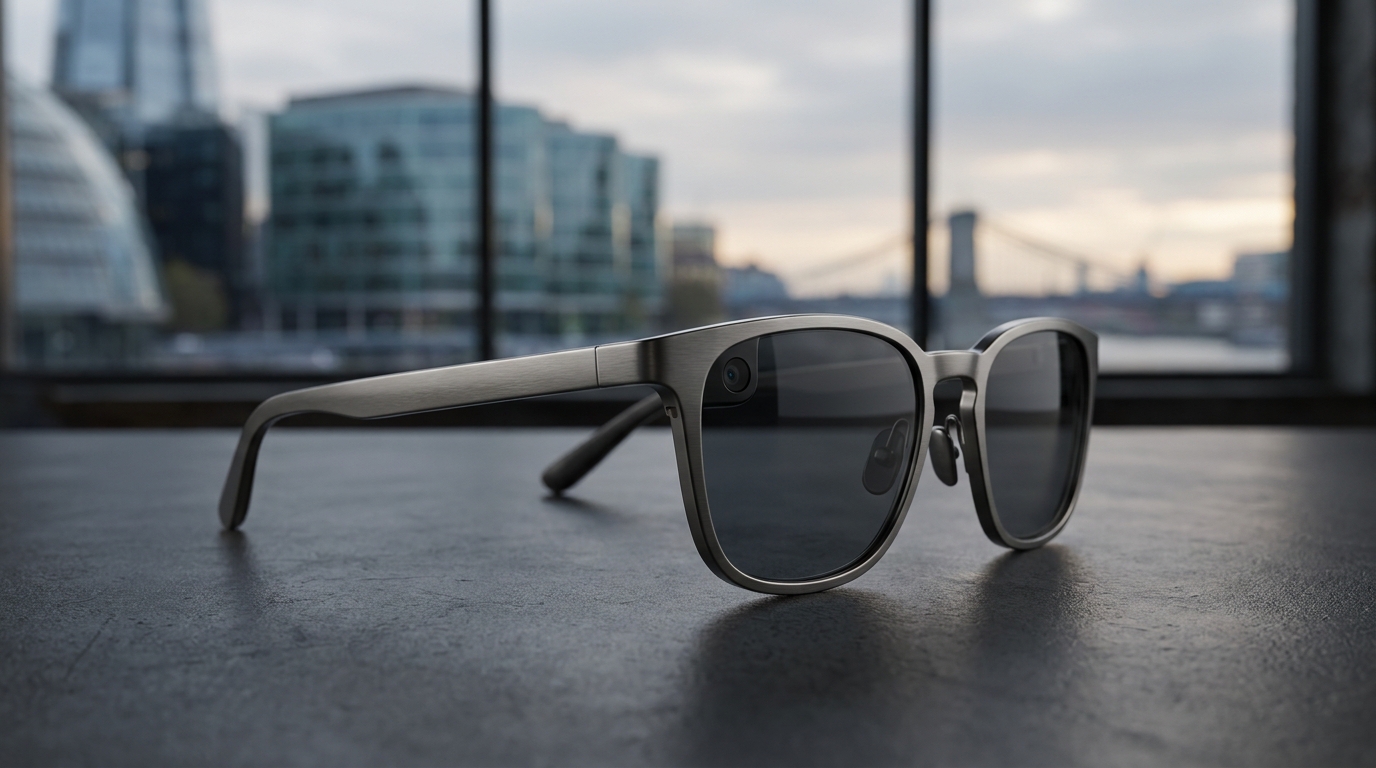
Rollme’s flagship offering, the ProView smart glasses, is the spearhead of this strategy. Announced recently, its most striking feature is, unequivocally, its $99.99 price tag. This positions it not just as competitive, but as a disruptive force in a market where even 'entry-level' can mean several hundred dollars.
Beyond the price, the ProView is confirmed to integrate a 12MP Sony camera, a respectable resolution for capturing everyday moments, and perhaps more significantly, AI translation capabilities. This combination signals a focus on practical utility: documenting the world hands-free and breaking down language barriers in real-time.
Specifics regarding battery life, processor, display technology (or lack thereof, beyond potential indicators or subtle HUDs), and material quality are not yet publicly detailed. What's known emphasizes core functions: a capable camera and a practical AI feature, all wrapped in a package designed for mass appeal at an unheard-of price.
When positioning Rollme against established players, the contrast is stark. Meta's Ray-Ban Meta glasses, while stylish and offering Meta AI integration, start at significantly higher price points and emphasize social sharing and audio. Rollme’s advantage is pure cost-to-feature ratio, focusing on translation and camera functions without the social ecosystem overhead.
Apple, with its Vision Pro, occupies an entirely different universe—a premium, high-fidelity spatial computing device with a price tag to match. Comparing Rollme to Apple is less about direct competition and more about divergent market philosophies: mass accessibility for Rollme versus bleeding-edge, high-end innovation for Apple. Rollme aims for the pocket, Apple for the entire living room.
Closer to Rollme's functional intent are companies like INMO, with their Air 2 and GO translation glasses. While INMO has carved out a niche for real-time translation and lightweight displays, Rollme's ProView undercuts them dramatically on price, potentially making those crucial translation features available to an even broader audience. Rollme is betting that a lower barrier to entry for these core AI utilities will win out.
Rollme's ProView is clearly for the pragmatic early adopter, the curious consumer, or anyone who has wanted to experiment with smart glasses but found the price prohibitive. Its strengths are undeniable: a genuinely disruptive price, a respectable camera, and a highly practical AI translation feature that could hold significant daily value. It's a low-risk entry point into wearable AI.
However, weaknesses loom. The unknown quality of the AI translation, the build quality, the longevity of the device, and the lack of a proven ecosystem are all critical questions. Smart Glasses Daily will be watching Rollme closely over the next 12 months. Success hinges on actual user experience, the robustness of its AI features, and whether this bold pricing strategy can translate into sustainable market traction beyond the initial hype. Can Rollme deliver a truly useful product at this price, or is it merely a race to the bottom?
Interactive guide — prices, displays, cameras, battery.
Share this story