Analysis · RayNeo
RayNeo Bets on Three Paths to Solve the Smart Glasses Puzzle
TCL spin-off RayNeo is attacking wearable displays from every angle, balancing lightweight heads-up displays, theater-style screen glasses, and true AR.
On November 18, 2026, technode.com detailed how RayNeo has built one of the most diverse hardware roadmaps in spatial computing. Spun out of TCL Electronics in 2021, the company has rapidly climbed market rankings. According to IDC data cited by technode.com, RayNeo captured second place globally in AR/VR headset shipments in the second quarter of 2026 with a 12 percent market share, fueled by deep-pocketed investors and a Series D round surpassing 1 billion RMB earlier this year.
Rather than forcing a single form factor to serve every need, RayNeo is actively hedging its bets across three distinct hardware tiers. At the lightweight end sits the RayNeo iO, an everyday pair weighing roughly 33 grams that relies on a discrete monochrome heads-up display. The iO focuses on real-time transcription, live translation, and voice-driven AI assistance without an integrated camera. As Wareable noted, RayNeo avoids head-on competition with camera-first frames like Meta's smart glasses, opting instead for a subtle, always-on notifications layer that looks like conventional eyewear.
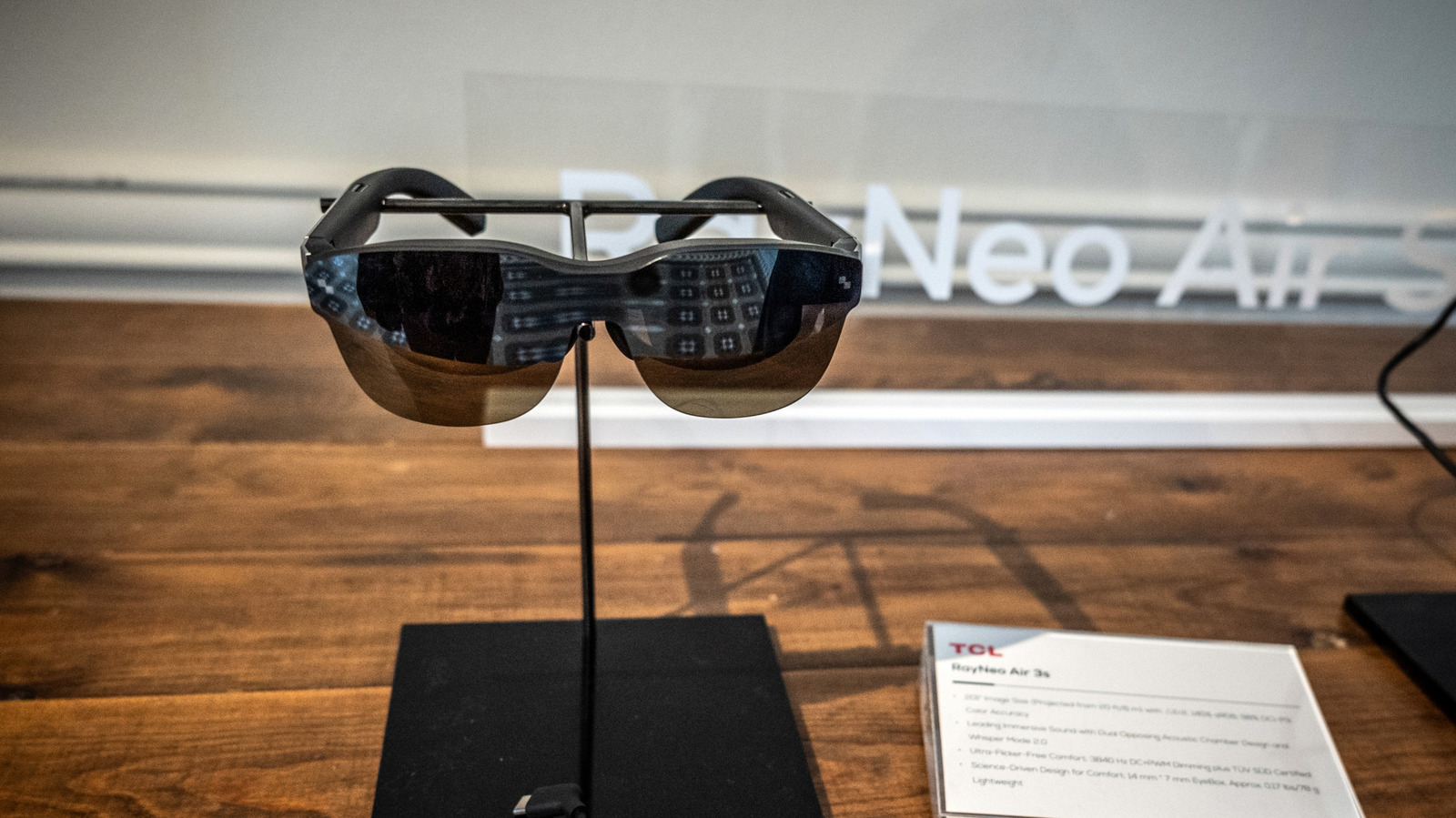
At the opposite end of the daily utility spectrum lies the GT series. These tethered frames are built purely around immersive media consumption, turning a connected phone, laptop, or gaming console into a massive virtual screen. The top-tier GT Max simulates up to a 307-inch canvas paired with Bang & Olufsen audio tuning. In a hands-on review, Tom's Guide praised the GT Max for its comfort while emphasizing that the hardware acts as display glasses rather than a standalone spatial computer, delivering a dedicated personal cinema rather than an untethered workstation.
RayNeo's ultimate vision, however, belongs to the X3 Pro. That flagship model aims for genuine standalone augmented reality, packing binocular full-color MicroLED waveguides, on-device cameras, real-time navigation, and AI processing into a 76-gram chassis. A review from TechRadar commended its visual clarity, but pointed out that the diminutive 245mAh battery pack and steep retail price present obvious everyday compromises.
The engineering friction behind building true standalone AR has also tempered internal executive expectations. As highlighted in an interview with iFanr, RayNeo founder and CEO Li Hongwei acknowledged that while AI model capabilities have advanced much faster than anticipated, the underlying display optics, spatial compute silicon, and power density have evolved at a far slower pace. Consequently, Li pushed back his target for the consumer AR category's defining breakthrough from 2025 to around 2027.
Our take: RayNeo's three-pronged strategy reflects the broader reality of the eyewear sector today. True standalone AR is still constrained by thermal limits and battery physics, meaning no single device can yet be an invisible daily assistant, a giant monitor replacement, and a full spatial computer all at once. By selling targeted, comfortable display glasses like the GT series and featherweight HUDs like the iO to fund its long-term MicroLED experiments, RayNeo is staying financially solvent while waiting for the broader supply chain to catch up to its ambitions.
Interactive guide: prices, displays, cameras, battery.
Share this story