Manufacturer News · Google
Google Unveils Samsung-Built Intelligent Eyewear Starting at $395
Google enters the smart frame race with Samsung hardware and Gemini software, but iPhone users face notable feature trade-offs at launch.
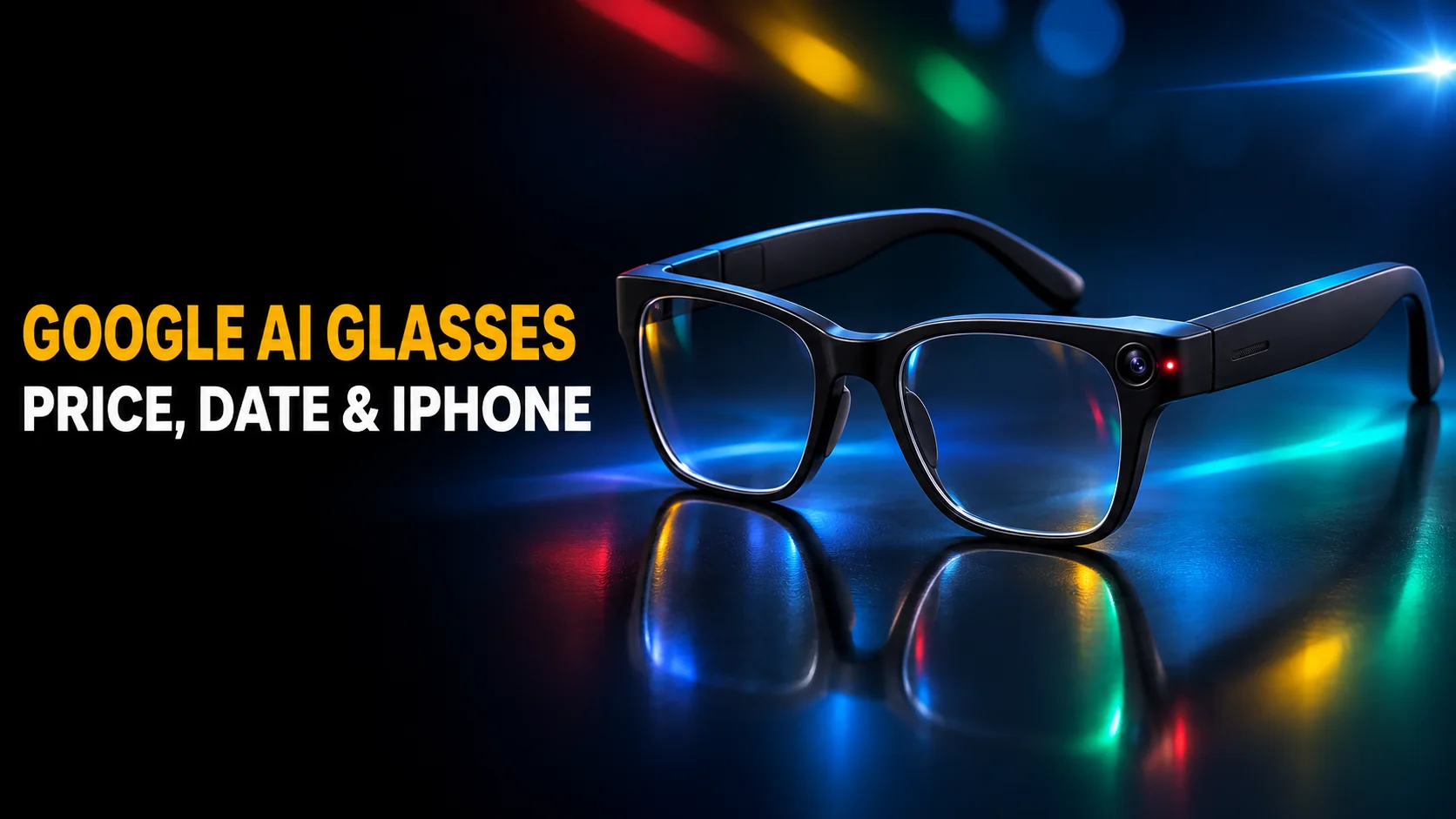
Google opened pre-orders this week for its upcoming smart glasses lineup, marketed as Intelligent Eyewear. Built in collaboration with Samsung and powered by Gemini, the audio-first frames start at $395 for Warby Parker designs and climb to $449 for Gentle Monster variants. General retail availability is scheduled for December 10, with initial sales restricted to Google account holders aged 18 and older in the United States and South Korea.
On paper, the hardware specifications closely target the benchmarks set by category leaders. The frames skip visual displays in favor of a lightweight 41-gram build, open-ear stereo speakers, and a 12-megapixel sensor for contextual camera input. Google claims up to nine hours of runtime per charge, supported by an included carrying case capable of replenishing the battery up to seven additional times.
While Google promotes cross-platform compatibility across both Android and iOS devices, early documentation points to significant ecosystem friction. As reporter Lenka Vojtechova at felloai.com notes, Google's technical requirements create confusing discrepancies for Apple users: the official launch announcement specifies an iPhone 13 Pro or newer, while the product FAQ mentions any iPhone 13 or later equipped with at least 6GB of RAM. More importantly, felloai.com reports that key features, including Guided Vision, Aira assistance, and Audible integration, will remain strictly exclusive to Android when the glasses hit shelves.
Google is also preemptively addressing visual capture pushback. The Intelligent Eyewear hardware integrates a prominent front-facing LED indicator that illuminates during recording sessions. On the software side, the company promises that images captured for Gemini processing will not be stored in user history, will not be repurposed for advertising or model training, and will automatically blur bystander faces prior to cloud ingestion.
What this means: Google is targeting the premium segment of the audio-first category, positioning the $395 starting tier well above the $299 baseline established by Meta with its Ray-Ban smart glasses. The extended nine-hour endurance and Samsung assembly represent a calculated push to justify that premium, aiming directly at buyers who prioritized battery life and high-end eyewear styling over budget pricing.
Our take: Partnering with fashion brands like Warby Parker and Gentle Monster gives Google immediate optical credibility, but treating iOS users as second-class citizens is a dangerous gamble. If iPhone owners are asked to pay a higher entry price while receiving a stripped-down feature set, Google risks locking its most lucrative hardware initiative out of half the domestic market before retail shipments even begin.
Interactive guide: prices, displays, cameras, battery.
Share this story