Guides · EverHarbour AI
EverHarbour AI Brand Guide: Can Ergonomics Beat Feature Creep?
EverHarbour AI enters the fray with the 311 Series, benching display gimmicks in favor of all-day comfort and voice clarity. Here is why their restrained hardware playbook deserves attention.
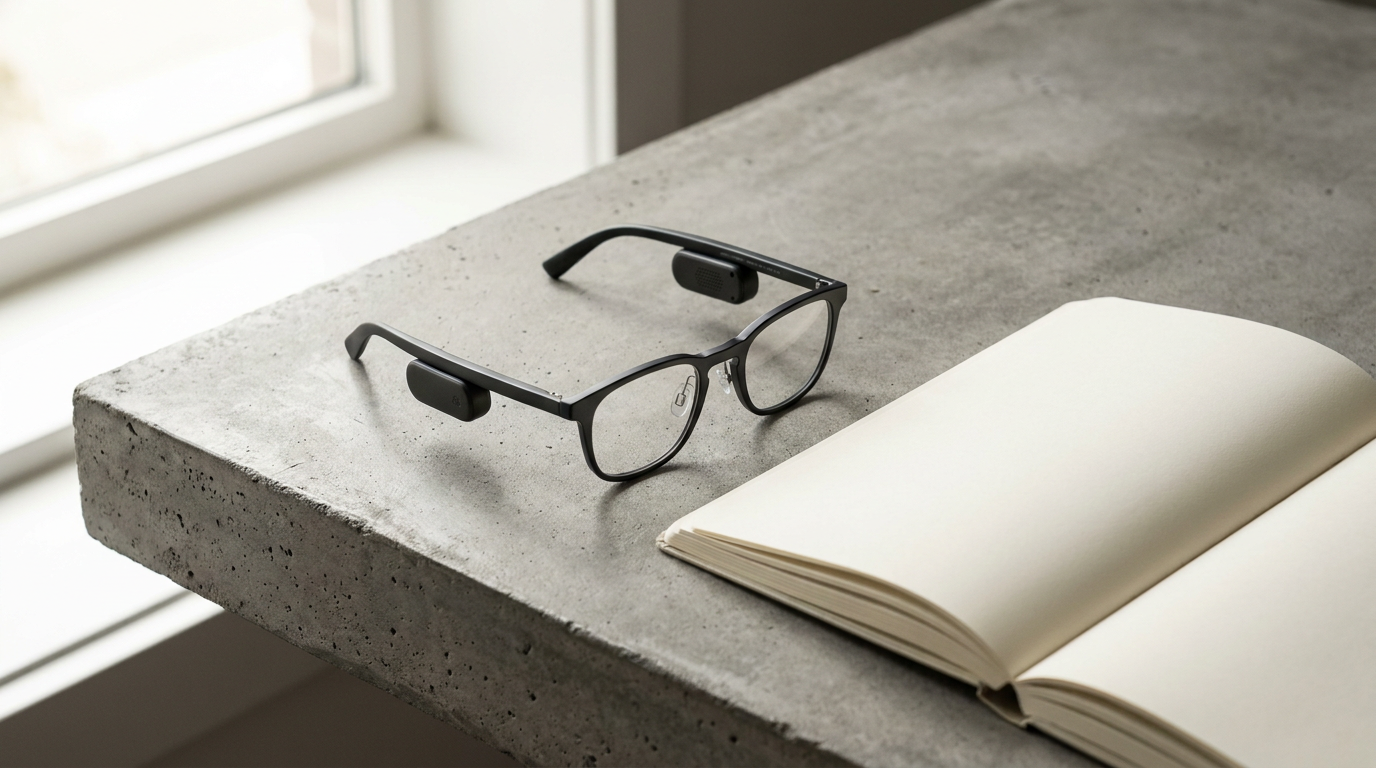
The smart-glasses market is currently locked in an exhausting arms race of optical ambition. Waveguides, micro-OLED panels, and spatial compute chips are crammed into frames that look impressive on spec sheets but brutalize the bridge of your nose after thirty minutes. Time and again, consumer adoption stalls not on intelligence, but on basic wearability.
Enter EverHarbour AI. A fresh hardware startup stepping into the frame category, EverHarbour is actively resisting the temptation to ship an oversized science experiment. Instead of fighting thermal physics to project an augmented reality HUD, the company is wagering that the winning formula for ambient computing starts with invisible industrial design and crisp acoustics.
That calculated restraint is either a masterstroke of pragmatism or a risky concession in a market that craves visual spectacle. By elevating daily ergonomics over sci-fi optical feats, EverHarbour AI is operating on a foundational truth the rest of the industry frequently forgets: you cannot deliver ambient intelligence to users who refuse to keep the glasses on.
Who is EverHarbour AI? Surfacing out of the hardware startup trenches, the company represents a new cohort of consumer tech builders who view smart eyewear as fashion accessories first and compute endpoints second. Rather than burning through venture capital trying to build proprietary micro-displays, they are targeting the massive white space between conventional frames and wireless earbuds.
The timing of their entrance is deliberate. Voice-driven generative models and low-latency audio processing have advanced to the point where an artificial intelligence assistant no longer requires an on-eye canvas to be genuinely useful. Directional speakers, beamforming microphone arrays, and seamless pairing can deliver actionable ambient utility without adding structural bulk.
EverHarbour’s strategic crosshairs are locked on everyday commuters, hybrid workers, and mobile professionals. These are consumers who want frictionless hands-free communications and contextual voice assistance throughout their day without looking like background extras from a cyberpunk film.
This grounded brand identity separates EverHarbour from early-stage hype machines. They are not selling a nebulous portal to the metaverse; they are pitching a lightweight, acoustic daily driver engineered to survive an eight-hour workday unnoticed.
The brand's opening salvo is the 311 Series. While comprehensive engineering spec sheets remain guarded and have yet to populate our testing database, the core design philosophy is publicly unambiguous: everyday comfort and voice clarity trump feature overload.
From what EverHarbour has revealed, the 311 Series stakes its claim squarely within the audio smart-glasses domain. By shedding visual projection hardware, the frames avoid the nose-pinching weight, bulky front rims, and thermal throttling that doom traditional AR headsets to desk-drawer obscurity.
Instead, the hardware architecture is built around weight balance, all-day hinge tension, and acoustic performance. Dual-microphone arrays configured for beamforming voice capture are central to the pitch, ensuring that voice commands and phone calls remain legible even in noisy urban environments.
Software specifics remain closely held, but the operational model is clear. The 311 Series relies on reliable Bluetooth handoffs and low-latency voice integration rather than a standalone spatial operating system, keeping power consumption low and industrial silhouettes svelte.
Position the 311 Series against the broader landscape and its deliberate divergence becomes stark. Snap’s Spectacles 5 offer brilliant, full-color AR backed by a massive developer ecosystem in AR Studio, but they remain heavy developer-facing prototypes tethered to short battery runs and industrial frames. EverHarbour represents the inverse philosophy: mass-market consumer wearability with zero developer friction.
Contrast EverHarbour with Lenovo's catalog, and the difference is ideological. Lenovo focuses on tethered productivity powerhouses like the ThinkReality A3 and the entertainment-focused Legion Glasses, explicitly designed to serve as virtual multi-monitor workstations. EverHarbour has no interest in replacing your desktop monitor; they want to replace your blue-light glasses and your AirPods simultaneously.
Perhaps the most compelling counterpoint is Mentra. While Mentra champions a hackable, open-source platform model with hardware initiatives like Mentra Live, EverHarbour is pursuing an integrated, out-of-the-box consumer experience. Where Mentra courts tinkerers looking to rebuild the smart-glasses stack, EverHarbour wants to ship polished consumer hardware that simply works when you pull it out of the case.
Our initial verdict: EverHarbour AI is making the correct tactical compromise for this stage of ambient computing. Optical heads-up displays will inevitably dominate the next decade, but until micro-displays shrink and thermal dissipation solves itself, audio-first frames with pristine ergonomics remain the only smart eyewear regular people will wear from breakfast to bedtime.
Over the next 12 months, the test will be execution. We will be tracking whether EverHarbour’s acoustic beamforming holds up in real-world testing, how smoothly their companion app interfaces with top-tier AI voice agents, and whether their retail pricing undercuts established audio frames. If EverHarbour treats the 311 Series as a commodity audio shell, it will drown in white-label obscurity; if they treat ergonomics as the foundation for an effortless ambient AI interface, they could become one of the quiet winners of this hardware cycle.
Interactive guide: prices, displays, cameras, battery.
Share this story