Guides · Chamelo
Chamelo’s Smart-Glasses Play, Explained: A Niche-First Strategy
Amidst a fragmented smart-glasses market, Chamelo emerges with a focused, utility-driven approach. Their Music Shield Gen 2 offers adaptive optics and audio, carving out a distinct segment.
The smart glasses landscape is often defined by ambition, pushing the boundaries of AR displays, sophisticated AI, and integrated cameras. Yet, the path to mainstream adoption is rarely a straight line, often favoring focused utility over feature sprawl. This is the stage upon which Chamelo makes its entrance, not with a full-blown AR computer, but with a highly specialized piece of eyewear.
Chamelo represents a refreshing counter-narrative to the prevailing 'more is more' ethos. Instead of chasing a converged, all-in-one device, they are betting on solving specific, tangible user problems with precision engineering. Their debut product, the Music Shield Gen 2, signals a clear intent: superior audio and adaptive vision, packaged into a device designed for active lifestyles.
This isn't about augmented reality overlays or capturing every moment. Chamelo's play is about enhancing the user's immediate environment through intelligent, responsive hardware. The question for "Smart Glasses Daily" readers isn't whether Chamelo can compete with the likes of Meta or Vuzix on display tech, but whether their unique value proposition—centered on a patented optical innovation—is compelling enough to matter.
Chamelo enters the smart eyewear arena with the lean profile of a specialist, seemingly emerging from a deep understanding of optical technology and user experience in demanding environments. While a comprehensive company history remains nascent in the public eye, their product strongly suggests a foundation built on precision optics rather than consumer electronics generalism. They are not attempting to be a broad platform provider.
Instead, Chamelo targets a clear segment: individuals who prioritize audio quality and visual comfort during activities where traditional smart glasses often fall short. This includes athletes, outdoor enthusiasts, or anyone seeking high-fidelity sound and dynamic glare management without the bulk or distractions of cameras and displays. It's a strategic move to own a functional niche, rather than vie for the crowded general-purpose market.
The timing is astute. As consumer fatigue mounts over nascent AR tech and privacy concerns surrounding always-on cameras, a product focused purely on personal sensory enhancement resonates. Chamelo positions itself as a practical upgrade to premium audio sunglasses, rather than a nascent computing device, lowering the barrier to entry and adoption for its target demographic.
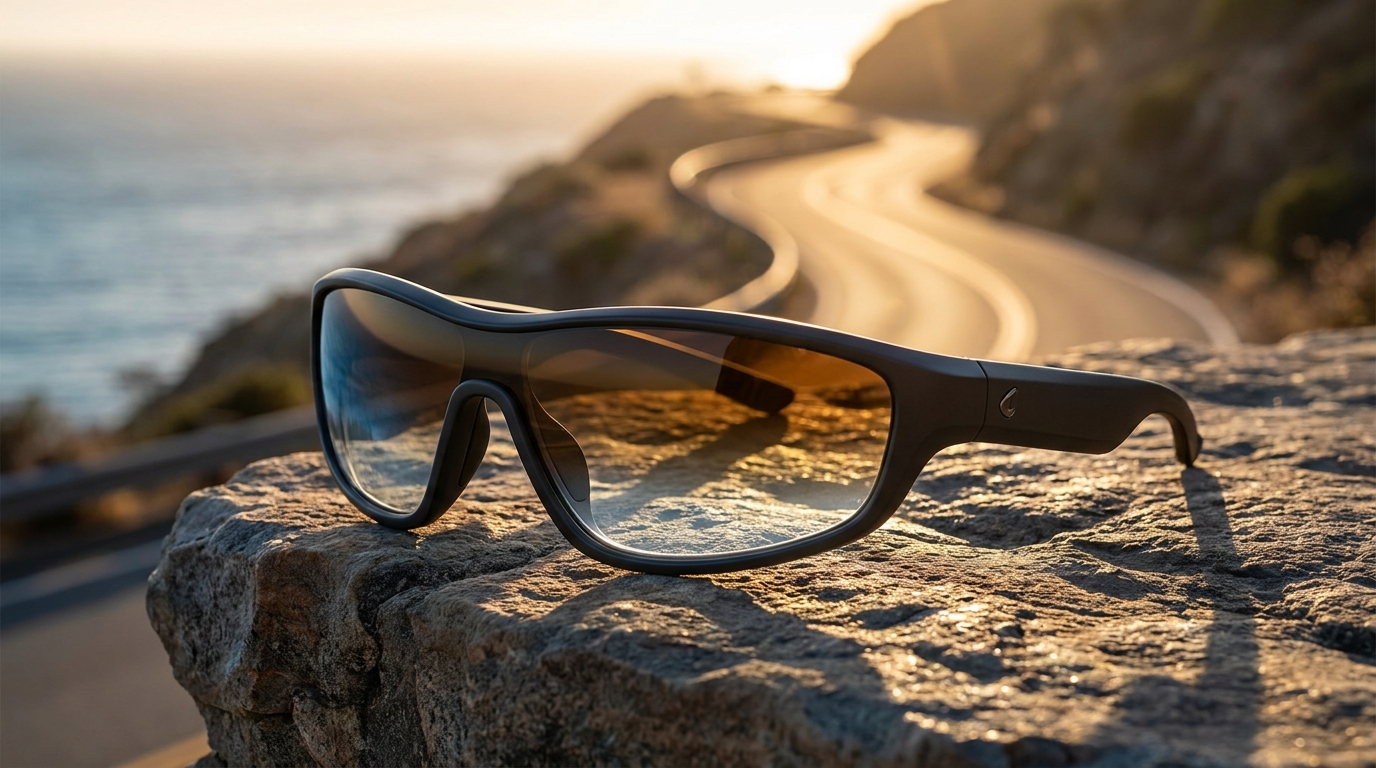
At the heart of Chamelo's current lineup is the Music Shield Gen 2. This device is explicitly an audio-first offering, weighing a trim 49g and retailing at an accessible $229. It adopts a sports wrap frame, prioritizing a secure and comfortable fit for active use. Crucially, the Gen 2 makes no claims of integrated cameras or display technology; this is a deliberate design choice that distinguishes it immediately.
The standout feature of the Music Shield Gen 2 is its patented Eclipse tint-adjustable lenses. Unlike photochromic lenses that react solely to ambient UV light, Chamelo's Eclipse technology allows users to adjust the tint on demand. This provides immediate, user-controlled adaptation to changing light conditions, from bright sun to shaded areas, without waiting for passive chemical reactions.
Beyond the innovative optics, the Music Shield Gen 2 provides robust audio delivery, designed for clarity and presence without external distractions. While specific audio driver details are not public, the product's name and focus suggest a commitment to sound quality that complements its visual utility. It's an integrated solution for music, podcasts, or calls while maintaining awareness of one's surroundings.
Positioning Chamelo against established players reveals its distinct identity. Compared to Meta's Ray-Ban Meta or Oakley Meta HSTN, which emphasize social sharing, photography, and rudimentary AI capabilities, Chamelo presents a stark contrast. Meta's offerings are lifestyle devices centered around a camera and a budding AI assistant; Chamelo is a utility tool focused on personal comfort and performance, sans camera, sans display, and with a significantly lower entry price.
Against enterprise powerhouses like Vuzix, with their AR-enabled Z100 or Shield glasses, Chamelo operates in an entirely different universe. Vuzix prioritizes industrial applications, sophisticated AR displays, and ruggedized designs, commanding price points several orders of magnitude higher. Similarly, Monako's niche AI coding workstation glasses offer a highly specialized AR display for developers. Chamelo makes no attempt to compete in the display or enterprise AR space; its strength lies in its specialized optical and audio features.
Chamelo's differentiator is its deliberate simplicity and hyper-focused innovation. It's not chasing the generalized 'smart' label; it’s delivering a specific 'smart' function—dynamic light control and integrated audio—with a form factor and price point that appeal to a consumer base uninterested in complex AR or ubiquitous photo/video capture.
The "Smart Glasses Daily" verdict is clear: Chamelo's Music Shield Gen 2 is for the discerning consumer who values immediate utility and specialized performance over feature creep. Its strengths lie in the truly innovative Eclipse lens technology, offering unparalleled on-demand tint adjustment, combined with a lightweight, comfortable design and an accessible price point. It's a confident step into the smart audio sunglasses category, a segment often overlooked by AR-first companies.
However, Chamelo's singular focus also presents its primary challenge. The lack of a display or advanced AI features may limit its appeal to readers expecting more from a "smart glasses" brand. The question for the next 12 months will be whether Chamelo can expand its optical innovations, perhaps integrating minimal, non-distracting heads-up data without compromising its core philosophy, or if it will solidify its position as the definitive leader in smart-adaptive optics and audio, carving out a highly successful, yet niche, domain.
Interactive guide — prices, displays, cameras, battery.
Share this story