Manufacturer News · AROTI
AROTI R1 Drops Cameras and Speakers to Hit Sub-27-Gram Weight
Hong Kong startup AROTI is stripping smart eyewear to the bone, delivering an ultralight frame featuring a single-eye heads-up text display.
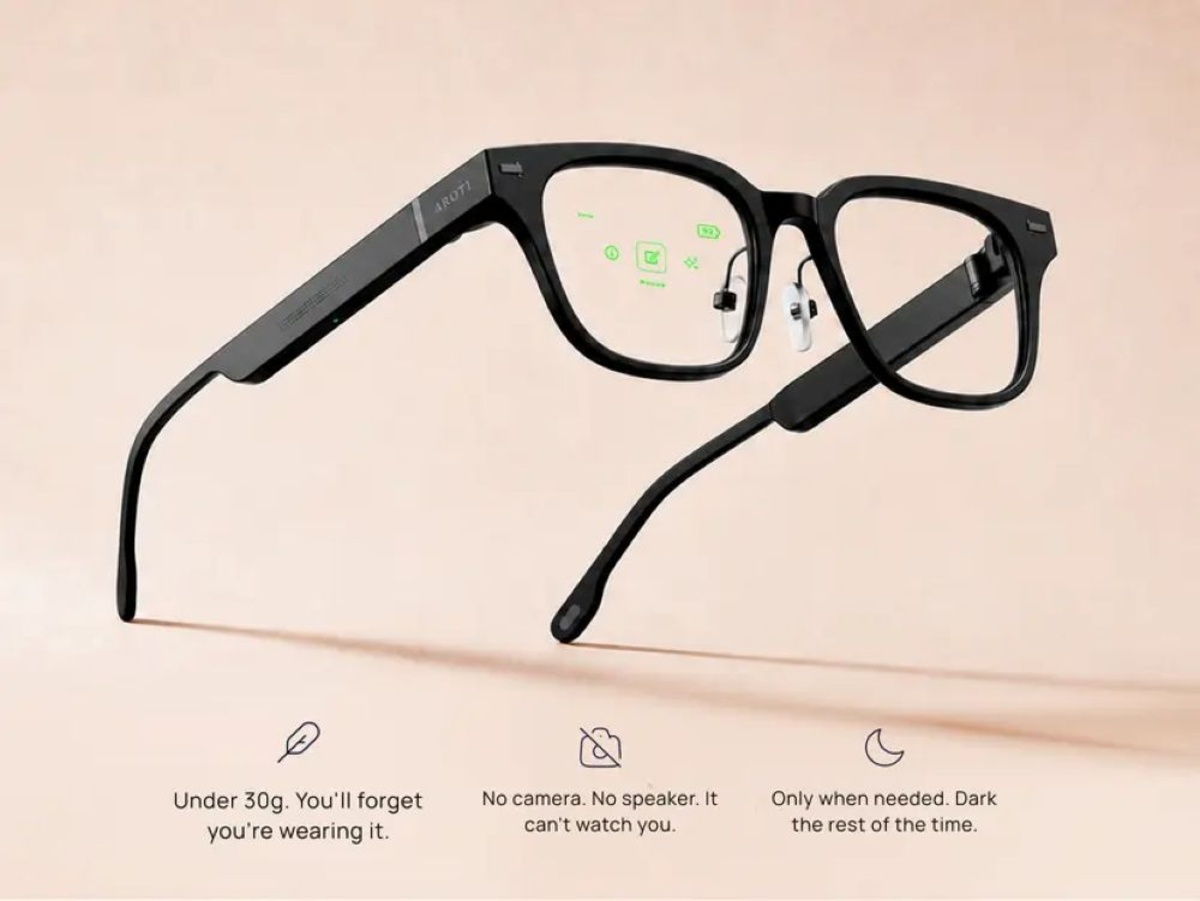
On November 12, 2026, Hong Kong startup AROTI unveiled the R1, a pair of minimalist AI glasses designed to undercut the bulk of modern spatial computing by ditching heavy hardware altogether. Weighing in at under 27 grams (0.95 ounces), the frame matches the weight profile of standard, non-connected prescription eyewear. The company announced that a Kickstarter crowdfunding campaign will launch on November 16, 2026, to finance initial production, with retail and early-bird pricing still under wraps.
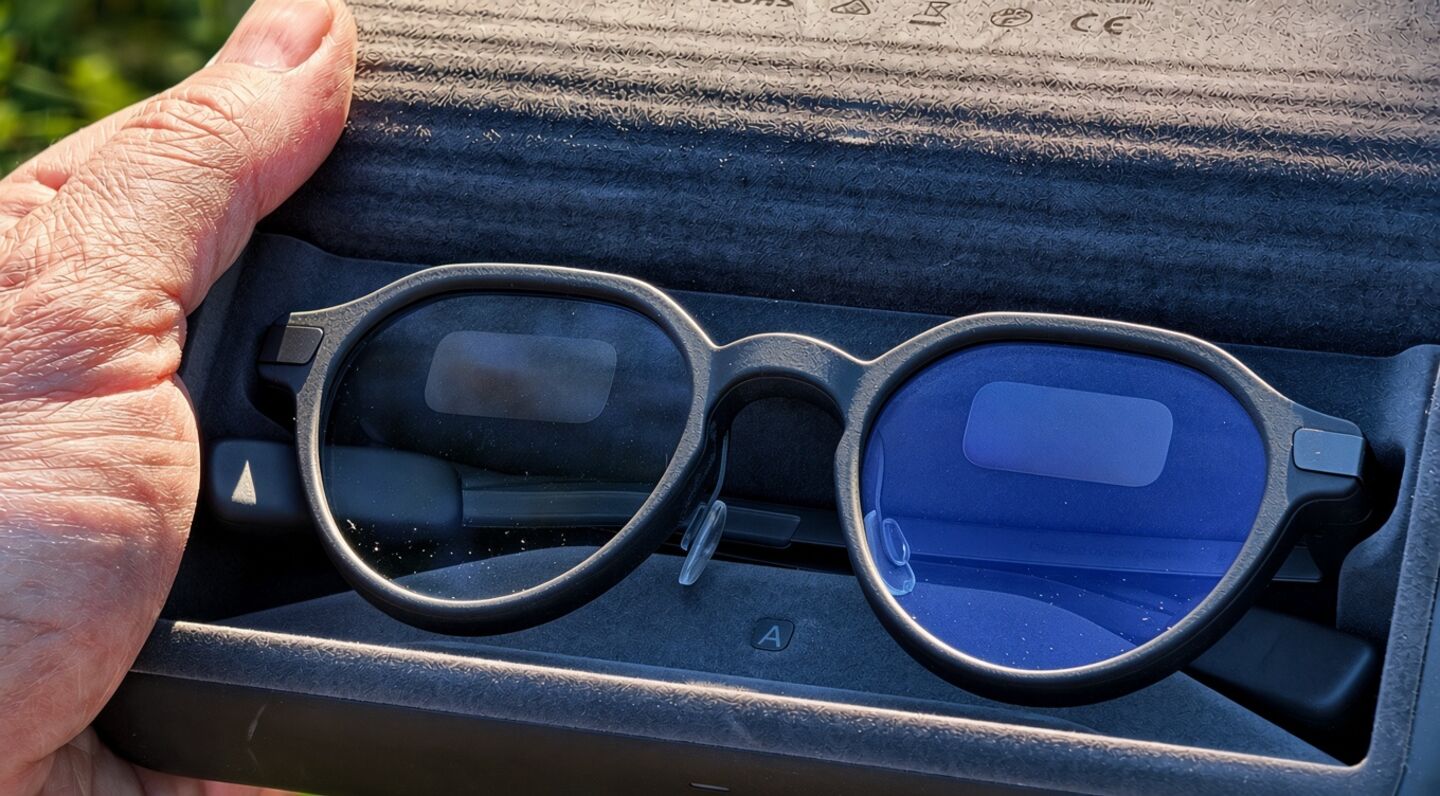
To achieve a sub-27-gram chassis, AROTI adopted a strategy of deliberate subtraction. There are no onboard cameras for computer vision or photography, and there are no open-ear speaker drivers embedded in the temples. Instead of a binocular optical engine, the R1 relies exclusively on a single right-eye monochrome green micro-LED projector that beams crisp text and simple graphical cues into the wearer's peripheral vision.
That radical diet addresses the primary physical hurdles facing wearable displays. As Brandi Henkel of techtimes.com reports, camera modules in modern smart eyewear typically tack on five to ten grams once protective housings and glass optics are factored in, while audio drivers, amplifiers, and acoustic chambers contribute another three to five grams. Doubling the waveguides and projectors for a two-eye display adds even more mass. By stripping all three away, AROTI bypassed the bulk that keeps rival hardware parked on your nightstand.
What survives that purge is a streamlined, text-first bridge to your smartphone. The R1 handles incoming notifications, serves single-line turn-by-turn navigation prompts, and processes voice queries routed over Bluetooth to a paired device. According to techtimes.com, the glasses also support live meeting transcription and real-time translation across 20 languages. Input relies on an onboard microphone array, but because the frame is completely mute, any spoken feedback or audio playback must route through your phone or a separate pair of wireless earbuds.
How it compares: The R1 stakes out a very different corner of the market than feature-packed rivals. Devices like the Rokid Glasses pack a 12-megapixel camera, speakers, and dual green micro-LED displays into a 49-gram package, while TOZO's AIVU weighs 45 grams with cameras and audio intact. Even camera-free dual-display models like the MemoMind One sit at roughly 46.6 grams. By slipping under 27 grams, the R1 lands directly inside the standard optical eyewear sweet spot of 20 to 30 grams.
Our take: AROTI's design philosophy is refreshing in an industry obsessed with cramming full smartphone sensor suites onto the human face. For daily users who simply want discreet heads-up notifications, speech-to-text transcription, and quick translation without social stigma or temple fatigue, skipping the camera and speakers makes immense sense. Still, Kickstarter campaigns for emerging hardware demand caution. The hardware engineering might be featherlight, but the real test will be whether AROTI can deliver polished companion software and reliable Bluetooth stability when backer units ship.
Interactive guide: prices, displays, cameras, battery.
Share this story