Manufacturer News · Viture
Viture's Vonder Glasses Prioritize Mind Mapping Over Virtual Displays
The new Vonder smart glasses from Viture, announced September 22, 2026, forgo a virtual display to focus on private audio recording, an AI assistant, and personal reflection. This marks a strategic shift for the display-centric company.
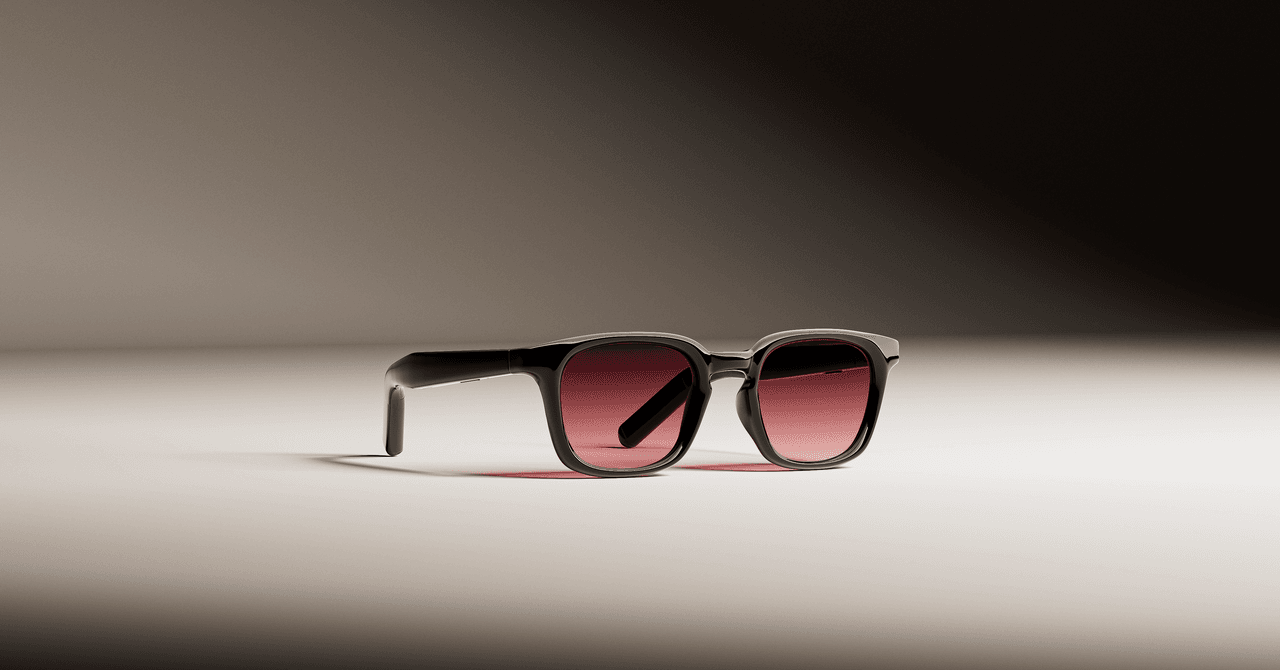
Announced September 22, 2026, Viture has unveiled Vonder, its latest smart eyewear, representing a significant departure from the company's established virtual display glasses. Unlike previous models such as the Viture One and Viture Beast, Vonder glasses lack an embedded screen, instead prioritizing a camera-free design focused on personal audio capture and an integrated AI assistant. This pivot aims to offer a more discreet and introspective wearable experience.
According to WIRED, Viture cofounder and CEO David Jiang shared a compelling anecdote about Vonder's potential. Jiang recounted how the glasses' AI assistant intervened during a tennis tournament, prompting him to reassess his critical parenting style. As Jiang told WIRED, the AI's insights, based on his vocal patterns, supposedly made him "a better father." He further stated, "I didn't know this until Vonder could find my pattern. This is not only a tool that can summarize your life, but also a tool that can help yourself to be a better person." Viture reportedly intends Vonder to act as a tool for self-improvement and memory organization.
The Vonder glasses feature bone-conduction microphones and speakers, enabling wearers to record thoughts, get directions, or make calls privately. Its integrated AI assistant leverages multiple large language models, including OpenAI's ChatGPT, Anthropic's Claude, Google's Gemini, and DeepSeek. Vonder's AI intelligently selects the most efficient and economical model for each task, aiming to summarize daily experiences and create a "digital vision board" of ideas and goals without relying on visual recording.
Our take: Viture's move from display-focused AR glasses to an audio-centric, AI-driven personal assistant wearable is intriguing. While the previous models catered to gamers and entertainment consumers with chunky designs, the Vonder appears to target a broader, more lifestyle-oriented audience concerned with privacy and self-reflection. The claim of an AI improving parenting based on vocal patterns raises questions about privacy thresholds and the subjective nature of "improvement," but the underlying tech-agnostic LLM switching is a smart strategy for performance and cost. It's a bold gamble to enter the crowded AI assistant eyewear space without a visual element, betting heavily on audio-based interaction and discreet data capture.
Interactive guide — prices, displays, cameras, battery.
Share this story