Apps & Use Cases · Meta
Smash Drums Brings Fingertip Mixed Reality to Quest and Future Meta Glasses
A free Tiny Drums mode is arriving in December, trading wild stick flailing for precision fingertip tapping across Meta headsets.
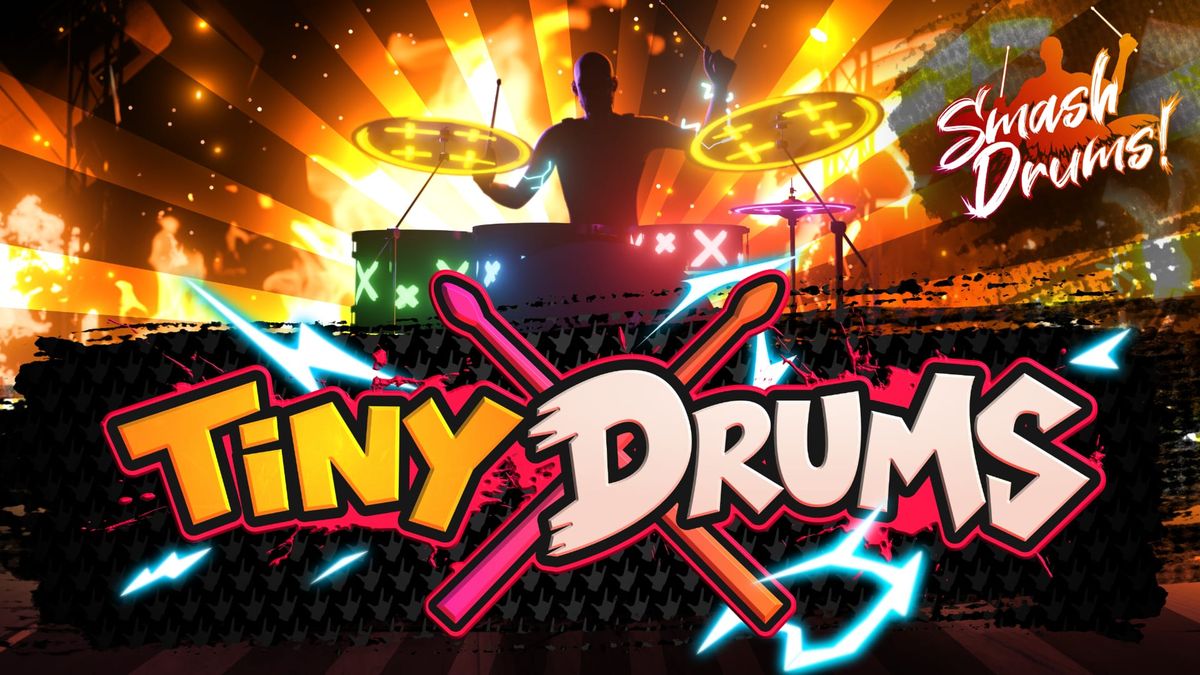
Announced on November 19, 2026, the popular rhythm title Smash Drums is rolling out a free mixed-reality update dubbed Tiny Drums. Scheduled to launch on December 2 for Meta Quest 3 and Quest 3S, the new mode reworks the percussion simulator around tabletop play and micro-gestures. The title is also confirmed to support Meta's upcoming VR Glasses when the hardware arrives in spring 2027.
Unlike the core game, which demands full-arm swings with tracked controllers to hammer virtual cymbals, Tiny Drums shrinks the entire drum set into a miniature playspace. UploadVR reports that the mixed-reality experience lets players tap out beats directly with their fingertips, using optical hand tracking instead of physical inputs. The shift effectively transforms a physically exhausting room-scale workout into an ultra-portable tabletop diversion that can be played on virtually any flat surface.
Older headsets will receive partial support in the same software push. Meta headsets predating the Quest 3 lineup will gain standard optical hand tracking for the main title, but they will be excluded from the Tiny Drums experience. That division underscores the hardware realities of mixed reality. Older devices lack the higher-resolution color passthrough and processing headroom required to accurately anchor and track fine finger positions against real-world backgrounds.
The expansion marks a significant milestone for the indie rhythm game, which is celebrating its fifth anniversary on the Quest platform. Developed primarily by a solo creator, the project has steadily evolved through regular content drops and music packs. Over the past year, the studio delivered a dedicated campaign mode and ported the title to PlayStation VR2, but the move toward fingertip interaction represents its most dramatic interface overhaul yet.
The explicit mention of Meta's upcoming spring 2027 VR glasses offers an intriguing glimpse into developer preparations for lighter spatial hardware. As head-mounted displays shed bulk and migrate toward everyday eyewear aesthetics, relying on bulky plastic controllers becomes a dead end. Experiences designed for future spatial glasses must operate entirely through natural optics, subtle pinches, and fingertip contact.
Our take: Tiny Drums provides a smart blueprint for how traditional VR genres can survive the transition to lightweight smart glasses. Big swing mechanics are great for high-intensity gaming sessions in an empty living room, but casual spatial computing requires minimal friction and socially acceptable movement. If rhythm gaming can thrive on coffee tables and airplane tray desks using micro-gestures, ambient gaming on consumer eyewear has a very bright future.
Interactive guide: prices, displays, cameras, battery.
Share this story