Analysis · RayNeo
RayNeo GT Max Pushes Display Glasses to 59-Degree FOV at $429
RayNeo targets portable cinema and gaming with dual Micro-OLED panels, a massive virtual screen, and aggressive pricing.
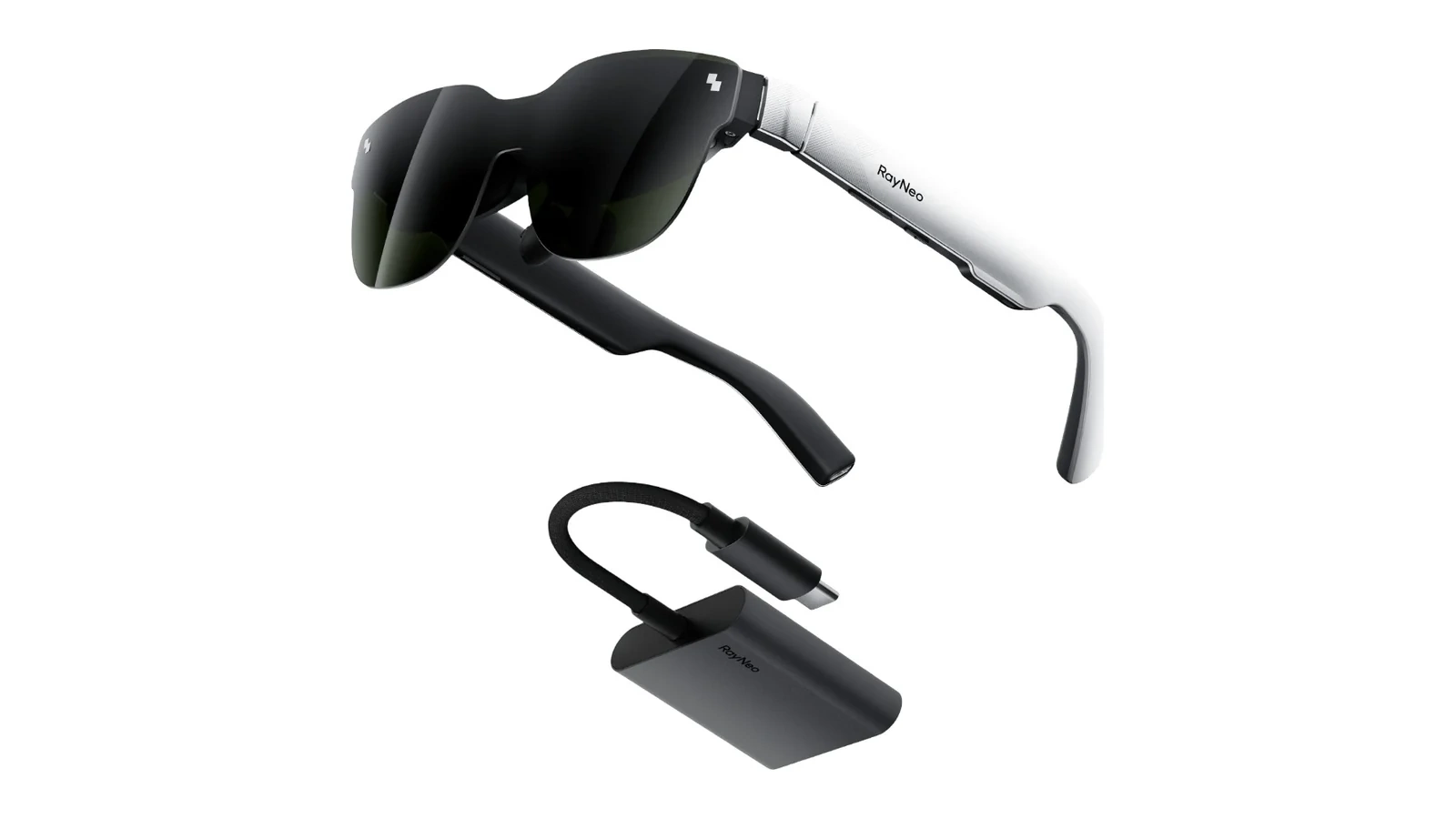
On November 27, 2026, initial reviews surfaced for the RayNeo GT Max, an optical wearable designed to turn connected phones, handheld consoles, and laptops into a floating personal theater. RayNeo is pitching the glasses on high-impact specs: a 59-degree field of view, an adjustable virtual display simulating up to a 307-inch canvas, and an official list price set at $429.
Under the hood, the hardware relies on a pair of 0.6-inch SeeYa Micro-OLED panels. Each microdisplay operates at 1920 by 1080 resolution, delivering full HD per eye. Refresh rates top out at a smooth 120Hz for standard 2D playback before dropping to 60Hz when handling stereoscopic 3D content. RayNeo configures the projected canvas with three distinct sizing presets: 227 inches, a default 267 inches, and the maximum 307-inch projection.
Early reception across tech outlets focuses squarely on multimedia performance. According to shattered.io, consensus among early coverage treats the glasses primarily as an entertainment accessory rather than a productivity tool. As shattered.io notes, a review by PhoneArena highlighted the GT Max as an exceptionally immersive option for movies and gaming at its $430 price tag.
The 59-degree field of view marks a noteworthy optical jump. Most competing birdbath display frames, such as standard offerings from Xreal or Rokid, historically hover between 46 and 50 degrees of diagonal FOV. Pushing the boundary to nearly 60 degrees significantly expands peripheral coverage. However, stretching a 1080p source over a broader optical angle inherently lowers the pixels-per-degree density, meaning fine software UI and small text might lose sharpness compared to narrower setups.
Pricing also creates an interesting dynamic in the wider spatial hardware market. With retail pricing hovering around $429 and promotional discounts dropping as low as $335, the GT Max undercuts full spatial headsets while offering an entirely different value proposition. Instead of heavy spatial tracking, onboard computing, and short battery life, display glasses offload compute and power to the host device, providing pocketable simplicity for commuters and frequent flyers.
Our take: The display glasses category is locked in an optical arms race, and RayNeo is betting that maximum perceived screen scale matters more to buyers than ultra-high text fidelity. While productivity hounds may pine for 4K panels, travelers and Steam Deck gamers just want a giant, fluid screen in their bag. If the optics remain clear at the edges, the GT Max could set a new benchmark for budget video glasses.
Interactive guide: prices, displays, cameras, battery.
Share this story