News · Halliday
Halliday Gen 2 Opts for Standard Waveguides, Drops Signature Display
The startup that introduced a proactive AI display in its frame is now pivoting to conventional binocular waveguides and monochrome microLED projection. This strategic shift puts the onus squarely on software and industrial design to differentiate its latest smart glasses.

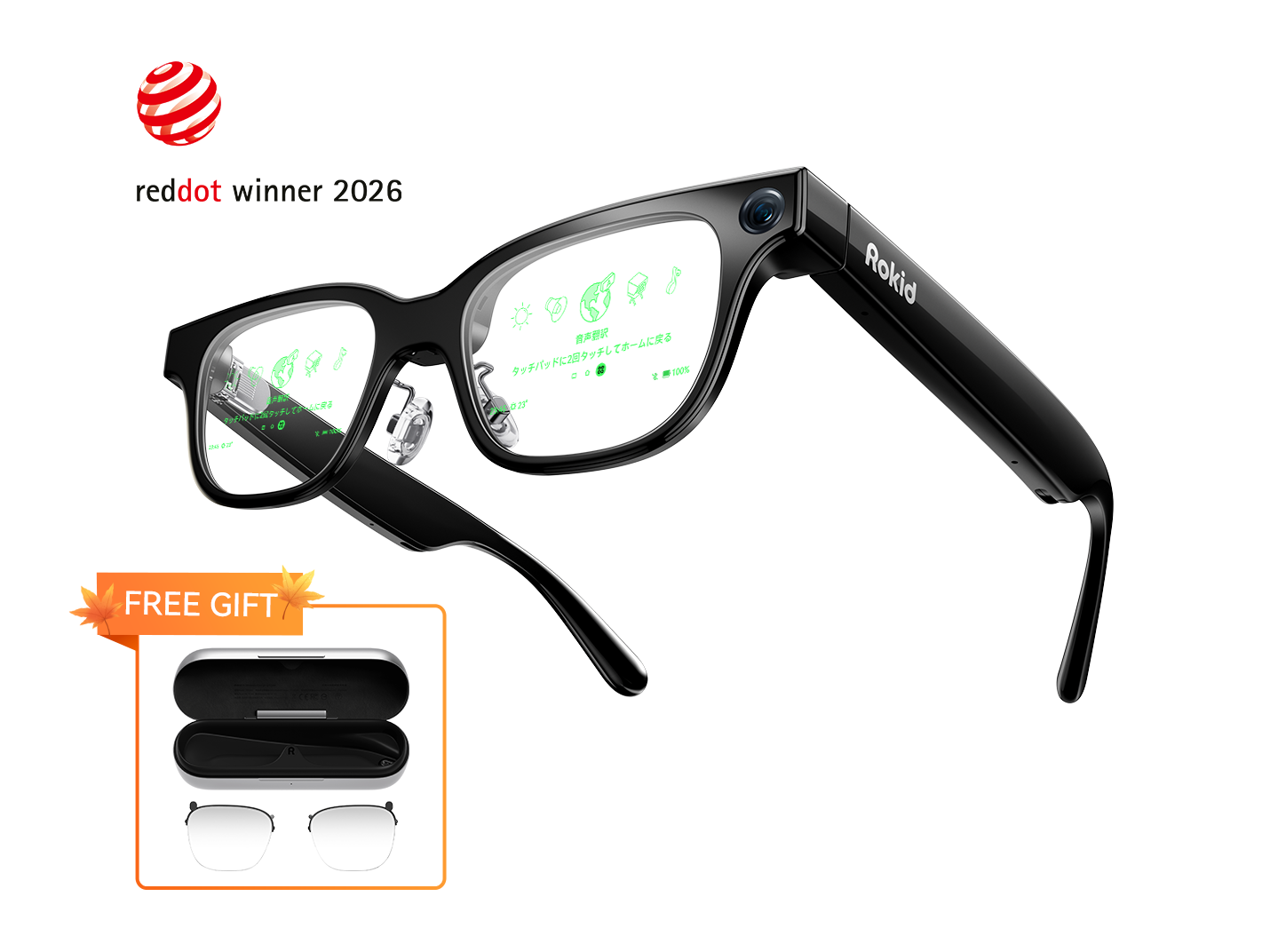
Halliday, the startup that made waves at CES 2025 with a distinct direct-view display embedded in the top-right corner of its frames, is walking away from that signature architecture. This week, Halliday confirmed via its company site and LinkedIn that the Gen 2 glasses will abandon that proprietary design. The new hardware adopts a standard binocular waveguide paired with a monochrome microLED projector, a common optical setup seen in products from INMO, Even Realities, and Rokid.
The original "DigiWindow" was Halliday's defining feature: a discreet micro-projector aimed at peripheral vision, eschewing waveguides and bulky temples. Halliday previously positioned it as a unique, unobtrusive HUD. Its removal means the Gen 2 now presents as conventional hardware in an increasingly crowded market.
With hardware now table stakes, Halliday's differentiation hinges on software and industrial design. The Gen 2 ships with a core app bundle. This includes the proactive Halliday AI assistant, live translation with in-lens subtitles, and daily functions like navigation cues and notifications. Professional users gain access to credit-based features: "Meeting Flow," capped at 120 minutes per month, and "Post-meeting Summary," capped at 300 minutes per month.
The "Meeting Flow" focus marks Halliday's most intriguing strategic bet. Instead of vying with Ray-Ban Meta on lifestyle capture or XREAL on media consumption, Halliday aims to be the premier wearable meeting assistant. This includes live captions, action items, and summaries delivered to the lens and inbox, directly challenging desktop AI companions like Otter, Fireflies, and Zoom AI Companion in a new form factor.
Video: Halliday
Our take: This pivot is not without significant risk. By abandoning its optical differentiator, Halliday now directly competes on hardware specifications with established players like Even Realities, INMO, and Rokid. These companies already boast polished waveguide stacks, strong distribution, and locked-in microLED partners. Halliday must ensure its hardware performance-including battery life, sunlight brightness, and prescription lens compatibility-meets or exceeds these rivals for its design and app polish to matter.
What this means: Halliday's credit model, particularly for "Meeting Flow," seems limiting for frequent users. A 120-minute monthly cap works for occasional meetings, but not for those constantly on Zoom. A paid tier seems inevitable. Competitors are likely to counter with unlimited, on-device transcription solutions as NPU capabilities improve in chips like Qualcomm's AR1 Gen 2, allowing local execution of models like Whisper.
We've been tracking Halliday's evolution, and this pivot appears to be an honest acknowledgement that a unique optical trick alone won't build a category. Halliday is now betting its future on becoming the dominant meeting-glasses company. The critical question remains: can its software innovation and execution outpace Meta, Google, and numerous well-funded Chinese rivals?
Interactive guide — prices, displays, cameras, battery.
Share this story