News · Meta
Autonomous Agent Glasses Now Possible With Ray-Ban Meta, OpenClaw, and Gemini
A developer has transformed Ray-Ban Meta smart glasses into an autonomous AI agent, connecting them to Google's multimodal Gemini API and an OpenClaw agent. This setup demonstrated the ability to diagnose a car issue and order a replacement part independently.
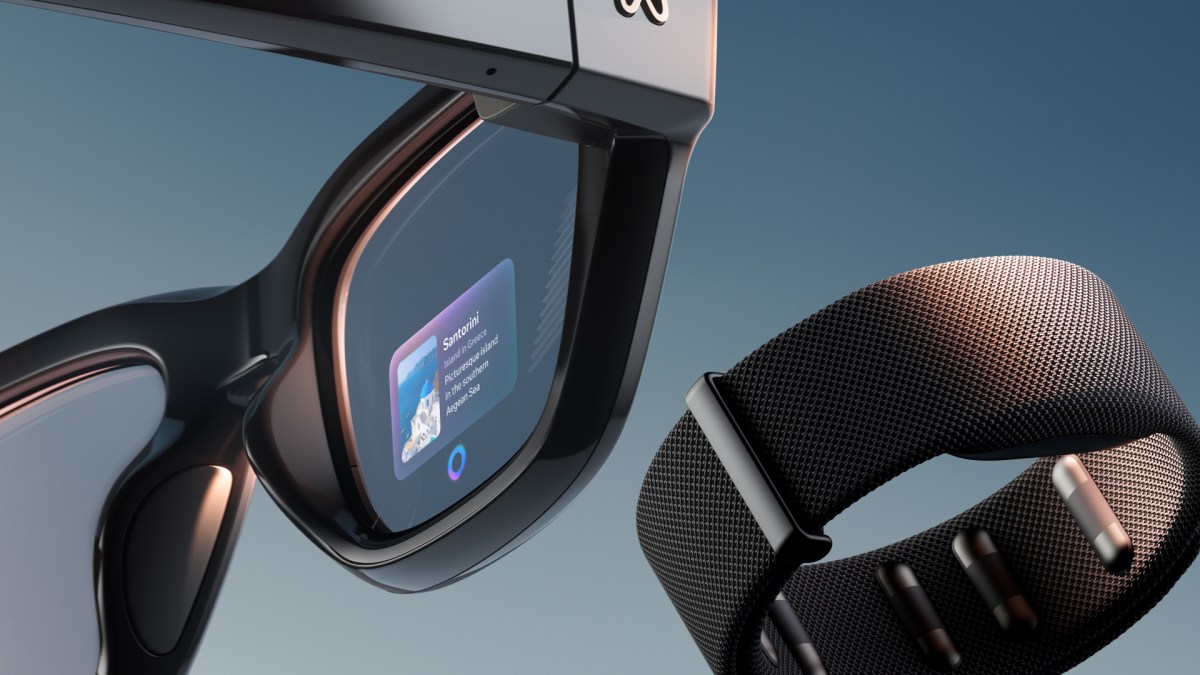
A new demonstration published on February 28, 2026, showcases Ray-Ban Meta smart glasses operating as an autonomous AI agent, a significant leap for spatial computing. Developer Samin Yasar, a former Amazon software engineer, details how he integrated the glasses' camera feed with Google's multimodal Gemini API, then handed decision-making to OpenClaw, an open-source autonomous agent running on his Mac.
Dubbed "VisionClaw," the setup allows the glasses to perceive the environment and act on it. In a walkthrough, Samin Yasar (YouTube) demonstrates the system diagnosing his car's acceleration problem. The agent, viewing through the glasses, identified a clogged air filter, found a replacement part for approximately $16, and offered to add it to his Amazon cart. This entire process unfolded without explicit, step-by-step instructions from Yasar.
Crucially, Yasar (YouTube) stressed the agent's autonomy. He noted, "I didn't have to tell it to go to Amazon. I didn't build an order from Amazon workflow." Yasar (YouTube) explained that the agent could have just as easily contacted a mechanic, searched a parts forum, or accessed a service manual. "But it chose the best action based on what it saw and what I had asked it. And that's what makes this agentic," he said.
The architecture's simplicity is intentional, promoting reproducibility. The glasses function solely as sensors- a camera and microphone, without on-device processing. An iPhone acts as a bridge via the Meta AI companion app, utilizing developer mode. The live video stream is piped directly into Gemini's multimodal API for both vision and language interpretation. OpenClaw, hosted on a Mac Mini or a Virtual Private Server (VPS), provides persistent memory and computer control, autonomously navigating apps, clicking, and typing.
Yasar outlines the agent's core capabilities with the acronym SMART: See, Memorize, Act, Read, Teach. Examples include recalling dictated notes from its local memory store, translating foreign menus on the fly, and providing step-by-step repair guidance while monitoring the user's hands.
Samin Yasar (YouTube) is blunt about the current limitations. While the glasses cost around $300, continuous live video streaming to a multimodal model can incur hundreds of dollars in monthly bills. Raw agent API tokens are even costlier, with users potentially burning through thousands of dollars if an agent runs unattended. His workaround, which the OpenClaw founder also recommends, is routing the agent through a flat-rate ChatGPT Plus subscription. Battery life remains a hard ceiling, and the entire stack currently requires a Mac, an iPhone, and a high tolerance for troubleshooting. As Yasar (YouTube) admits, "Just for me to get this demo working took a lot of attempts."
What this means: This project underscores a significant industry trend: the existing hardware capability of smart glasses is meeting the rapid advances in consumer-grade AI software. No new bespoke hardware was needed; the missing pieces- a multimodal model to process vision and audio, and an agent layer with memory and the right to act- have recently become available. This mirrors the broader strategies of companies like Meta with its paid AI tier, Alibaba with its Qwen agent glasses, and Google and Samsung for Android XR.
The project also previews imminent governance challenges. An agent that autonomously browses, logs into accounts, and places orders presents vastly different privacy and liability concerns than a simple recording device. Yasar's local memory store offers a reassuring, user-controlled model, but the inevitable cloud-based, subscription-driven versions from manufacturers are already drawing scrutiny from regulators in Europe and various US states.
Interactive guide — prices, displays, cameras, battery.
Share this story