Manufacturer News · Google
Android XR Adds Spatial Containers for Multi-Engine Volumetric Apps
Google's spatial platform implements the OpenXR Spatial Container standard, paving the way for true volumetric multitasking across smart glasses and headsets.
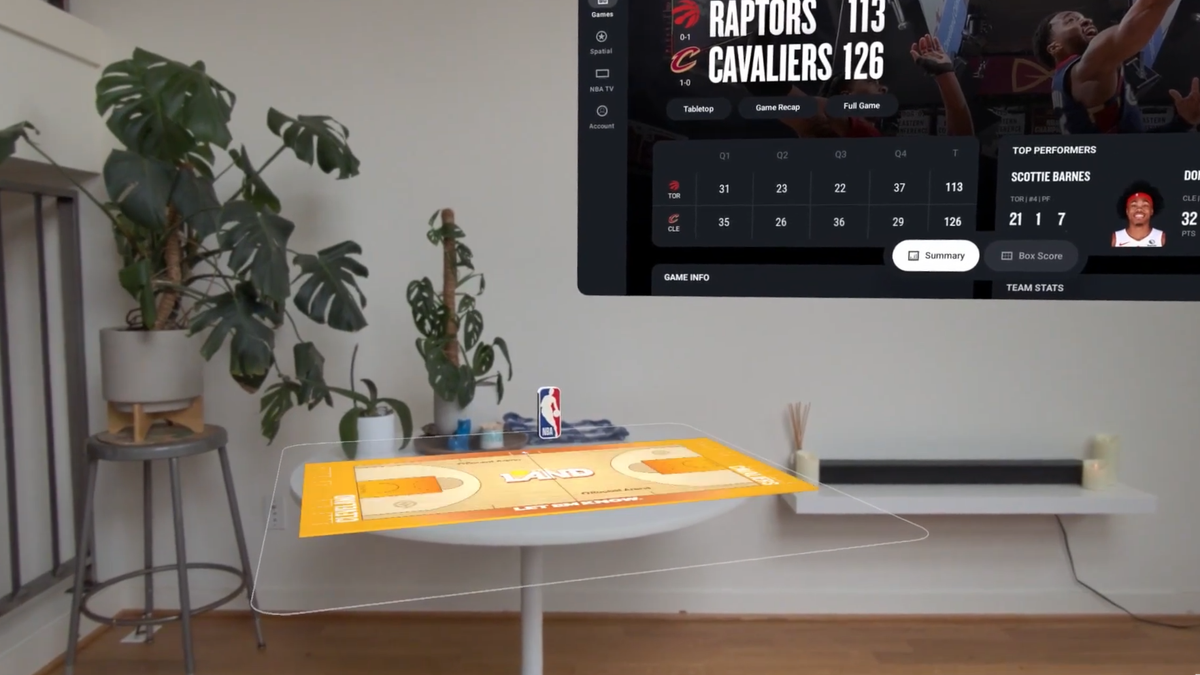
On November 16, 2026, Android XR rolled out support for the recently standardized OpenXR Spatial Container extensions on devices running Spatial API Level 4 or higher. UploadVR reporter Luna reports that this milestone allows developers to build multi-engine applications capable of coexisting in shared environments, moving Google's spatial operating system closer to true volumetric multitasking.
Prior to this release, launching an OpenXR session on Android XR effectively monopolized the device's entire display, locking users into an exclusive, single-app experience. Spatial Containers change that dynamic by letting software render 3D content inside distinct, bounded volumetric boxes or smoothly transition into an unbounded, immersive mode. As UploadVR explains, Android XR handles the window controls and system placement for each container, while users can interact directly with the 3D content inside the volume using hand tracking, eye gaze, or six-degree-of-freedom (6DoF) controllers.
The underlying technology builds directly on the Khronos Group specification for spatial containers, which standardizes system-managed spaces in the same way traditional operating systems organize 2D windows on a desktop. However, UploadVR highlights a notable caveat in the current release: Android XR limits these spatial containers to applications running in Full Space mode. While it stops short of letting bounded 3D boxes freely intermingle across every ambient surface, it provides an essential bridge for complex, multi-engine workflows.
What this means: The spatial computing platform race is rapidly shifting from raw graphics horsepower to window management and interface versatility. For years, standalone spatial headsets operated like early smartphones, trapping the user inside one full-screen application at a time. Apple tackled shared volumetric computing in visionOS by requiring developers to use its proprietary RealityKit compositor. By implementing OpenXR Spatial Containers instead, Android XR is offering a far more flexible route. Studios using Unity, Unreal Engine, or bespoke in-house rendering pipelines can deploy bounded 3D apps without completely rewriting their graphics architecture.
How it compares: Meta has gradually opened Horizon OS to side-by-side 2D panels and lightweight 3D widgets, but unified multi-engine volumetric multitasking has remained tricky across independent applications. Google and Samsung, which are positioning Android XR as the premier open alternative to Apple's visionOS, need developer momentum before hardware arrives broadly in retail channels. If Android XR can deliver frictionless multitasking without forcing teams into proprietary frameworks, it gives enterprise productivity tools, CAD viewers, and collaborative suites a practical reason to build for the ecosystem.
Looking ahead, containerized 3D rendering will be equally vital for everyday smart glasses and lightweight mixed-reality viewers. Ambient computing relies on glancing at an interactive widget, a floating notification, and a volumetric model simultaneously without resetting the digital environment. Android XR's container rollout is an essential foundation, but expanding these volumes beyond Full Space mode into an always-on, unified spatial desktop will be the next major hurdle.
Interactive guide: prices, displays, cameras, battery.
Share this story