Analysis · XRPAK
XRPAK's Vision: Detaching the Smart Glasses From Their Brain
A new startup, XRPAK, proposes a "Portable Spatial Computer" that powers any XR glasses, aiming to lighten eyewear and enhance performance. Its ambitious plans include collectible XR cartridges and an ambient AI layer, but the company's offerings remain largely conceptual.
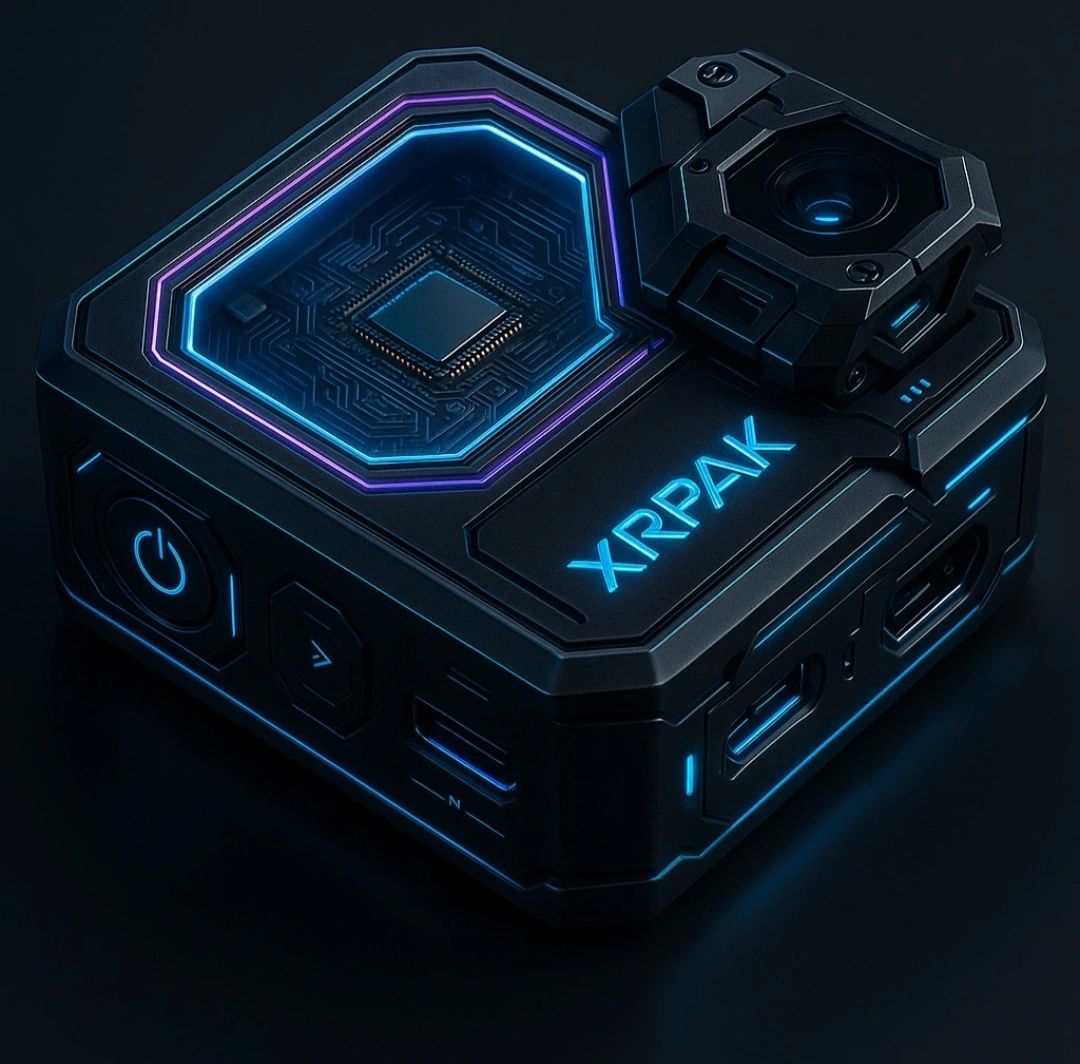
A new name has entered the smart glasses conversation, though it is neither a headset manufacturer nor a chip vendor. XRPAK, a startup whose website went live with a 2026 copyright and a prototype-stage disclaimer, is pitching what it calls the world's first Portable Spatial Computer and XR Phone. XRPAK's core concept is straightforward: separate the compute, battery, and thermal management from the smart glasses themselves, moving them into a pocket-sized device compatible with various XR eyewear.
XRPAK frames this approach as "splitting the laptop." The glasses would serve as a lightweight visual interface, while the XRPAK unit provides the necessary processing power. According to XRPAK, this separation promises several benefits: increased performance, extended battery life, lighter eyewear, modular upgrades, and an ecosystem that can refresh without replacing the frames worn on the face.
This argument, while not entirely new, has gained significant relevance. Current smart glasses like Meta's Ray-Ban Display, Rokid Glasses, XREAL One Pro, and Even Realities G2 all operate within similar physical constraints, balancing silicon, battery size, and heat dissipation directly on the user's face. XREAL already offers a compute puck with its One Pro line, and Rokid frequently leverages a connected smartphone for intensive tasks. XRPAK aims to formalize this external compute unit into a fully fledged, independent spatial computer.
The company's website also sketches a broad software ecosystem around its proposed hardware. NEO Spatial Ambient AI and Ambient AI describe an intelligent assistant designed to interact with the environment rather than being confined to specific applications. Spatial Workspaces promises multiple virtual displays and AI-assisted workflows, all accessible from the portable computer. Spatial Calling reimagines voice and video calls as spatially anchored conversations, while Augmented Memory suggests the capture and recall of visual and auditory experiences, an area also explored by Meta and Alibaba's Qwen glasses.
One of XRPAK's more distinctive pitches is what it terms Portable Spatial Ownership. Instead of relying solely on cloud streaming, XRPAK floats the idea of collectible XR cartridges and XRPAK Media. These are spatial experiences that users could collect, display, preserve, trade, play offline, and even resell. This concept is an explicit play to nostalgia, reminiscent of video store and game cartridge culture, and directly contrasts with the subscription-based models, such as Meta's premium AI tier, prevalent in the industry.
Beyond core compute, XRPAK Sync aims to address the common criticism of XR isolation by offering synchronized media and shared spatial environments. The site also teases an XRPAK Vision Drone, a Neo Kids product line, a Spatial Gaming category, and premium designer-inspired AR frames intended to pair with the compute unit.
Our take: This is where the caveats matter significantly. XRPAK currently provides no information on its silicon partners, display specifications, weight, battery capacity, pricing, or an estimated ship date. Its website indicates prototype development is underway, but a public YouTube channel with few subscribers, a generic contact email, and a founder link pointing to a personal LinkedIn profile rather than a corporate page underscore its early stage. While all product names carry trademark symbols, this indicates intent more than a readily available product.
What this means: XRPAK should be viewed as a compelling thesis rather than a product announcement. The core idea-separating significant compute from eyewear-offers a credible pathway to smart glasses that are lightweight, thermally efficient, and offer all-day utility. Major players are already moving in this direction with companion pucks, phones, and specialized silicon. The critical question for XRPAK is whether a small, independent team can bring this architecture to market as shipping hardware before established giants like Meta, Google, Samsung, XREAL, and Alibaba integrate the same principles into their own mass-produced offerings.
What we're watching: We will be looking for concrete developments: the announcement of a named chipset, a verifiable prototype demo on video, a compatibility list of supported glasses, and any clear signal that the XR cartridge concept has actual content partners backing it. Until these elements emerge, XRPAK remains one of the more interesting, yet unproven, bets on the smart glasses landscape.
Interactive guide — prices, displays, cameras, battery.
Share this story