
News · Xreal
Xreal's Wearable Display Glasses Hit Deep Price Cuts in Europe
A steep discount on Xreal's display glasses highlights how plug-and-play spatial monitors are sliding into mainstream budget territory.
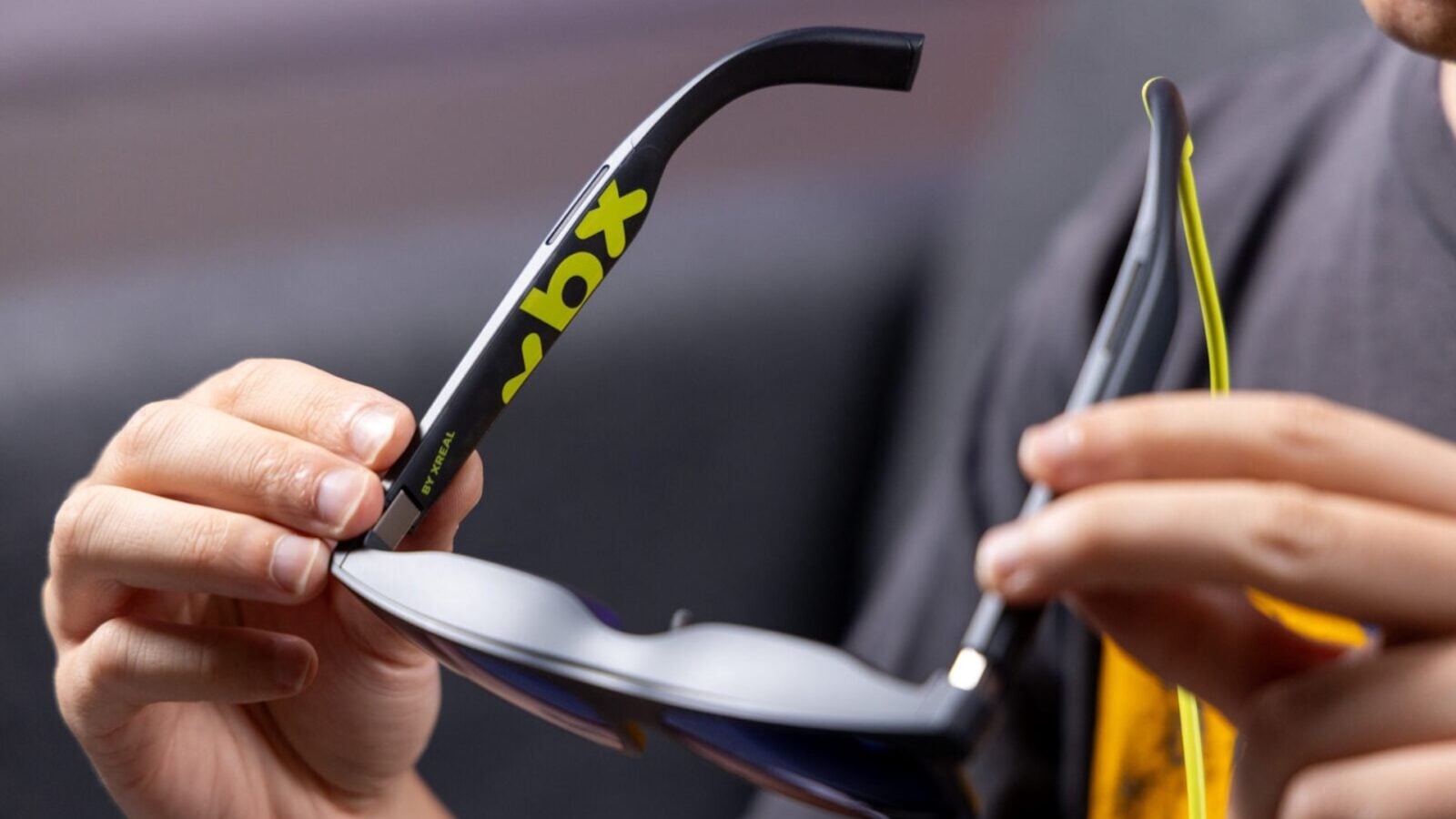
On November 15, 2026, French outlet 01net (FR) highlighted a dramatic price cut on the Xreal xbx A01+, dropping the wearable display glasses down to 214 euros via import promotions from an original price of 369 euros. The 42 percent markdown signals an aggressive push into value territory for hardware that serves primarily as a personal pocket monitor for portable consoles and smartphones.
The hardware package focuses squarely on media viewing and tethered gaming rather than full spatial computing. According to technical specifications compiled by 01net (FR), the glasses utilize twin 0.6-inch Micro-OLED panels delivering 1080p resolution per eye. The optical engine projects a virtual screen spanning an apparent 147 inches at a distance of four meters, backed by a 50-degree field of view, up to 1,600 nits of brightness, HDR10 support, and refresh rates topping out at 120Hz over USB-C.
In everyday use, the A01+ acts as a direct secondary monitor over DisplayPort alternate mode. As 01net (FR) notes, the form factor is designed to stream shows from Netflix or project handheld gaming systems like the Steam Deck and Asus ROG Ally without commandeering the living room television. The glasses package includes essential peripherals, notably a detachable light shield for high-contrast viewing, three interchangeable nose pads, and a protective carrying case. A prior review from Gizmodo similarly underscored that the hardware aims to keep both weight and retail pricing lower than flagship AR headsets.
What this means: We are watching wearable displays drop down the pricing curve much faster than standalone AI glasses. While optical waveguide frames and full standalone spatial platforms struggle with thermal boundaries and steep price tags, simple USB-C display glasses have matured into reliable commodity hardware. When high-refresh Micro-OLED glasses dip close to the 200-euro threshold, they stop competing with complex headsets like the Apple Vision Pro and instead compete directly with budget desktop monitors and portable travel screens.
How it compares: The core specs here match the foundational experience seen across the Xreal Air series, as well as rivals from Rokid and RayNeo. The trade-off at this lower tier remains the absence of onboard compute or spatial room-tracking sensors. Without 6DoF (six degrees of freedom) tracking, the display functions as a fixed heads-up canvas unless paired with dedicated spatial software bridges on a host laptop. For travelers, mobile gamers, and bedside streaming, however, the simplicity of a single display cable without battery overhead remains the exact selling point driving early adoption.
Interactive guide: prices, displays, cameras, battery.
Share this story





