Guides · Thunderbird
Thunderbird's smart-glasses play, explained: A new entrant on the AI horizon
A fresh face in the smart-glasses arena, Thunderbird V3 AI Glasses could be a dark horse in ambient computing. We dissect what's known about this new player and whether it warrants your attention.
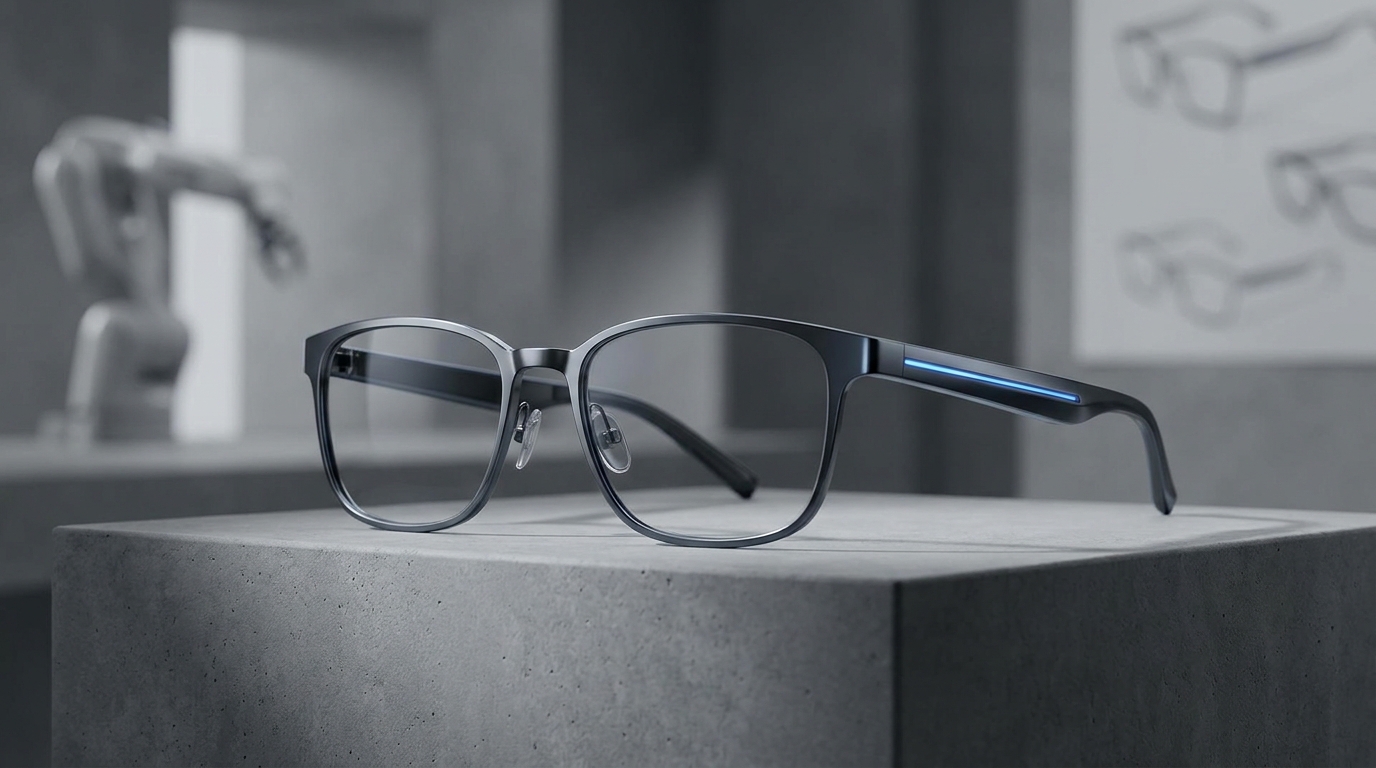
A new player has landed on our radar, promising to shake up the nascent but rapidly evolving world of smart glasses. Thunderbird, with its announced V3 AI Glasses, steps onto a crowded stage currently dominated by giants and nimble specialists. While concrete details remain scarce, any entrant explicitly branding their hardware as 'AI Glasses' in 2024 demands scrutiny, and Thunderbird is no exception.
The potential implications are significant. As the smart glasses market bifurcates into display-centric AR and more subtle, AI-first ambient computing devices, Thunderbird's chosen nomenclature places it firmly in the latter camp. This positions them to capitalize on the burgeoning interest in discreet, everyday AI companions, a space where user experience and computational prowess are paramount.
Thunderbird arrives at a pivotal moment. The industry is still defining what 'smart glasses' truly means for the average consumer, moving beyond niche applications to mass appeal. With major players still experimenting, there's a window for newcomers with a clear vision to carve out a meaningful segment. Thunderbird's initial foray suggests a focus on intelligence over visual spectacle, a strategy that could resonate with a privacy-conscious, utility-driven demographic.
So, who is Thunderbird? At present, they are a name with a product announcement, not a storied history in the smart-glasses space. Unlike long-established tech players, Thunderbird appears to be a fresh face, emerging precisely as AI integration becomes the critical differentiator for next-gen wearables. Their move into 'AI Glasses' suggests a target demographic keen on advanced conversational AI, real-time contextual awareness, and seamless digital assistance, rather than overlaying virtual objects onto the real world.
The 'why now' is clear: the underlying AI technology has matured sufficiently to enable on-device processing and robust natural language understanding, essential for a truly intelligent pair of glasses. This trend, coupled with growing consumer readiness for more personalized, discreet technology, creates fertile ground for a company willing to bet big on a specialized AI-first approach. Their entry underscores the industry's shift towards intelligent assistants that are physically integrated into daily life.
Our current intelligence on Thunderbird's smart-glasses lineup centers exclusively on the 'Thunderbird V3 AI Glasses.' It's important to clarify a note in our tracking that mistakenly referred to a smartphone; the product we are analyzing here is unequivocally a pair of smart glasses. As an announced product, granular details are still emerging, but key specifications give us an initial impression of their ambition.
The Thunderbird V3 AI Glasses are categorized as 'ai-glasses' and are currently listed with an 'announced' status. They weigh in at 198g and include a camera. Beyond these core facts, public information is sparse. We do not have details on display technology, battery life, specific AI capabilities, on-board storage, or processor type. The significant weight of 198g, for a device explicitly termed 'AI Glasses' rather than 'AR Glasses' (which often justify weight with robust displays and processing), is a notable data point.
This weight suggests either a very substantial battery, advanced on-board processing for complex AI models, or perhaps a more ruggedized design than typical consumer eyewear. The inclusion of a camera is standard for AI glasses, enabling visual context for AI processing, but its specifications (resolution, field of view, privacy indicators) are yet to be disclosed. Without a specified display, the V3 AI Glasses are likely designed for audio-first interactions and discreet data delivery.
When positioning Thunderbird V3 AI Glasses against the current market, we find distinct competitive landscapes. Meta, with its Ray-Ban Meta and Oakley Meta HSTN lines, emphasizes fashion integration, robust audio, and a strong social sharing camera experience, backed by a developing on-device AI assistant. Thunderbird's 'AI Glasses' designation implies a potentially deeper, more integrated AI experience, perhaps with a focus on productivity or contextual assistance that goes beyond Meta's current conversational scope.
Sony, while a formidable player in XR partnerships and a key supplier of micro-OLED displays (like those used in high-end AR/VR), primarily operates in enterprise and component supply rather than direct consumer AI glasses. Thunderbird is unlikely to compete directly with Sony's enterprise XR solutions but might leverage similar componentry. Their challenge, unlike Sony's B2B focus, will be building a compelling consumer-facing brand and ecosystem from scratch.
TCL RayNeo, with products like the Air 3s and X3 Pro AR glasses, offers a range of display-focused AR experiences for entertainment and light productivity. RayNeo's strength lies in providing visual overlays and immersive media. Thunderbird's V3 AI Glasses, lacking a publicly disclosed display and emphasizing 'AI,' suggests a different value proposition entirely—one centered on intelligent assistance and audio interaction rather than augmented visual reality. The battle here isn't about screen quality, but about the quality and utility of the underlying intelligence.
The Smart Glasses Daily verdict on Thunderbird is cautiously optimistic. This is a company betting on the 'AI Glasses' category specifically, signaling a clear intent to prioritize intelligent interaction over visual augmentation. For early adopters and professionals seeking a truly smart assistant integrated into their daily wear, Thunderbird could present a compelling, discreet alternative to more visually demanding AR headsets.
However, the significant 198g weight for an AI-first device is a concern, demanding robust justification in terms of battery life or processing power. Thunderbird's strengths lie in its focused AI positioning, which, if executed well, could differentiate it in a fragmented market. Weaknesses currently stem from the lack of detail, an unproven ecosystem, and the challenge of building brand trust from scratch. In the next 12 months, we will be watching closely for a full product reveal, detailed specifications, pricing strategy, the specifics of its AI capabilities, and most critically, its real-world utility and comfort. The V3 AI Glasses represent an interesting first step; its true impact will depend on what lies beneath the surface.
Interactive guide — prices, displays, cameras, battery.
Share this story