Analysis · Meta
The Silent Drain: Why No One is Solving Smart Glasses' Toughest Problem
The smart eyewear industry is chasing AR dreams and battling privacy fears, yet consistently ignores the silent killer: battery life. Meta's latest product launches inadvertently highlight this fundamental, unsolved conflict.
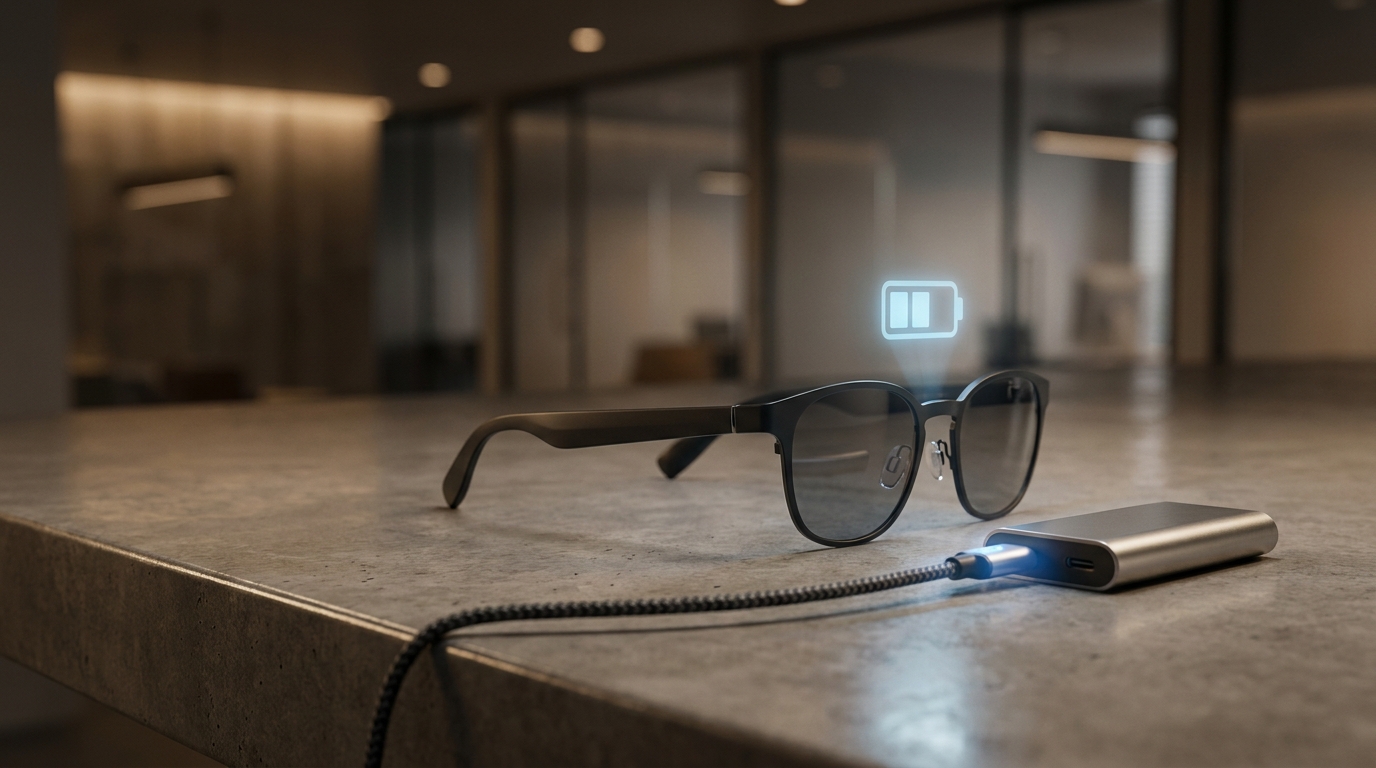
Everyone is fixated on smart glasses' privacy problem, or their potential for holographic avatars. Analysts dissect AI integrations, regulatory bodies debate surveillance, and brands unveil sleek new designs. But beneath all the hype and hand-wringing lies a more fundamental, more intractable issue that nobody truly addresses: the battery problem.
The ambition is clear. Meta, for instance, is pushing for high-fidelity experiences like Tetris Effect: Mixed Realities, slated for 2027 release on its VR Glasses and Quest platforms. This vision promises hand-tracking and room-aware immersion, capabilities that demand immense processing power. Yet, cramming that kind of energy draw into a discreet, all-day wearable form factor remains a fantasy.
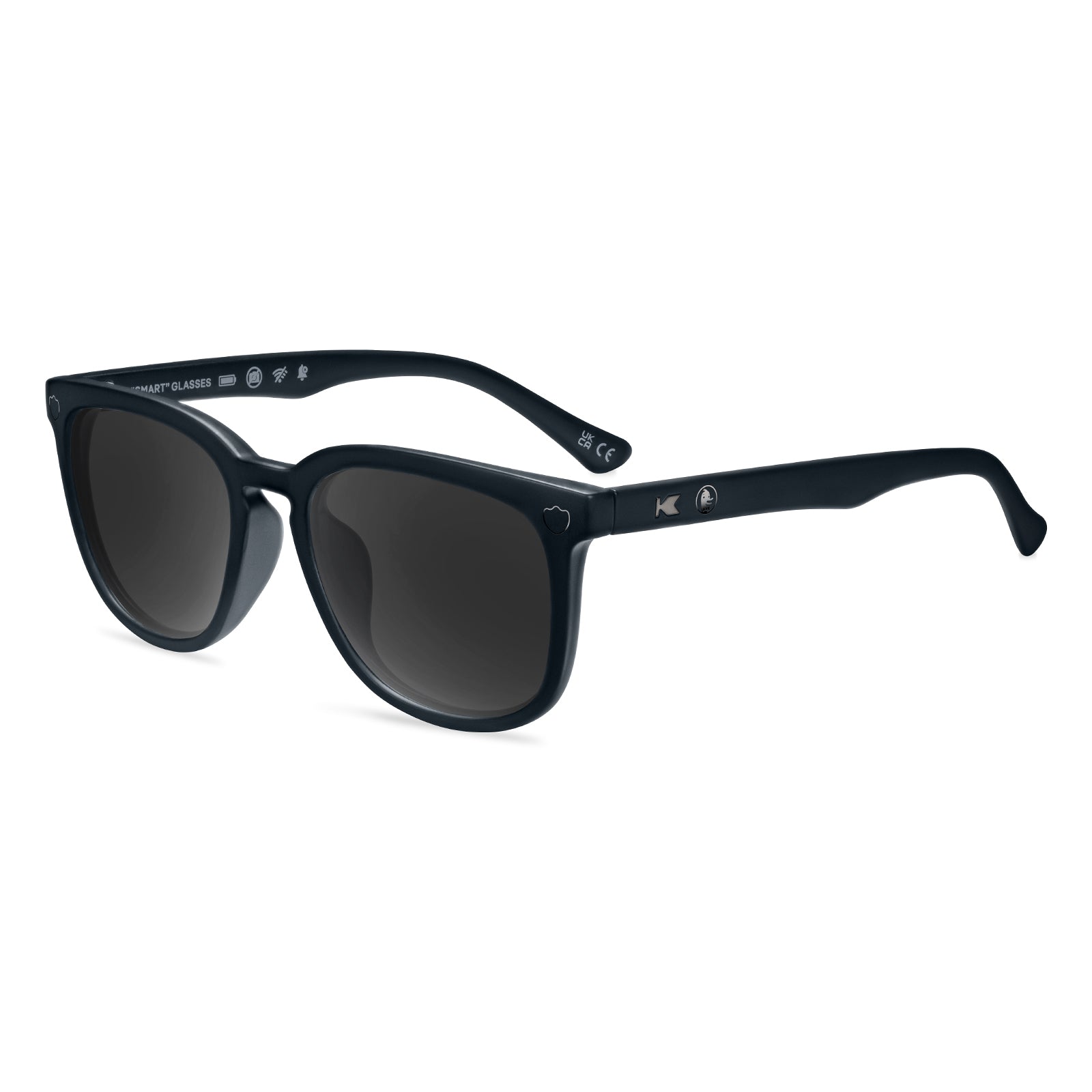
Meta's recent strategic pivot into camera-free smart glasses, highlighted at Connect 2026, was framed as a direct response to global privacy concerns. With existing camera-equipped models facing lawsuits and venue restrictions, introducing devices like the new Ray-Ban Meta Audio seems like a shrewd move. However, this supposed privacy solution also inadvertently exposes the industry's deep battery conundrum.
The camera-free approach is a tacit admission that certain features simply drain too much power for practical, sustained use. Smart Glasses Daily has previously noted that "display-less smart glasses are quietly winning," not just on privacy, but on utility. These simpler, more utilitarian devices typically offer far better endurance.
The numbers bear this out. The Ray-Ban Meta Audio, devoid of a camera and display, boasts a claimed "up to 12 hours of battery life" while weighing a mere 43 grams. This is a significant improvement for all-day wear, a direct consequence of shedding power-intensive components. But this improvement comes at a cost- the absence of advanced features.
The core contradiction is stark: the more intelligence, display capability, or mixed reality interaction a smart glass offers, the shorter its battery life. Consider the announced over-the-counter hearing aid functionality coming to Meta's AI-powered smart glasses. This addition, while beneficial, demands continuous audio processing, another drain on already strained power cells.
Even Meta's much-touted privacy concessions, like allowing users to opt out of visual data training, do not solve the underlying power issue. For Meta AI to answer "what does this sign mean?" the camera must still be active, capturing and processing visual context in real-time. That continuous operation, regardless of data retention, demands power Meta's small batteries struggle to provide.
Then there are the feature-rich models. The Ray-Ban Display is getting holographic avatars and enhanced navigation capabilities. These are undeniably impressive technological feats. But pushing photorealistic holograms and complex AR experiences onto slim eyewear with integrated displays is an energy black hole, far beyond what current compact battery technology can reliably support for more than a few hours.
Even Meta's ambitious 100-gram VR Glasses, set for a spring 2027 launch at $1,299.99, represent a significant engineering challenge in terms of power management. To be so lightweight while offering a full VR experience suggests either significant battery compromises, or an expectation of extremely short use cycles. Where will the sustained energy for a "personal AI superintelligence" truly come from in such a device?
The introduction of the Muse Charm, a keychain device designed for Meta's personal AI agent, further hints at the battery bottleneck. Is this an admission that the glasses themselves cannot hold enough power, or sufficiently offload processing for Meta's ambitious AI vision? It suggests a tacit reliance on external components to achieve true "superintelligence" without constant recharging.
While privacy crises spark global alarm, as seen in India and amplified by international media, the industry's fundamental limitation, battery capacity, continues to be overlooked. Innovators keep building more powerful machines, more ambitious features, without a corresponding breakthrough in the energy density required to power them. This oversight is stifling true, untethered smart eyewear utility.
Until a radical breakthrough in battery technology or ultra-efficient power management, smart glasses will remain caught in this uncomfortable loop. They will either be under-featured and long-lasting, catering to simple audio and subtle AI, or feature-rich but constantly tethered to a charger. The industry keeps building a future it cannot yet sustain, rendering much of its grand vision inherently impractical.
Interactive guide — prices, displays, cameras, battery.
Share this story