
News · Meta
Swiss Canton Pushes for Stricter Rules on Camera-Equipped AI Glasses
Lawmakers in Vaud have overwhelmingly backed a motion demanding regulation for smart eyewear, citing privacy blind spots and public harassment concerns.
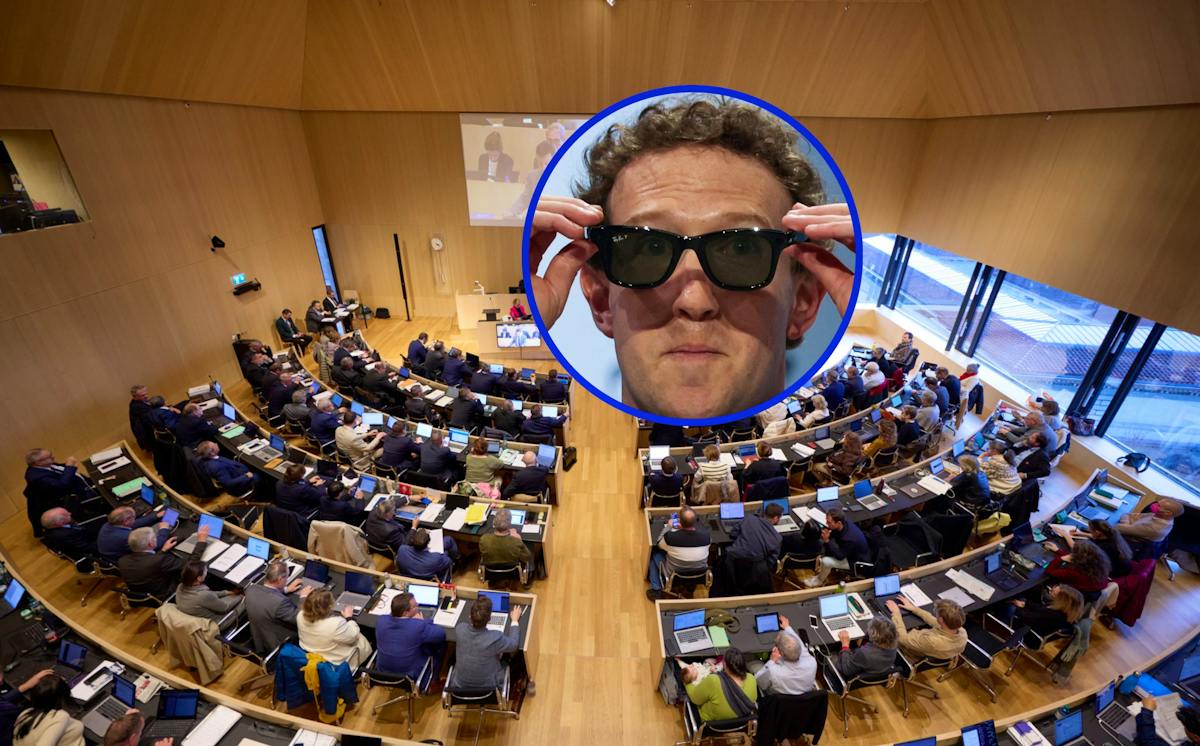
On November 18, 2026, the Grand Council of Vaud in Switzerland voted overwhelmingly to demand clearer regulations on smart glasses and recording-capable wearables. With 95 votes in favor, 22 abstentions, and only 8 opposed, the regional parliament forwarded a motion to the Council of State seeking enforceable guardrails against discreet public recording and surveillance.
According to 20 minutes, the cross-party initiative brought together lawmakers from across the political spectrum, including the Greens, the Swiss People's Party (UDC), Socialists, and Green Liberals. Backers argued that existing Swiss federal statutes remain partial and inadequate, leaving a gray area where capturing footage of people without consent does not automatically breach data privacy laws.
Green deputy David Raedler, speaking for the signatories, highlighted an exponential surge in hardware capable of recording discreetly. As 20 minutes reports, Raedler warned against fragmented local rules, urging the executive council to establish uniform oversight before individual public institutions craft ad-hoc bans. At the same time, he acknowledged that camera-enabled assistive tools can provide critical support for visually impaired or hearing-impaired users.
The legislative debate also centered heavily on street harassment and personal safety. As 20 minutes notes, Socialist deputy Virginie Pilault stated: 'Fear is a feeling widely shared by us women when walking in public spaces. These glasses ratcheted that tension up another notch.' Fellow deputy Elodie Lopez echoed those concerns, underscoring the risk of intrusive non-consensual capture.
The pushback follows a rapid retail explosion of AI eyewear across Europe. Citing retail figures, 20 minutes reports that global sales of Ray-Ban Meta and Oakley Meta smart glasses surpassed 7 million pairs in 2025, more than triple the cumulative shipments of the prior two years. In Switzerland, major retailer Digitec Galaxus posted a 307 percent year-over-year surge in smart glasses orders between January and September 2026, with men accounting for 87 percent of buyers.
What this means: The vote in Vaud reflects a growing dilemma facing the wearable technology industry. While manufacturers have relied on tiny LED indicator lights to signal active recording, privacy advocates and lawmakers argue that micro-LEDs are practically invisible in direct sunlight or crowded transit. With European regulatory bodies already scrutinizing biometric capture and public video harvesting, hardware makers like Meta will likely face mandatory privacy safeguards, stricter hardware indicators, or potential restrictions in public-sector venues.
Interactive guide: prices, displays, cameras, battery.
Share this story





