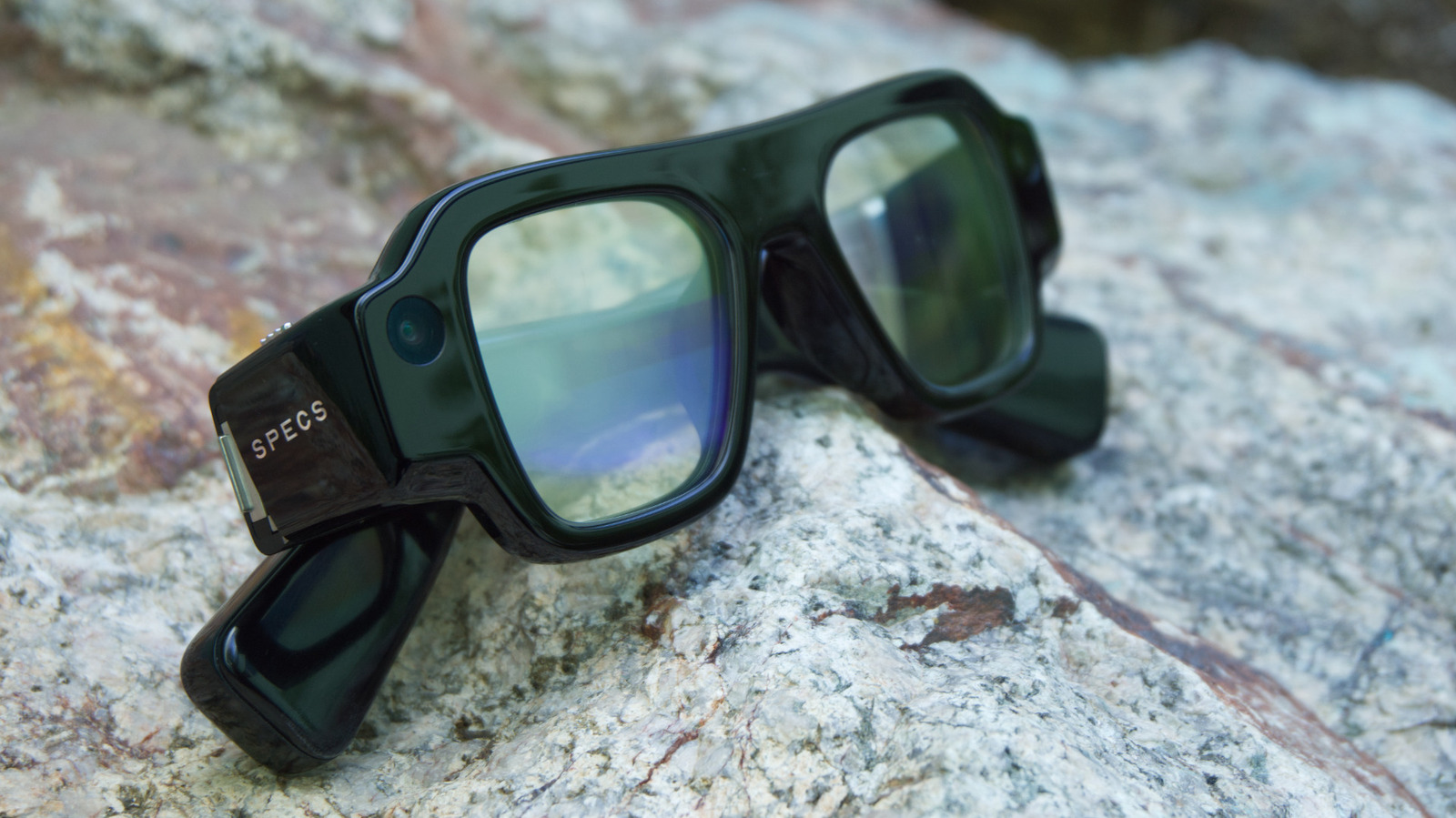
Analysis · —
Smart Glasses' Unspoken Crisis: The Battery Problem Nobody Is Solving
The industry fixates on cameras, displays, and AI, yet consistently ignores the fundamental power constraint. Until all-day battery life becomes a priority, 'everyday' smart glasses remain a myth.
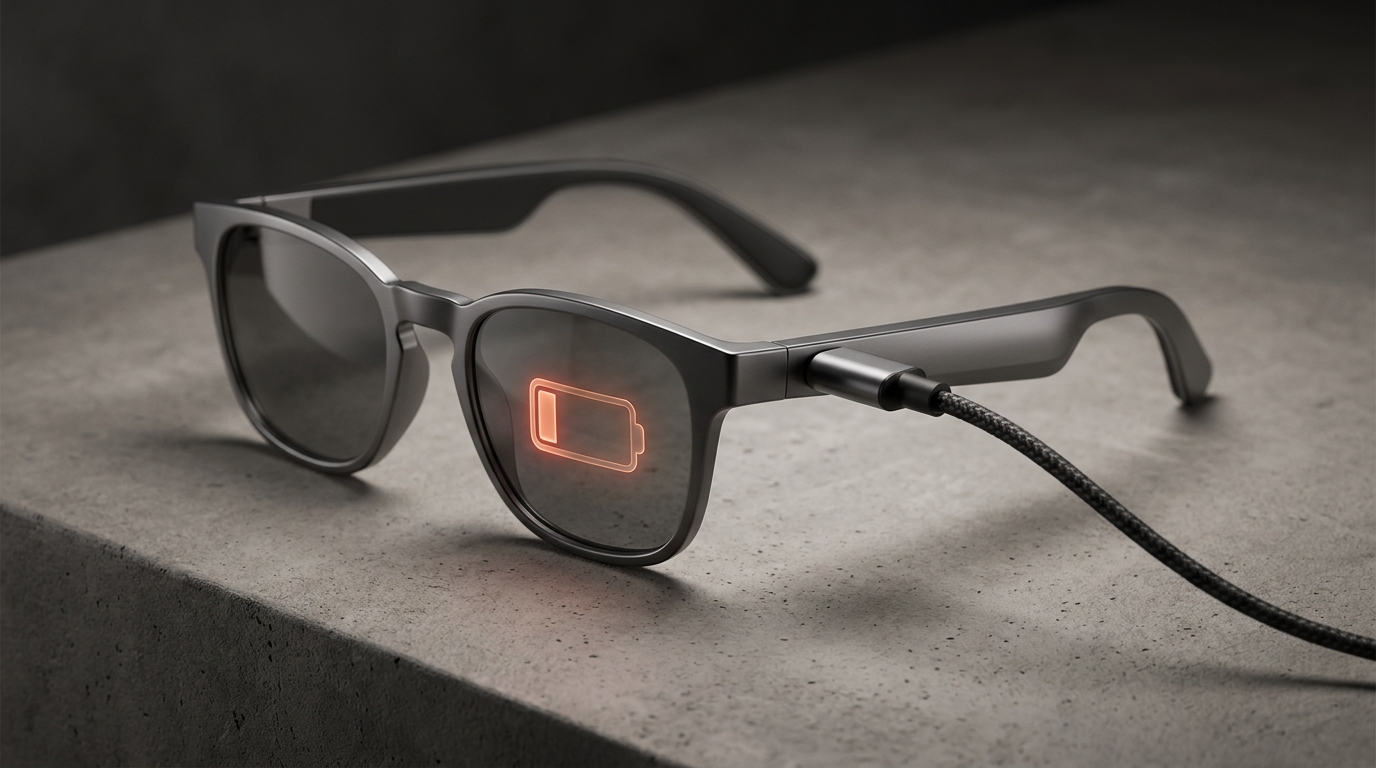
The smart glasses industry is locked in a frantic race, chasing every conceivable feature from real-time translation to AI chatbots and discreet recording. Brands are scrambling for market share, tackling privacy fears, and refining form factors, but a critical, unspoken problem persists: the battery. This isn't just a minor inconvenience, it is the Achilles' heel that prevents truly ubiquitous, 'always-on' intelligent eyewear from ever becoming a reality.
Consider the sheer computational demands now being crammed into these frames. SmartXY's K900 platform, intended to power 'tomorrow's AI camera glasses,' details impressive livestreaming capabilities in a lightweight 39-gram build. INMO's GO3, an IFA Innovation Award winner, boasts binocular Micro-LED displays for real-time translation across 98 languages. FunFitLand carves out a niche with immersive fitness and biometric integration. Each of these advancements, while compelling on its own, adds layers of power-hungry processing and display technology, intensifying the strain on an already limited power source.
Meta's Ray-Ban smart glasses offer a stark paradox. They are undeniably 'winning the consumer smart eyewear race' in terms of accessible utility and market penetration, despite igniting a firestorm of privacy concerns. The company's reported Luna project, a camera-free variant, seems positioned as a privacy response. However, even without a camera, Luna's six microphones and speakers for AI interaction still demand consistent power, a fact rarely highlighted amidst the privacy debate. Are we trading one problem, privacy, for another, persistent charging?
The dream of 'everyday' smart glasses, devices that seamlessly integrate into our lives like conventional spectacles, is fundamentally incompatible with the current state of battery technology. For a device to be truly 'always-on,' it needs to last a full day, from morning coffee to evening wind-down, without needing a mid-afternoon pit stop at a power outlet. The current crop, whether the 39-gram K900 or the 58-gram INMO GO3, struggles to meet this baseline expectation when actively in use.
Even as Original Design Manufacturers like SmartXY detail sophisticated platforms, the public specifications remain conspicuously silent on practical battery life. They are focused on the engine, but not the fuel tank. How does a reference design, built for 'AI camera glasses' with livestreaming, manage to power complex AI calculations and continuous data transfer within its minuscule weight? This omission is not accidental; it points to an industry-wide blind spot.
The push for sophisticated displays further compounds the issue. INMO GO3's binocular green Micro-LED panels, boasting 'up to 1,500 nits brightness' for outdoor legibility, are essential for its translation use case. Yet, high-nit displays, especially dual ones, are notorious power hogs. How long can a user truly rely on live subtitles appearing in their line of sight before the screen flickers out? The industry promotes these visual enhancements without transparently addressing their energy cost.
The omnipresent promise of 'ubiquitous, always-on AI assistants' is another major drain. Whether processing commands on-device or constantly pinging cloud servers, intelligent interaction requires continuous power. Meta's AI chatbot, integrated into both its camera-equipped and camera-free models, exemplifies this. The more responsive and context-aware these AI systems become, the more energy they will demand, further shortening the usable life of the glasses.
The relentless drive for lighter, more fashionable form factors directly conflicts with the need for robust battery capacity. Consumers want frames that resemble classic styles, like Meta's 'Clubmaster and Burbank' designs, not bulky devices. Integrating a battery capable of all-day use into a discreet, lightweight frame without compromising aesthetics or adding significant weight is a design challenge that the industry has yet to credibly solve.
Where is the innovation in energy density, power management, or even novel charging solutions? While breakthroughs in processing chips and display technologies are celebrated, radical advancements in battery life for smart eyewear are conspicuously absent. The focus remains on what the glasses can *do*, not on how long they can *sustain* doing it.
This unaddressed battery limitation carries significant implications for mass adoption. Consumers are already accustomed to, and often frustrated by, the need to regularly charge their smartphones and smartwatches. Introducing yet another daily charging ritual, especially for a device that's meant to be an invisible extension of oneself, creates friction. It turns 'smart' eyewear into 'smart-until-it-dies' eyewear, negating the very utility it aims to provide.
The consequences are clear: without significant battery breakthroughs, smart glasses are destined to remain tethered. This might manifest as external battery packs, clunky charging cases, or simply shorter operational times. Any solution that compromises the seamless, discreet experience fundamentally undermines the core appeal of wearable technology and particularly 'HUD-only glasses' that 'quietly win the everyday user' through their unobtrusive nature.
The industry's 'persistent blind spot' regarding everyday user needs extends directly to battery life. Until developers and manufacturers prioritize engineering for full-day power, rather than just incremental feature adds, smart glasses will remain a powerful, yet ultimately intermittent, novelty. The true 'reckoning' for smart glasses' next 12 months, beyond Android XR or privacy concerns, will be the hard reality of their energy limitations.
It is time for a frank conversation about power. We need to see substantial, game-changing advancements in battery technology or radical power efficiency in components. Otherwise, all the cutting-edge cameras, brilliant AR displays, and seamless AI interactions are moot points, limited by the invisible, yet omnipresent, leash of a charging cable.
Only when smart glasses can truly last from dawn until dusk, without a thought for recharging, will they shed their status as a gadget and finally become the indispensable, everyday tools they are envisioned to be. Until then, the battery problem continues to be the silent killer of the industry's grand ambitions.
Interactive guide — prices, displays, cameras, battery.
Share this story